Kennedy Space Center, Florida, – The United States has launched astronauts toward the Moon for the first time in more than half a century, marking a significant milestone in space exploration. The Artemis II mission lifted off from Kennedy Space Center in Florida, carrying three NASA astronauts and one Canadian Space Agency astronaut on an approximately 10-day flight around the Moon and back.
The crew, consisting of Commander Reid Wiseman, Pilot Victor Glover, and mission specialists Christina Koch and Jeremy Hansen, are flying aboard the Orion spacecraft.
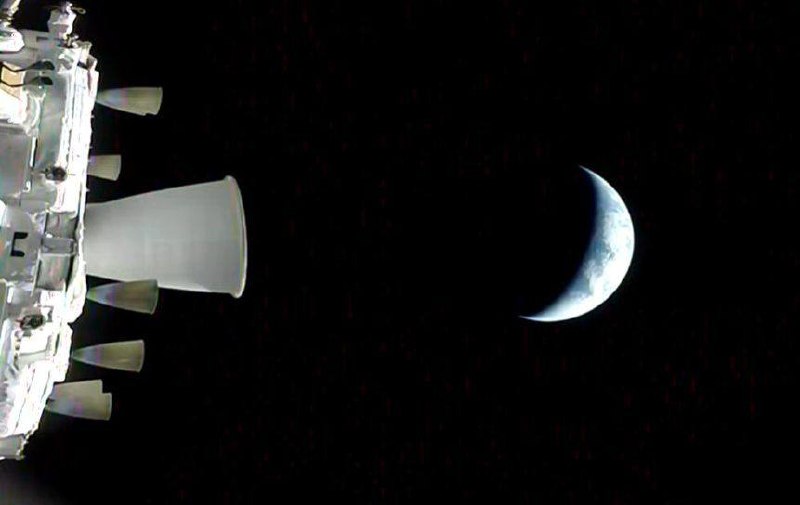
During the early hours of the flight, the Orion spacecraft sent back striking views of Earth. This mission is a crucial step in NASA’s Artemis program, which aims to return humans to the Moon, establish a sustained presence there, and eventually use the lessons learned to send astronauts onward to Mars.
Unlike the Apollo missions, Artemis II will not land on the lunar surface; that milestone is planned for the later Artemis III mission, targeted for 2028.
Instead, the mission is designed to test Orion’s life-support, navigation, and communication systems with a crew aboard before a landing is attempted. This is a central step in the Artemis program, and its success will pave the way for future missions. The launch was watched by crowds along Florida’s coast, marking a generational milestone as no astronauts had traveled toward the Moon since the Apollo program ended in 1972.
The Artemis II mission is a significant achievement, demonstrating the progress made in space technology and exploration. As the spacecraft travels around the Moon, it will provide valuable insights and data that will help NASA prepare for future missions.
With the Artemis II mission underway, the focus now shifts to the crew’s journey and the critical tests they will conduct during their approximately 10-day flight.
The success of this mission will be a major step forward in NASA’s plans to return humans to the Moon and eventually send astronauts to Mars. As the world watches the progress of the Artemis II mission, it is clear that this is just the beginning of an exciting new era in space exploration.
Looking ahead, the next major milestone will be the Artemis III mission, which is targeted for 2028 and will include a lunar landing. The experience and data gained from the Artemis II mission will be crucial in preparing for this historic event. As the Artemis program continues to push the boundaries of space exploration, it is an exciting time for NASA and space enthusiasts around the world.