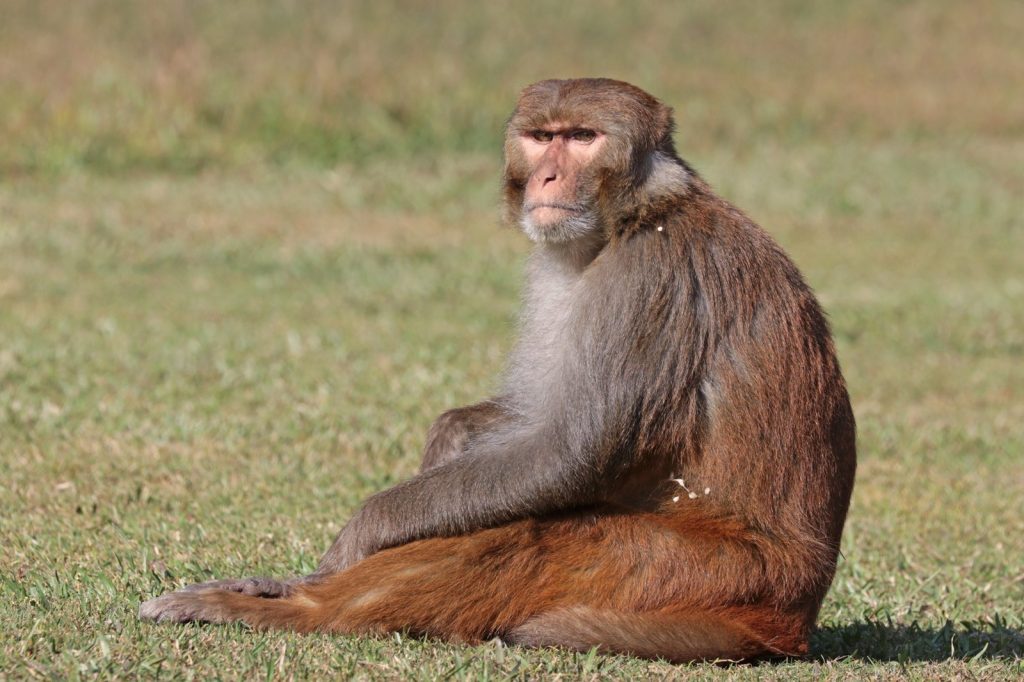
Alpha Genesis breeds rhesus macaques and sells them to medical researchers. In early November 2024, 43 of its animals walked out of the company’s compound in Yemassee, South Carolina.
Yemassee police said a caretaker had not secured the enclosure doors. CEO Greg Westergaard told NBC News the enclosure was new, and that the worker, who was cleaning and feeding at the time, left two separate doors unlatched. “It was purely human error,” he said.
All 43 were young females. Police said they weighed six to seven pounds, had never been used in testing and were too young to carry disease.
Trapping the runaways
The first monkey turned up in a trap on the company’s own grounds, unharmed. Westergaard’s statement was brief: “She is safe and sound and has since had a peanut butter and jelly sandwich.”
Twenty-four more were caught on the Sunday. A sizeable group stayed near the compound fence and slept in the trees overnight, police said. The company set one-way traps baited with apples and said it would keep at it “for as long as it takes.” Residents were told not to feed or approach the animals and to call local authorities if they saw one.
By mid-November, police reported that 39 had been trapped and returned. A handful stayed out through a hard winter. In late January 2025, the police department said the last of them had been recovered, and Westergaard told authorities the animals looked healthy after months outdoors.
Not the first escape
The Yemassee site has a record. Federal officials said 26 primates got out in 2014 and 19 more in 2016. In 2018 the company was fined $12,600 over those escapes and other problems, including an incident in which some animals were left without water. After the 2024 breakout, the group Stop Animal Exploitation Now, which has filed federal complaints against the facility for years, called on the USDA to prosecute Alpha Genesis as a repeat violator.
Born Free USA offered to help move the monkeys to a sanctuary. “The monkeys are vulnerable, with no experience of living outside of their captive environment,” CEO Angela Grimes said. She also warned that, as wild animals, they posed a risk to people, including the spread of zoonotic disease. The police and the company said the animals carried no disease.
The facility covers more than 100 acres of quarantine, holding and research space, and the company says it has clients in North America, Europe and Asia.
Sources
- How a South Carolina lab plans to capture 18 on-the-run monkeys
- 43 lab monkeys escaped in South Carolina. They have a legal claim to freedom.
- The last of the escaped South Carolina lab monkeys have been recovered