Early Steam was, by most accounts, a patching tool with delusions. It went live on September 12, 2003, and PC Gamer put its main duties plainly: updating Counter-Strike and matchmaking. Nobody queued up to admire it.
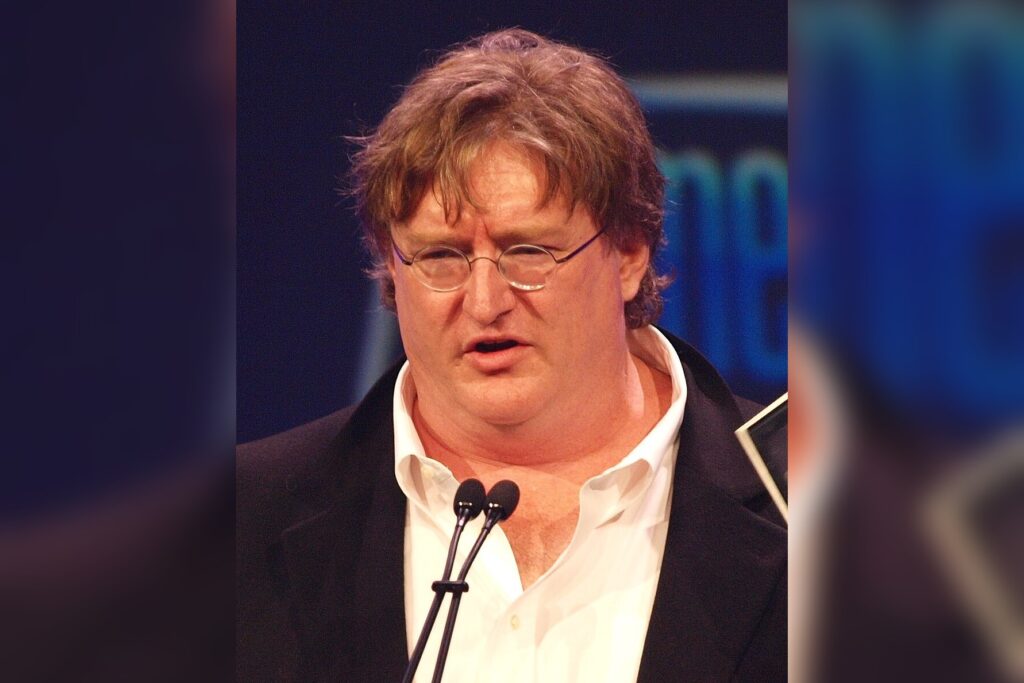
Valve had grander plans, and said so a year earlier. At GDC in 2002 it described “a broadband business platform for direct software delivery and content management.” Gabe Newell, on stage, cast himself as a sort of Robin Hood for independent developers. Remove the publishers and retailers, he argued, and a studio’s take could be $7 or $30 of a sale, when a boxed game generally cost $50 at the time.
The Half-Life 2 gambit
The detail that matters is what happened next. Half-Life 2 arrived in late 2004 and required a Steam account. Ars Technica noted that this handed Valve millions of new accounts and a route around the retail publishers of the day. It also made plenty of players furious. Retail boxes were useless until the buyer installed Steam and registered the key inside, and many saw the client as a nuisance bit of DRM. Servers buckled during preloading, and on launch day Valve admitted to delays with authentication.
What Steam offered in return was thin. Achievements, user reviews, voice chat and purchases of other studios’ games were all years off. Valve talked up automatic patching, which saved hunting for fixes by hand. To a good many players, that did not justify the RAM it took.
A fight with the publisher
Behind the scenes Valve was at war with its publisher. In August 2002 it sued its publisher, Sierra, and Sierra’s owner, Vivendi Universal Games, over delayed royalties. Vivendi countered that Steam let customers who would have bought at retail buy directly from Valve instead. By April 2005, after several court decisions against Vivendi, the two settled, and Valve had full control of its games again.
Boxes did not vanish overnight. In the game’s first two months Vivendi counted 1.7 million boxed sales, and Valve said 6.5 million boxed copies had sold by 2008. Digital was still the minority.
How it turned out
The tide did turn. Codename: Gordon, a fan-made game, was technically the first third-party title on Steam, according to Valve’s own anniversary timeline as PC Gamer described it, and the first big Steam sale arrived in December 2007. PC Gamer wrote that the platform ultimately led the industry’s move from discs to downloads, whether or not grumpy old physical-media fans liked it.
By Steam’s 20th birthday in 2023, the complaint had flipped: people got annoyed when a game was not on Steam.
Sources
- How Half-Life 2 helped sell Steam to a skeptical PC gaming market (Ars Technica)
- How Half-Life 2 helped sell Steam to a skeptical PC gaming market (Ars Technica)
- How Half-Life 2 helped sell Steam to a skeptical PC gaming market (Ars Technica)
- How Half-Life 2 helped sell Steam to a skeptical PC gaming market (Ars Technica)
- How Half-Life 2 helped sell Steam to a skeptical PC gaming market (Ars Technica)
- Steam reverts to original 'army green' for 20th anniversary (PC Gamer via Yahoo)