The Cassini spacecraft has been dead for years. It plunged into Saturn’s atmosphere in 2017, ending a 13-year mission. But the data it sent back keeps yielding discoveries. The latest: Saturn’s winds are not a surface show. They run deep. Thousands of kilometers deep.
That finding, published from analysis of Cassini-Huygens mission data, flips old assumptions. For decades, scientists debated whether the planet’s famous jet streams were shallow weather patterns or something far larger. The new analysis gives a clear answer. They are fundamental. They are part of the planet’s body.
The trick was gravity. As Cassini made its final, close passes to Saturn, it measured tiny variations in the planet’s gravity field. Those variations revealed mass movement below the clouds. The winds themselves, it turns out, shift mass around. That shift shows up as a gravitational wobble. Scientists read the wobble. They saw the depth.
Equatorial flows on Saturn may reach around 10,000 kilometers down. That is roughly the distance from New York to Tokyo. High-latitude winds are shallower but still vast. Below the visible cloud tops, winds can become even stronger than at the surface. The planet has no solid surface. It has a dense interior. Intense internal heat and rapid rotation combine to create a planet-scale engine of continuous motion.
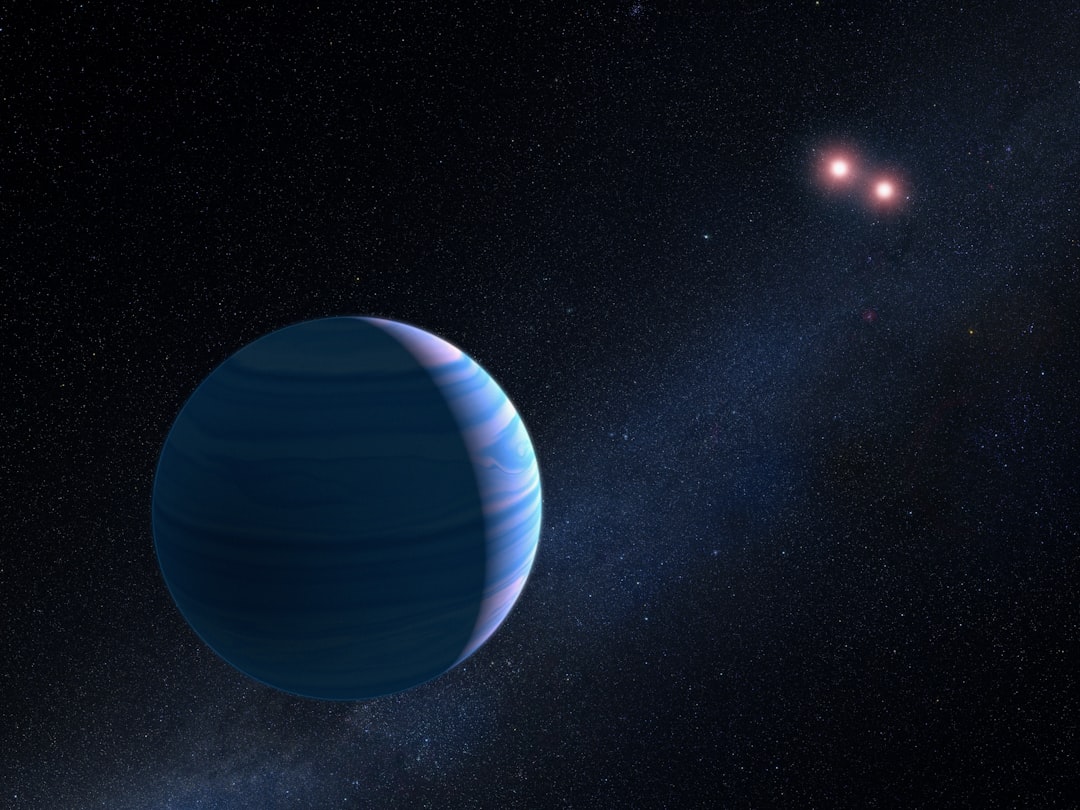
This matters beyond Saturn. Jupiter has similar bands. Distant exoplanets, many of them gas giants, likely share the same physics. If weather on these planets is not a thin surface layer but a deep, integral feature, then models of planetary atmospheres need rethinking. The weather is not skin-deep. It is bone-deep.
The Cassini-Huygens mission was a joint effort of NASA, the European Space Agency, and the Italian Space Agency. It launched in 1997. It reached Saturn in 2004. It spent over a decade orbiting the ringed planet, dropping a probe to Titan, flying through geysers on Enceladus, and finally, on its last orbits, skimming so close to Saturn that the spacecraft’s antenna acted as a drag brake. Those final dives were designed for exactly this kind of gravity science. The gamble paid off.
The discovery opens new research avenues. Scientists now want to understand the complex dynamics at play on Saturn and how they compare to other gas giants in the solar system. The same technique could be applied to Jupiter. The Juno spacecraft is already there, mapping Jupiter’s gravity field. The results may look similar.
For now, the picture is clear. Saturn’s winds are not a weather event. They are a structural feature. The planet’s atmosphere and interior are not separate. They are one machine. And it runs at thousands of kilometers deep.