
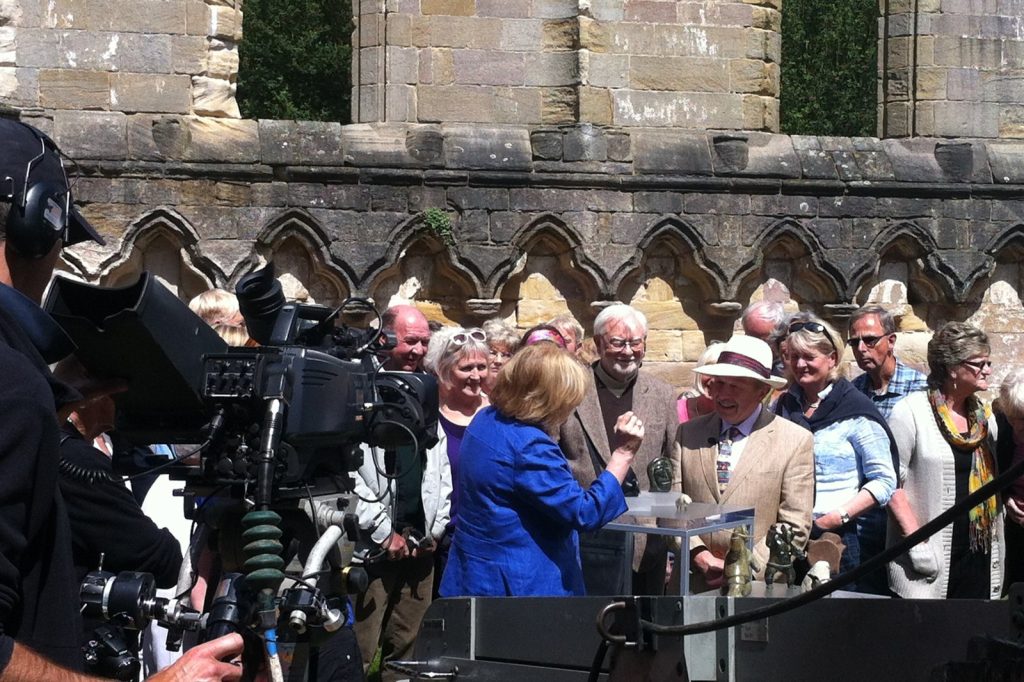
Theo Burrell, the ceramics specialist who for eight seasons appraised heirlooms on the BBC’s Antiques Roadshow, has died at age 39 from an aggressive brain tumor that she fought publicly even as it cut short an already improbable life. Her team announced on Instagram that Burrell died peacefully Wednesday, noting that neither she nor her physicians expected her decline to come so quickly, according to People magazine. The death comes just over four years after her diagnosis, a period in which she turned a devastating prognosis into a campaign for more government funding of cancer research.
A Life Framed by Advocacy
Burrell joined the BBC program in 2018, bringing the expertise she had honed at the Edinburgh auction house Lyon & Turnbull, where she worked full-time since 2011. She first encountered the firm as a teenager and later interned there while earning a master of letters in decorative arts from the University of Glasgow. By 2012 she had qualified as an auctioneer and developed a specialty in European ceramics, glass, and late 19th- and 20th-century decorative objects.
In 2022, Burrell received the diagnosis: an incurable glioblastoma, a fast-growing brain tumor that typically resists standard treatments such as surgery, radiotherapy, and chemotherapy. Doctors gave her a prognosis of 12 to 18 months to live.
She endured brain surgery and 17 rounds of chemotherapy. Despite that timeline, she lived to see her son’s first day of school. In March 2024, she married her longtime partner Alex, writing afterward that it “feels so nice to be husband and wife.” Her public presence after the diagnosis shifted from antiques to advocacy.
In March 2024, she appeared in a video for the UK health department, and she later became a patron of the Brain Tumour Research charity. She said she could accept her own fate if it meant better outcomes for future patients.
Her team’s Instagram post stated she wanted others to find hope in her story.
A Stalled Field and a Policy Gap
The backdrop to Burrell’s advocacy is a treatment landscape that has seen no substantial movement in two decades, according to the BBC. Glioblastoma, an aggressive tumor often detected after severe headaches or neurological changes, remains difficult to treat, and survival rates have scarcely improved. That stagnation — viewed by many researchers as a strategic failure — framed Burrell’s public calls for more funding.
The Brain Tumour Research charity, which Burrell championed, continues to press for increased government allocations. The UK health department has acknowledged the gap, but whether Burrell’s public profile will shift the funding calculus remains an open question.
Her decision to partner with the charity in 2023 amplified long-standing arguments that brain-tumor research and clinical trial access lag behind other cancers. Burrell’s case underscored the unpredictable course of the disease. Despite surviving more than four years past a 12-to-18-month prognosis, her final decline came rapidly.
That trajectory illustrated the urgent need for new therapeutic options, even as the condition resists standard care. Her public presence demonstrated how figures in popular culture can shape perceptions of rare, incurable diseases and influence health priorities.
From Teenage Intern to National Television
Burrell’s rise to a national audience began years before her television debut. She first encountered Lyon & Turnbull as a teenager and returned during university for an internship.
After completing her postgraduate degree in decorative arts, she joined the firm full-time in 2011 and qualified as an auctioneer the following year. Her work spanned European ceramics, glass, and late 19th- and 20th-century decorative objects. The BBC brought that expertise to millions when she joined Antiques Roadshow in 2018.
The Brain Tumour Research charity, which Burrell championed, continues to press for increased government allocations. With no substantial therapeutic advance in two decades, the record shows the UK health department has acknowledged the gap.
Whether Burrell’s public profile will shift the funding calculus remains an open question. Her legacy may rest as much on that unanswered question as on the antique treasures she appraised for a national audience.




