
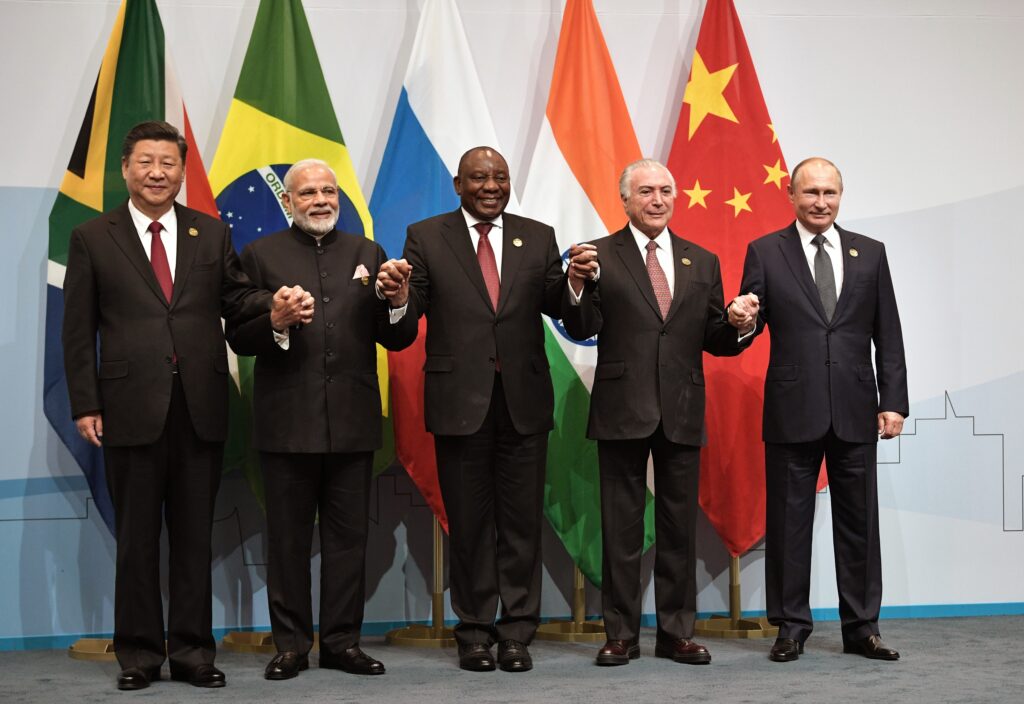
A declaration with 140 numbered paragraphs is a lot of paper. The BRICS leaders issued theirs in New Delhi at the close of the 18th summit, which met on 12 and 13 September 2026 under the theme “Building for Resilience, Innovation, Cooperation and Sustainability.” It is the kind of document that gets counted rather than read, which raises the sensible question of what happens afterwards.
What the text promises
The range is wide. The leaders marked 20 years of BRICS and pledged to reform global governance so that it is, in their words, more representative and more democratic. They repeated their call to overhaul the UN, Security Council included, so that developing countries sit in larger numbers. On money, they backed a strong, quota-based IMF and urged that the quota rises settled in the 16th review take effect without more delay.
Trade got blunt language. The text warns that rising tariffs and protectionism dressed up as environmental policy threaten global trade and supply chains, and it restates support for changing how the WTO works. Paragraph 22 condemns sanctions imposed by one state, and the secondary kind, as contrary to international law. Paragraph 115 turns to the New Development Bank, which the leaders said is entering its “second golden decade.”
India, as chair, drew its own credit: the declaration welcomes more than four hundred meetings held in thirty cities across the country during the year.
The scorekeepers
There is a way to test such pledges. The BRICS Research Group at the University of Toronto picks a handful of priority commitments from each summit, then scores every member on whether it acted. The scale runs from -1 for failure or action opposite to the goal, through 0 for half-done or still-unfolding efforts, to +1 for full compliance.
Its final report on the Kazan summit of October 2024 looked at eight priority commitments out of the 134 the leaders made there. The review ran until 5 July 2025, the eve of the Rio summit, and reflected the enlarged membership of 10 countries, with Egypt, Ethiopia, Indonesia, Iran and the United Arab Emirates now counted. The average came to +0.23, or 61%.
The spread was notable. Brazil topped the table at 75%. India finished at 69%, comfortably above the average, though hardly a perfect record for a country that now chairs the group.
The researchers are open about the limits. They choose commitments to reflect the breadth of the agenda and the host’s priorities, so the score covers only a sliver of what a summit says. A 61% on eight items is not a verdict on 134.
The salient point is the gap between the two documents. Delhi has produced 140 paragraphs. Whether they earn a score above the Kazan figure of 61% will not be known until the same researchers finish their next count.
Sources
- BRICS New Delhi Declaration: Building for Resilience, Innovation, Cooperation and Sustainability (September 12, 2026)
- 2024 BRICS Kazan Summit Final Compliance Report (BRICS Research Group, University of Toronto)




