
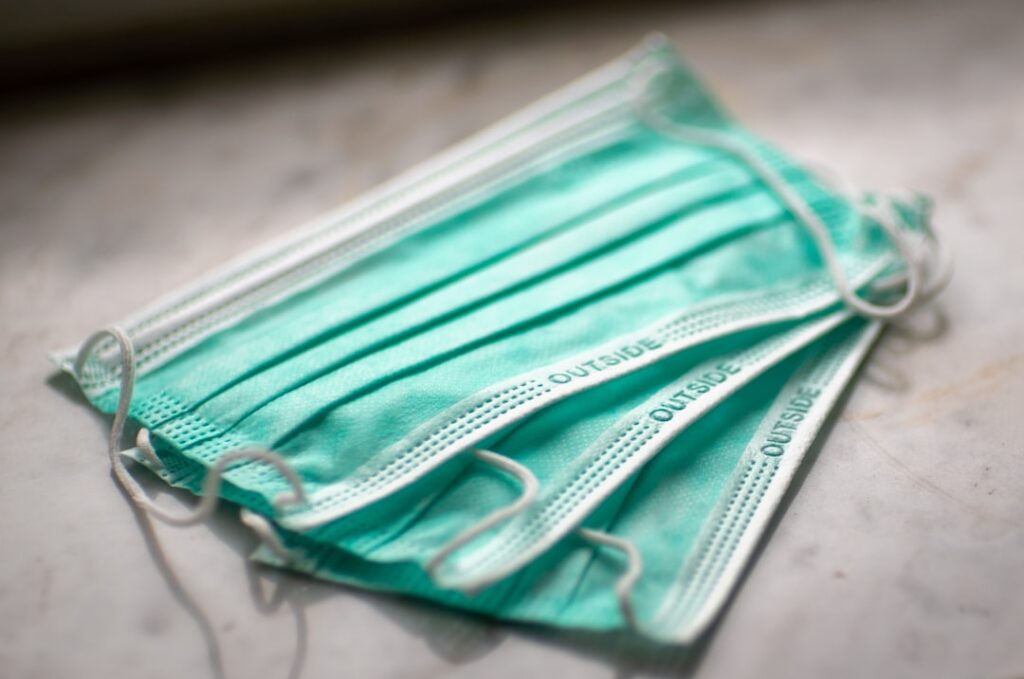
Chinese authorities have publicly acknowledged a widespread problem with counterfeit personal protective equipment (PPE) flowing from local manufacturers, responding to mounting international pressure that intensified on April 9, 2021. The scale of the issue became evident when China’s Ministry of Public Security announced it had confiscated over 31 million inferior or fake face masks in February alone, with that figure representing only what was caught rather than the total volume that may have reached frontline workers. Authorities arrested 1,560 suspects involved in producing and distributing counterfeit gear, targeting vendors who exploited the pandemic through fraud and price gouging.
However, these arrests occurred after significant damage had already been done. Thousands of Chinese-made face masks were removed from online platforms only after investigations revealed they lacked official certification from health regulators.
The counterfeit problem extended beyond generic masks to specific brands. Online sellers promoted face masks bearing fake labels claiming authorization from the United States’ National Institute for Occupational Safety and Health. Among the counterfeits identified were the Valpro Ranger 821, 821V, and N95 masks—products that frontline workers depend on for protection. Kerry Bowman, a Canadian bioethicist, described the marketing of counterfeit masks as “profoundly problematic.” The timing could not have been worse, as coronavirus cases were rising globally and the world was already struggling with a shortage of legitimate PPE.
Masks, gloves, respirators, goggles, and gowns were all in critically short supply. The global health crisis did not create this problem from nothing.
Growing demand for protective gear created a market, and into that vacuum stepped illegitimate manufacturers willing to sell anything to meet it. The counterfeits did more than cheat buyers out of money—they gave healthcare workers a false sense of security. A mask that does not filter properly is worse than no mask at all, as a nurse who believes she is protected may take risks she otherwise would not.
International security and health authorities repeatedly urged the public to be cautious, but caution is difficult when distinguishing a real N95 from a fake one requires laboratory testing. Each counterfeit mask represents a potential failure point where someone could become infected because their protection was a lie.
The pandemic originated in China’s Hubei province, and instead of ramping up protective efforts, some Chinese sellers worsened the crisis. The arrests and seizures represent a response, but counterfeiters had already shipped product, printed fake labels, and collected payment. The question now facing the global community is whether the supply chain for PPE can ever be fully trusted again.
For doctors, paramedics, and nursing home workers, that trust is not abstract—it is the difference between going home healthy and bringing the virus home with them.




