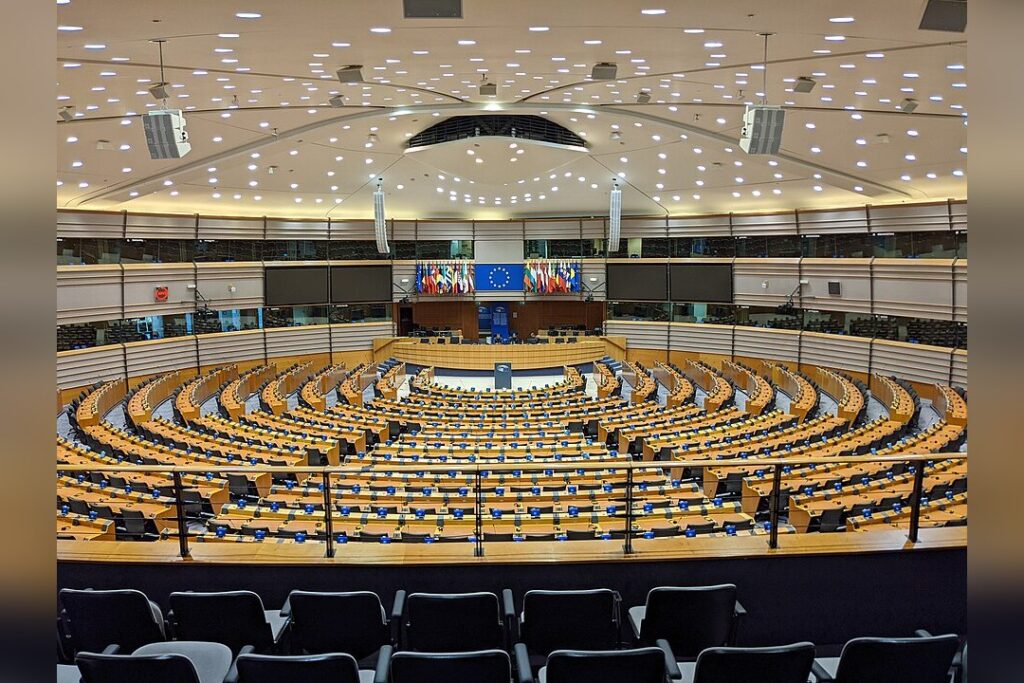
The applause came first. On September 16, Ursula von der Leyen told members of the European Parliament she wanted to “work with you on opening the door for Canada to be the first associate member of the EU”. Nobody had yet explained what that meant, because no such status exists in the treaties.
An EU diplomat told Reuters that “nobody really knows what it means” and said von der Leyen was overpromising. Member states had not discussed the idea beforehand. Brussels later pointed to Article 217 of the Treaty on the Functioning of the European Union, which lets the EU sign association agreements with third countries, as a possible legal basis. So far there is no sign that treaty change would be needed. EU leaders are expected to take it up at the October European Council.
Reactions came fast. Parliament President Roberta Metsola suggested Australia and New Zealand might eventually follow Canada. Mark Carney told the Parliament that Canada was not seeking full membership, and later argued that the substance of the relationship counted for more than its label. Donald Trump called the idea “laughable” and said he would impose “very serious tariffs” if he saw it as a hostile act.
The countries still waiting
An analysis in Emerging Europe argues the harder problem lies elsewhere. Türkiye has been a candidate since 1999, North Macedonia since 2005, Montenegro since 2010, Serbia since 2012 and Albania since 2014. Bosnia and Herzegovina, Moldova and Ukraine joined the list in 2022. None of them was consulted about the new category floated for Canada. Its author notes that in Warsaw, the Europe Agreement of December 1991 is still remembered as the start of a 13-year road to membership.
The piece makes the point that enlargement is arguably the EU’s most effective foreign-policy tool, and that its credibility rests on conditions being transparent and broadly the same for every applicant.
Is Canada “not in Europe”?
That objection, the analysis says, is weaker than it sounds. “European” has never been a purely geographical word in EU institutions. Morocco applied in July 1987 and was turned down because it was not considered a European state, yet European Parliament research has noted that the term in Article 49 carries political and cultural meaning too, with Türkiye the obvious case.
The Union also reaches well beyond the continent. French Guiana is an integral part of the EU and its single market, and so are Réunion and Mayotte in the Indian Ocean. Greenland left the European Communities in 1985 but remains linked as an overseas country and territory, and von der Leyen opened an EU office in Nuuk in March 2024. Canada has held observer status at the Council of Europe since 1996.
Article 49 keeps full membership for European states, so none of this makes Canada eligible. Article 217 has no comparable geographical restriction. The question, the author says, is how far a non-European democracy can be woven into European institutions without becoming a member.
The idea still has no strategy, no defined rules and no criteria that would apply beyond Canada. Without them, the warning runs, some countries spend decades working through EU procedures while others are offered a new category before anyone has decided what it is.