
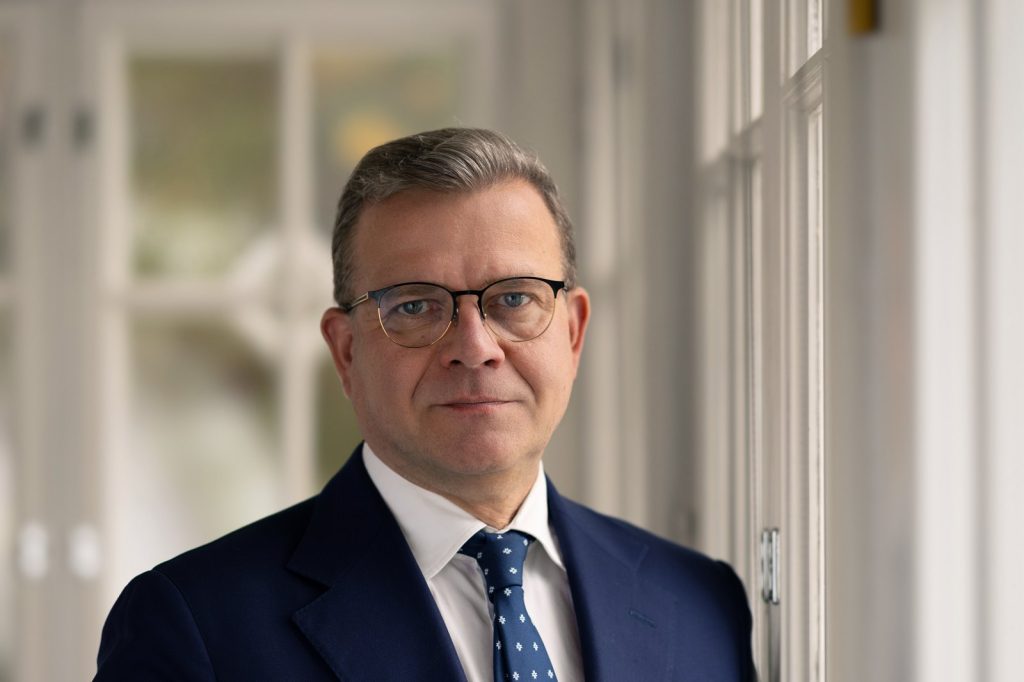
Rovaniemi sits just below the Arctic Circle, and on September 13 and 14, 2026, it hosted leaders from more than ten EU member states who had come to talk about the cold, strategic north. Finnish Prime Minister Petteri Orpo was the host. The agenda covered security, infrastructure, economic development, climate change and cooperation.
Twelve countries put their names to the joint statement: Finland, Denmark, Estonia, France, Greece, Germany, Latvia, Lithuania, the Netherlands, Poland, Romania and Sweden. They described an Arctic in rapid transformation, pushed along by great-power competition, the consequences of Russia’s war against Ukraine, China’s growing security-policy interest and accelerating climate change.
The central message was short. What happens in the Arctic is increasingly tied to European security.
Costa: Arctic security is European security
The statement insists that the European Arctic is part of the European Union, land and sea, and that it includes a long external EU border with Russia. It also reaffirms the goal of keeping the region peaceful, stable and cooperative, resting on international law, territorial integrity and the Law of the Sea.
The tone toward Moscow was harder. The statement called Russia a significant long-term challenge to Euro-Atlantic security and cited its Arctic ambitions and increased hybrid activity as reasons to strengthen EU Arctic policy.
European Council President António Costa, speaking after the summit, said Arctic security should be read as part of European security. Denmark, Finland and Sweden are Arctic EU members, he noted, and a changing geopolitical environment means the Union must adapt while holding to climate protection, sustainable development and peaceful cooperation. He also indicated that Arctic security and defence will feature in talks on the EU’s next long-term budget.
The countries asked the EU to take a more strategic and proactive role. Their wish list: stronger monitoring and analysis, better awareness of the maritime domain, wider use of member states’ space-based capabilities and more information sharing. They also pointed to military mobility, cross-border links, digital and transport infrastructure, satellite technology and protection of critical infrastructure on land and at sea.
Orpo cast security as more than a military matter. According to the Finnish government, talks also reached economic security, critical minerals, energy, logistics, trade routes, security of supply and climate change. The declaration calls for close coordination among the EU, its members and like-minded partners, complementing NATO.
Economic promise, environmental caution
The leaders named critical raw materials, space technologies, Arctic and intercontinental shipping, connectivity and tourism as areas with room for sustainable growth, and said people living in the region should share the benefit. They called for investment in transport links and digital infrastructure in the EU’s northernmost regions, and for safe, secure ways to operate in Arctic conditions. They also welcomed the recently announced 200 million euro EU-Greenland Partnership Package.
Environmental language stayed central. The statement stresses protecting fragile ecosystems, moving to clean energy and managing resources responsibly, and it backs engagement with Indigenous Peoples and local communities. The participating countries committed to the rights, livelihoods and cultures of Arctic Indigenous Peoples and to their effective say in decisions affecting the region, citing the UN Declaration on the Rights of Indigenous Peoples. Scientific research and academic cooperation were named as foundations for governing on evidence and understanding the Arctic’s place in global climate change.
All of this feeds into work already under way. The European Commission and the European External Action Service are updating the EU’s Arctic policy, which Costa said is meant to answer a shifting geopolitical, economic and environmental picture. The joint statement looks ahead to the Commission and High Representative’s forthcoming Joint Communication on a Resilient, Secure and Peaceful Arctic, and asks for adequate resources and concrete action.




