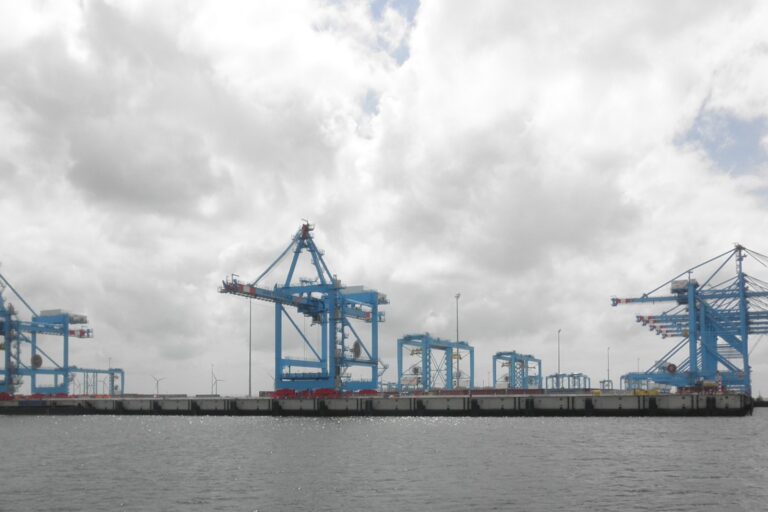
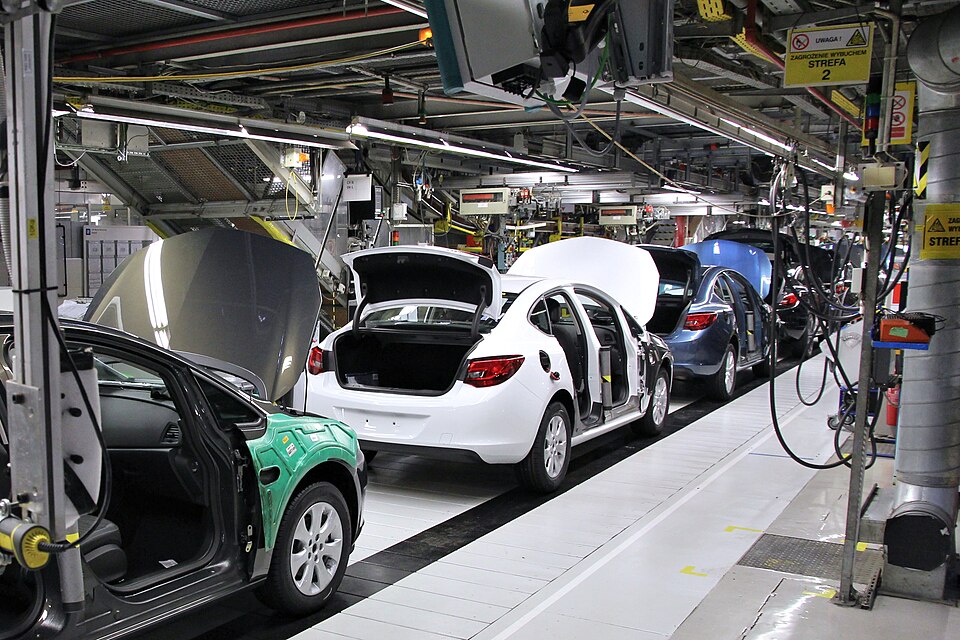
Nearly a third of Czech exports, 32 percent, go to Germany, and one in six Czech exporters has no other customer. A German slump is not only a German problem.
A new Atlantic Council analysis, written for its GeoEconomics Center, argues that the manufacturing base of Central and Eastern Europe is under growing strain as German demand weakens and Chinese overcapacity spreads. Across the region, industry makes up from 21 to 33 percent of national GDP. The authors see that as an asset: a ready production platform that could make European reshoring plans believable. The danger is that falling demand wipes out capacity before anyone has found a way to redeploy it.
Germany’s trouble travels east
The analysis traces Germany’s difficulties to the cutoff of Russian energy, uncertainty across the Atlantic and weaker demand from China. In recent months, it says, worry in Berlin has turned to panic. Chinese-made cars, machinery and capital goods are flowing into Germany at a fast clip, while Chinese appetite for the same EU exports is shrinking. Job cuts have followed, along with louder calls for safeguards. Even committed free-trade supporters now talk of a “China Shock 2.0” for German manufacturing.
The Centre for European Reform made a related point in an earlier report by Sander Tordoir and Brad Setser. China, Tordoir said, is pivoting to aggressive export-led growth that undercuts German manufacturing, where, Tordoir added, 5.5mn quality jobs still sit and a fifth of GDP is made.
Oxford Economics had already described the squeeze on the region in March 2025. CEE manufacturers tied into the German car supply chain were struggling, it noted, and the region also faced American tariffs and subsidised Chinese output.
Who is most exposed
Healthy consumer spending and a few new export markets, the United States among them, have so far kept the German malaise from spreading east. The Atlantic Council doubts this will last, given how much the region leans on German orders.
Investment tells the same story. Roughly 85 percent of foreign direct investment stock in the region is owned by EU investors, but German FDI dropped 22.5 percent from 2022 to 2024 and is still down. Money from France and further afield has only partly filled the hole.
Slovakia looks especially vulnerable. Exports there are close to 90 percent of GDP, and cars are 34 percent of what it sells abroad. In Poland and Hungary, German influence has caused political backlash, yet Germany still took 27.1 percent and 24.9 percent of their respective exports in 2024.
The warning is blunt. Thirty years of close ties to German and Austrian industry left the region more industrialised than the EU average. If that model keeps faltering, the analysis says, a slowdown that began in Germany could pull parts of the region into severe recession.
Sources
- To save its manufacturing base, Europe needs to look east
- No shelter from the external storm for CEE economies
- Europe Express: Eastern regrets