
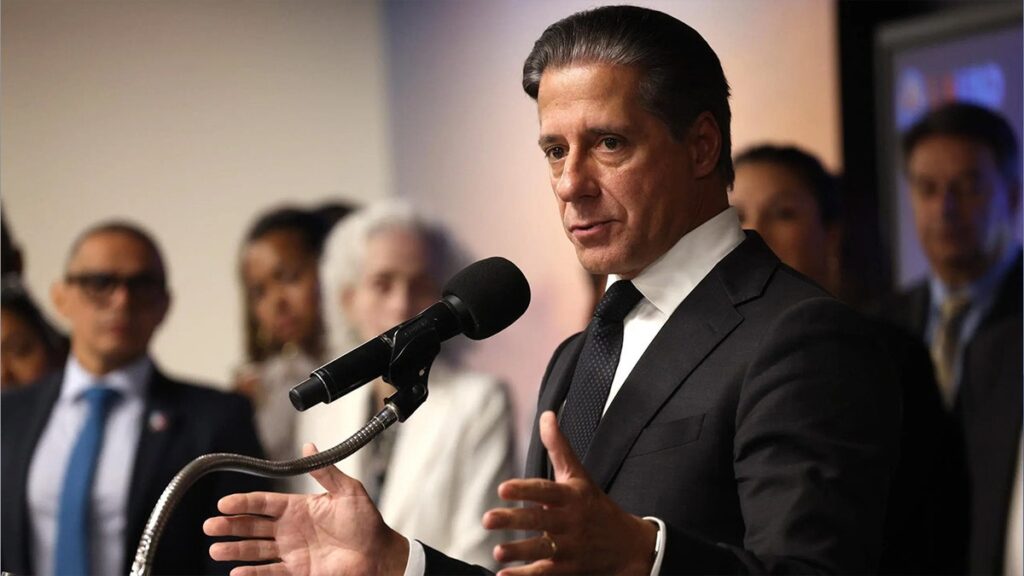
Two months after FBI agents searched Superintendent Alberto Carvalho’s home and office, the leader of the nation’s second-largest school district is out. Carvalho resigned June 21. He leaves behind a district still in the dark about what federal investigators are after.
The FBI has not said what it is investigating. The agency has not confirmed whether anything was seized during the mid-February raids, which also hit a location in Miami.
That silence is a problem for LAUSD. The board placed Carvalho on paid leave right after the raids. The vote was unanimous.
Now the board must find a permanent replacement while the investigation drags on with no end date. Carvalho’s resignation does not end the district’s troubles.
It adds a layer of leadership uncertainty to an already messy situation. The chatbot scandal is still fresh. Carvalho had pushed a program called “Ed,” built by the tech company AllHere.
The company is now defunct. Its founder, Joanna Smith-Griffin, faces federal charges — securities fraud, wire fraud, and identity theft. LAUSD had paid a significant amount of money in advance for that chatbot.
That money is likely gone. The board is now left explaining to parents and taxpayers why the district prepaid a company that collapsed under criminal allegations.
The board’s public statement, released to NBC, was careful. It reaffirmed a commitment to “providing every student with a high-quality education, supporting its dedicated workforce, and maintaining the trust of the communities it serves.” That is boilerplate crisis language. The real work is behind the scenes.
The board needs an interim superintendent fast. It needs someone who can manage day-to-day operations while the FBI continues its work.
It also needs to figure out how much the district lost on the AllHere contract and whether anyone else inside LAUSD knew the company was in trouble before the money was handed over. Carvalho’s exit was not a surprise. The raids made his position untenable.
But the timing matters. School is out for summer. That gives the board a few months to stabilize before students return in August.
If no permanent leader is in place by then, the district faces a fall semester with an acting superintendent and an open FBI investigation. That is not a recipe for calm.
The FBI has not named Carvalho as a target. It has not named anyone. But the raids were aggressive — home, office, a third site.
That suggests the investigation is serious. The board’s unanimous vote to put Carvalho on leave suggests they saw enough to believe he could not lead while the case was pending.
His resignation may be an attempt to control the narrative. Or it may be a practical move. Either way, the district is now in a waiting game.
What comes next depends on the FBI. If charges are filed, the board will have to distance itself from Carvalho completely. If the investigation fizzles, the board will still have to explain why they paid millions for a chatbot built by a company whose founder is now facing federal charges.
Either outcome is bad. The board has experience with crises.
LAUSD is a massive system — over 1,000 schools, half a million students, constant budget fights. But an FBI investigation into the former superintendent, combined with a failed tech contract and federal fraud charges against the vendor, is not routine. The board’s statement about maintaining trust sounds hollow when the details are this thin.
Trust is built on transparency. So far, there has been very little.




