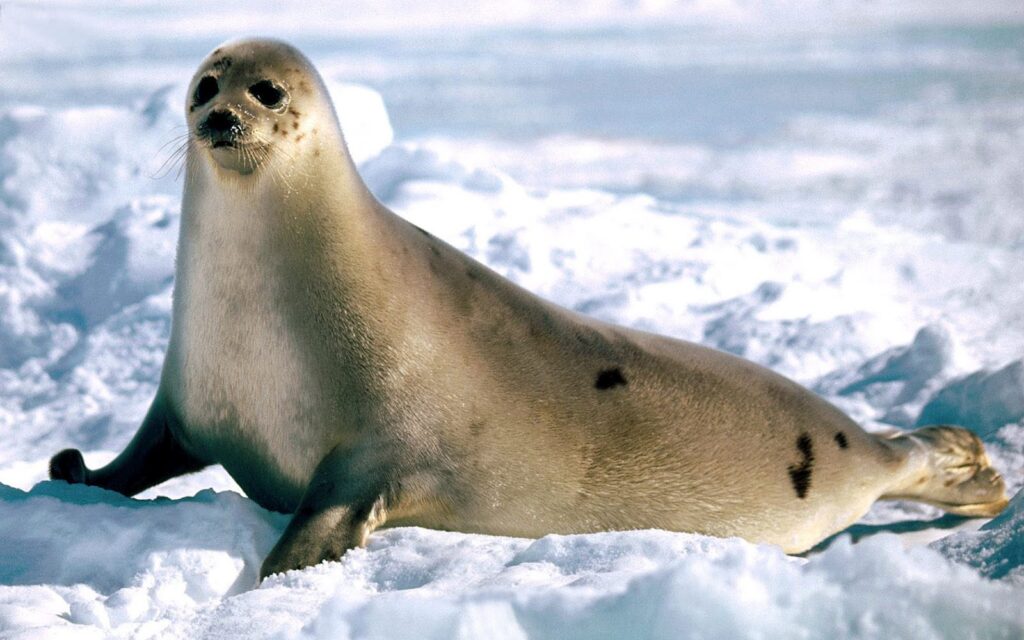
Tasmania’s Tasman council mayor has a plain assessment of Neil the elephant seal. “He’s probably not the fastest mover,” Rod Macdonald said, “but if he runs into a car or decides to put his nose up on the bonnet, it’s not going to be too good.”
Neil is five years old and weighs about 1,000 kilos. Bollards, traffic cones, fences and LandCruisers stand little chance against him. He has bypassed barricades, crushed fences, lain on roads and bashed into at least one parked car, and he has again taken up residence in towns across southern Tasmania.
Macdonald’s council covers the area where Neil was born in 2020. The seal is “certainly been a bit of a celebrity”, he said. Senator Jacqui Lambie called him “the only bloke in Tasmania who can stop traffic, ignore everyone, and still be loved for it”.
What the experts say
Dr Jane Younger, a seal expert at the University of Tasmania, calls it “normal seal behaviours”. Elephant seals return several times a year to the area where they were born, to moult, breed or socialise. Still, most of them live thousands of kilometres south on the Macquarie and Heard islands. Younger suspects Neil’s mother was a young, inexperienced seal that wandered to Tasmania by mistake. “He’s come back every year since he’s been born, but he’s bigger now,” she said. “He’s broken fences, he’s harassing people’s cars, that’s just a function of his size.”
He will get bigger. Adult males are routinely more than 2 tonnes, Younger said, and larger ones reach about three-and-a-half.
Dr Clive McMahon, a marine ecologist who has worked with elephant seals for three decades, says Neil is on one of several yearly haul outs and should stay about six weeks. Normally, young males would spar with him. Without them, he practises on bollards. McMahon thinks the seal is probably lonely.
Looking after the neighbours
McMahon argued that Tasmanians should welcome the visits. “If we love seeing Neil, why not look after Neil’s environment and ensure that his environment is safe,” he said.
The wider species has had a hard time. The International Union for the Conservation of Nature recently upgraded the southern elephant seal to “vulnerable”, after bird flu tore through four of five major populations. In some colonies more than 90% of pups died, including 13,000 on Heard Island alone.
Wildlife officials want people to stay 20 metres away from Neil, even when he is asleep, and 50 metres if they have dogs.
Sources
- A 1,000kg mammal is wreaking havoc in Tasmania – and Neil the seal is loved for it
- Neil the Elephant Seal: Why Tasmania's 1,000kg giant is crushing cars, blocking roads and winning hearts- Moneycontrol.com