Noah Kraft and his co-founders bet in 2013 that computing would migrate onto the body, and specifically into the ear. Their company, Doppler Labs, was dead by the end of 2017. The idea it chased has now resurfaced in Kansas.
Doppler Labs and the Funding Wall
Doppler Labs, based in San Francisco, was founded by Kraft, Fritz Lanman and Dan Wiggins, who was fired in 2015. It built in-ear computing hardware, from earplugs to wireless smart earbuds. The founding thesis arrived before voice assistants or true wireless audio were common: computing would move into the ear, and voice would become the main way people talk to machines. Apple dropping the headphone jack, the launch of AirPods and the spread of Alexa made that look prescient. The smart earbud category Doppler helped create was expected to reach $40 billion by 2020.
Money followed. In July 2015 the company raised $17 million in Series B funding, taking its total past $50 million. The round was led by The Chernin Group, Wildcat Capital Management and Acequia Capital, with Henry Kravis, David Geffen, Blake Krikorian, Dan Gilbert, David Bonderman and Barry Sternlicht among the individual backers.
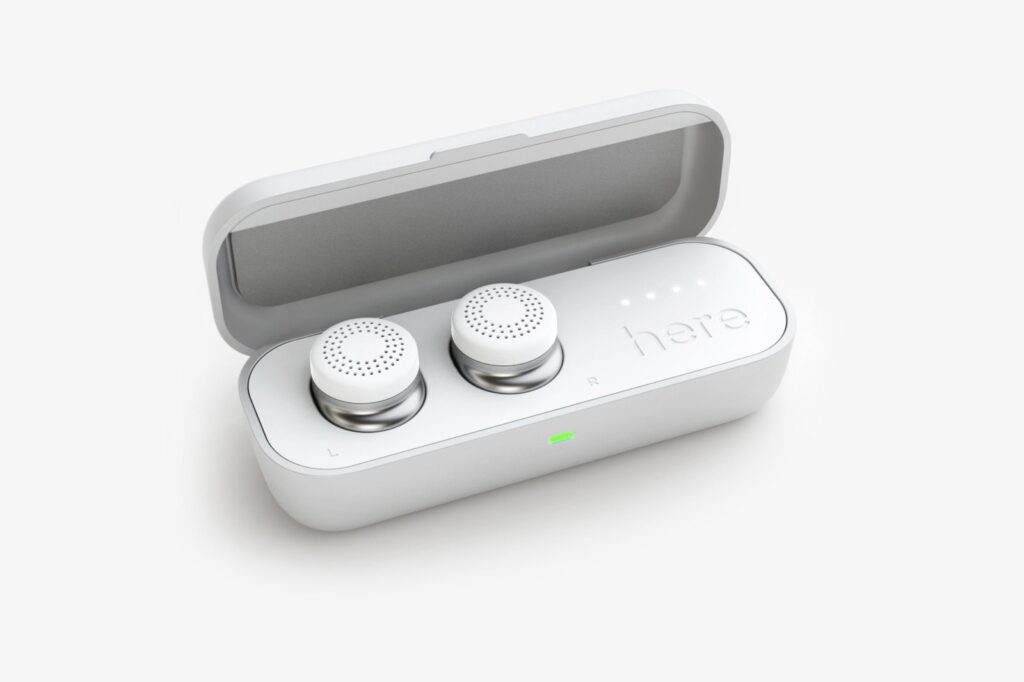
The first product was DUBS Acoustic Filters, earplugs built around a proprietary 17-piece physical filter that cut sound pressure at different frequencies without wrecking fidelity. Here Active Listening followed at Coachella in July 2016. In 2017 came the flagship, Here One: wireless earbuds that could filter ambient sound, stream music, amplify speech and take phone calls. It was billed as the world’s first in-ear computer. That March, Doppler sued Bose over the Here Buds trademark, and the company also backed the Over-the-Counter Hearing Aid Act of 2017.
It did not last the year. On November 1, 2017, Doppler announced it was winding down, blaming trouble raising a Series C. Wired wrote that the company had tried partnerships, investment and acquisition talks with Microsoft, Apple, Google, Amazon and Facebook, without success. The doors closed on December 1, with Here Two still due in 2018. Dolby later bought most of the remaining IP, under Kraft’s direction, and Wiggins acquired the Doppler Labs trademark on May 14, 2024.
EAR Micro and the Embedded Computer
EAR Micro, based in Lenexa, Kansas, is trying a smaller, denser version of the same idea. It develops what it calls in-ear computers, combining high-performance audio, embedded computing and advanced sensing, working with partner brands. Some 85 percent of the parts are made in the United States.
Founder Bear Clark makes bold claims for the hardware. His device, he says, carries ten times the compute of an AirPod at half the size, and runs twice as long on average. On a tour of the development lab he told founders and investors that reshoring the supply chain is the advantage, because “the folks in China don’t know how to do this.” They have no idea, he said, and “can’t even be close.” Clark also says the technology has drawn interest from Google and Meta.
The business model is less glamorous than the hardware. Per Clark, 85 percent of the company’s revenue comes from licensing its patents and technology, and the team builds only about 200 custom units a year. In his words, they go into the ears of “the most interesting folks on the planet Earth.”
His view of the category is that ear computers today sit where phones did in 2007. The hardware exists. What is missing is software. Unlike glasses or goggles, he argued, an ear computer leaves both hands and both eyes free, and he expects it to take over from watches and phones for tasks that do not need a screen. Voice, head movement and even nonverbal sounds would be the controls.
Why Kansas
At an early-stage investing panel hosted by Social Balances on a Monday, Clark credited state programs, GrowKS and the Kansas Angel Investor Tax Credit among them, with helping “turbocharge” the company and its backers. The credit lets angel investors claim up to 50 percent back. Based on his own research, Clark ranks it among the two strongest such programs in the country, and he says it makes Kansas more competitive for early-stage money than Silicon Valley, Austin or Boston.
EAR Micro has used the credit for three years. It has raised more than $2 million of a $4 million growth round, drip-fed in what Clark calls a rolling raise, since a company of its size does not burn cash in big lumps. Pratistha Khadka of the Kansas Department of Commerce told the panel that 32 of 52 applications to the angel credit were approved in 2025. This year 38 of 80 have been approved so far, with six still under review.
Sources
- Doppler Labs
- Wearables founder offers a bear hug to KS innovation incentives; here’s why he hopes fellow startups are listening
- How to Connect Earbuds to Laptop: Easy Steps
Photo: Doppler Labs (CC BY-SA 4.0)