
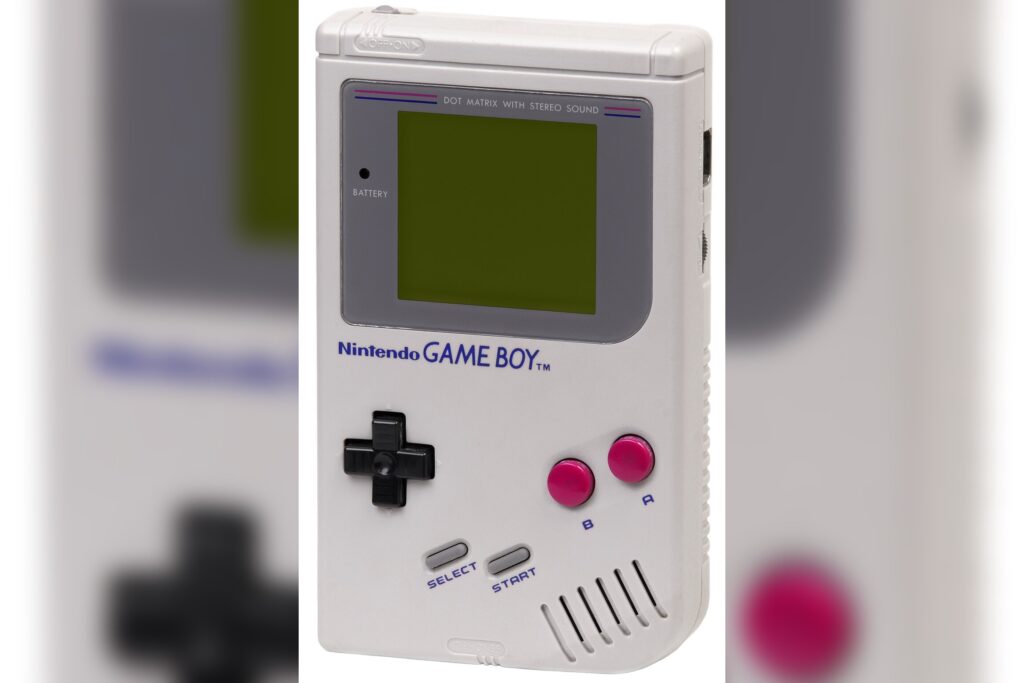
TOKYO, October 3 — The story begins with a simple gray brick that changed how the world played. On this date in 2026, reflections on the Nintendo Game Boy’s enduring legacy continue to surface in gaming circles, tech retrospectives, and collector communities worldwide. What unfolded over nearly four decades since its launch is a tale of quiet revolution.
Designed by Gunpei Yokoi and his team at Nintendo Research & Development 1, the original Game Boy debuted in Japan on April 21, 1989, and arrived in North America on July 31, 1989. It featured an 8-bit Sharp LR35902 processor, a monochrome LCD screen with 160×144 pixel resolution, and four-channel stereo sound — all powered by four AA batteries delivering up to 15 hours of gameplay.
At its heart, the Game Boy’s success was tied to accessibility. Launching at $89.99 — equivalent to about $215 today — it offered durability, long battery life, and an affordable entry point. Bundled with Tetris in most regions, the puzzle game became a cultural touchstone, driving sales and helping the device reach over 118 million units sold worldwide by 2003.
For those involved in its evolution, the journey continued well beyond the original model. The Game Boy line evolved through the Game Boy Pocket in 1996, the Game Boy Color in 1998, and the Game Boy Advance in 2001.
Each iteration maintained backward compatibility, reinforcing Nintendo’s dominance in handheld gaming while preserving a vast library of playable titles. Its influence echoes in modern design. The Nintendo Switch, which blends portable and home console functionality, draws from the Game Boy’s principles of battery efficiency, robust software ecosystems, and broad appeal.
These same ideals helped shape early mobile gaming, emphasizing simplicity and sustainability in user experience. Today, the Game Boy remains a benchmark in consumer electronics. Its induction into the World Video Game Hall of Fame in 2015 cemented its status as an industry milestone.
Retro gaming communities keep its spirit alive through emulation preservation efforts, while original units and cartridges — especially rare variants like the Japan-only Game Boy Light (1998) and limited editions — continue to command premium prices in collector markets. What follows is ongoing appreciation.
As handheld technology advances, the Game Boy’s legacy endures not as a relic, but as a reference point for how thoughtful design can democratize play across generations and geographies.




