
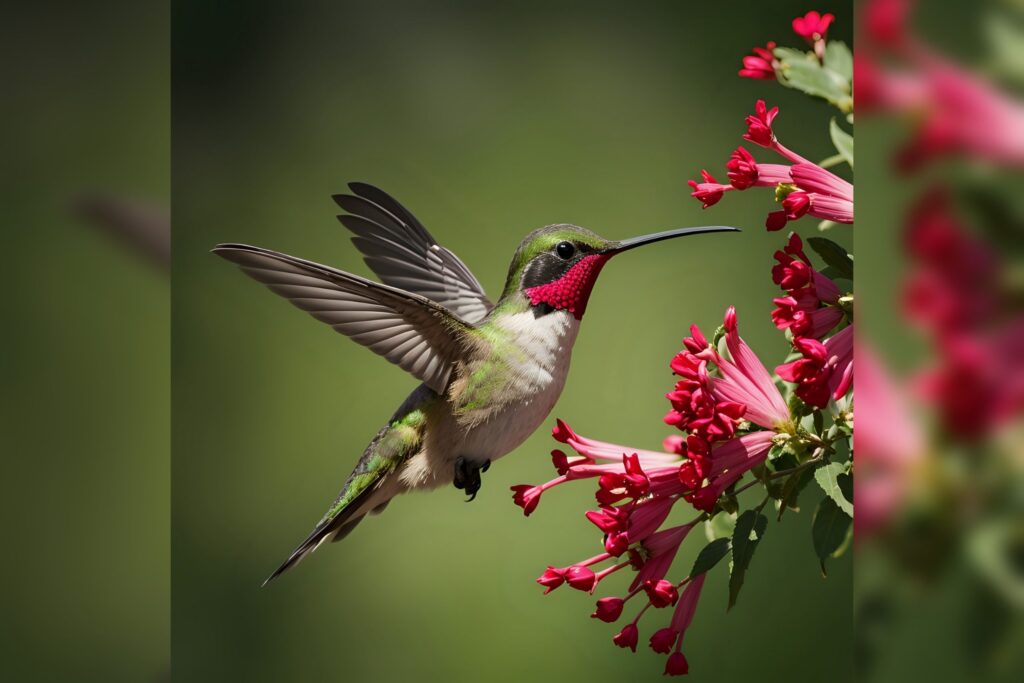
Just over three inches long, the rufous hummingbird flies roughly 3,900 miles each way. That is the distance Audubon gives for the most northern populations, which nest in Alaska and spend the winter in Mexico. In body lengths it works out to over 78 million, which makes the trip one of the longest of any bird in proportion to size.
The Arctic Tern does cover far more ground in absolute terms: over 11,000 miles, by Audubon’s count. Measured against its 13-inch frame, though, that comes to only 51 million body lengths. The Tucson Bird Alliance uses nearly the same arithmetic and counts 78,470,000 body lengths for the rufous for a round trip of 4,000 miles linking Mexico and Alaska, against 51,430,000 for the tern’s 11,000 mile journey.
A loop, not a line
The route is circular. According to the Tucson group, the birds follow the Pacific coast northward in spring, grazing on wildflowers, then come back down through the interior mountains to reach summer blooms at altitude. In southeast Arizona they pass through every spring and late summer, and can be found there through September.
No hummingbird nests farther north; the breeding range runs from the Pacific Northwest up into Alaska. No rufous stays behind. Every one of them winters on the southern Mexican west coast. That makes it a handy study subject for researchers, because a rufous seen along the migration corridor cannot be mistaken for a local breeder. There are none.
Males are rusty orange with a bright gorget. They are also, the Tucson Bird Alliance notes, some of the feistiest hummingbirds on the continent, regularly driving off species twice their size despite the long flight.
What banders see
In Alaska, Todd Eskelin, a biologist with the U.S. Fish and Wildlife Service, bands rufous hummingbirds near Portage, at the Alaska Wildlife Conservation Center. He told KTUU in 2022: “They are the longest distance migrant of any bird that we know of if you measure by body length.” He added that arctic terns are known to fly 20,000 miles on migration, but are far longer birds, so measured proportionally the rufous beats every other North American bird.
The trip is costly. Scientists told the station that only about 60% of the birds survive it, one reason they study the species. Only three people in Alaska, Eskelin among them, hold the federal credential for banding hummingbirds. He bands, weighs and measures each bird in minutes, notes its sex and lets it go. What the work shows, he said, is “how many are coming back to that area, surviving the rigors of migration and coming back.”
The rufous population as a whole has declined, yet Eskelin said hummingbirds in Alaska are generally on the rise, and Anna’s hummingbirds have turned up around Homer and elsewhere on the coast. Warming in the Lower 48, he said, is likely to bring more hummingbirds north.
Sources
- Where Do Hummingbirds Go in the Winter? (Audubon)
- Rufous Hummingbird (Tucson Bird Alliance)
- It's hummingbird season in Alaska (KTUU / Alaska's News Source)




