CUPERTINO, October 21, 2026 — Apple has begun moving up delivery estimates for early iPhone Duo pre-orders, shifting arrival windows forward by weeks and in some cases months. The adjustments offer unexpected relief to buyers who faced waits stretching into 2027 when pre-orders opened last week.
Pre-Order Surge and the Initial Backlog
When pre-orders for the iPhone Duo went live on October 16, demand overwhelmed initial supply within minutes. According to MacRumors forum members cited by The Shortcut, delivery estimates slipped to January 25, 2027, within the first half-hour of availability. The device, Apple’s first foldable smartphone, had been announced on September 9 at Apple Park alongside the iPhone 18 Pro lineup. Its release is scheduled for October 23 across roughly 70 countries and regions.
The backlog reflected a production ramp that has been anything but smooth. Apple placed orders for 10 million units in early July, but mass production started slowly, with yield rates hovering around 60 percent by late August. Reports indicated Foxconn was assembling only a few hundred units per day at that stage, prompting suppliers to ask Apple whether to prioritize volume or yield. The 2026 production target was subsequently revised to between 6 and 8 million units.
Delivery Dates Shift Forward
Over the past few days, Apple’s online order tracker has begun revising those pessimistic estimates. In the United States, YouTuber Matt Gonzalez saw his Star White 512GB model move from a December window to a November 20 through November 30 estimate. Other US customers reported shifts from early December to mid-November. The most dramatic change appeared in Japan, where one buyer’s December 3-10 window moved to October 24, the day after the official launch.
This pattern aligns with Apple’s historical tendency to under-promise on pre-order timelines. The Shortcut noted the company has a track record of moving dates up as supply chains stabilize. For early adopters who ordered in the first wave, the revisions compress a wait that once looked like three months into a matter of weeks.
Development History and Technical Reality
The iPhone Duo represents the culmination of a development arc stretching back more than a decade. Apple filed its first foldable display patents in 2011, with a gesture-controlled flexible display patent awarded in January 2015. Book-style and clamshell patents followed in 2016, and by 2017 the company was reportedly working with LG Display on foldable panels.
The project gained urgency in 2020 when then-CEO Tim Cook concluded Apple needed a foldable after observing the category’s growth in Asia, particularly around Samsung and Huawei devices. Analyst Ross Young forecast a second-half 2026 debut as early as December 2024. The device cycled through rumored names — iPhone Fold, iPhone Ultra — before references to “iPhone Duo” appeared in iOS 27 beta code in July 2026. Motherboard photos and hands-on impressions surfaced in August.
The hardware centers on a 7.8-inch inner display and a 5.4-inch outer panel, the latter delivering 90 percent of the iPhone 18 Pro’s screen area in a closed form factor. Apple describes the hinge as precision-engineered for a smooth, satisfying feel. Under the hood, the A20 Pro chip powers a dual-battery architecture designed for all-day life, while iOS 27 has been reworked to adapt to the folded and unfolded states.
What Accelerated Shipments Mean for Early Adopters
The moving delivery dates create a ripple effect for buyers coordinating trade-ins, carrier promotions, and accessory purchases. Apple’s trade-in program offers instant credit of $175 to $885 for eligible iPhone 13 models and newer, applied against monthly payments through Apple Upgrade, Apple Card Monthly Installments, or carrier deals. Carrier partners — AT&T, T-Mobile, and Verizon — are offering up to $1,200 in credit for trade-ins of iPhone 14 Pro Max or higher when activated through Apple.
Apple Upgrade, provided by Klarna, offers 12- and 24-month lease terms starting at $57.99 per month for a 24-month iPhone Duo lease before trade-in credit. At lease end, customers can upgrade, purchase the device outright, or return it. With delivery windows tightening, buyers who locked in those financing terms based on a December or January arrival now need to prepare for payment schedules that may start weeks earlier than planned.
Navigating the New Timeline
Apple’s October 15 newsroom release highlighted the ability to arrange home delivery or in-store pickup at a preferred time. The company also noted that Apple Specialists are available online and in-store to assist with payment options, AppleCare+ or AppleCare One coverage, and data transfer. For early adopters, the practical task list has compressed: cases, screen protectors, and charging accessories that might have been ordered for a December arrival now need to be in hand by late October or November.
The shift also tests Apple’s logistics network across the 70-plus launch markets. If the Japanese example — a move to the day-after-launch delivery — proves replicable elsewhere, the initial “sold out through January” narrative could unwind quickly. As ever, the detail that matters is not the estimate on the order page today, but whether the hinge survives the first thousand folds in the real world.
The Role of Carrier Promotions in the Pre-Order Surge
Carrier promotions played a significant role in driving the initial pre-order surge for the iPhone Duo. AT&T, T-Mobile, and Verizon offered up to $1,200 in credit for trade-ins of iPhone 14 Pro Max or higher models when activated through Apple. This incentive, combined with Apple’s own trade-in program offering instant credit of $175 to $885 for eligible iPhone 13 models and newer, created a compelling financial proposition for early adopters. The ability to apply these credits toward monthly payments through Apple Upgrade, Apple Card Monthly Installments, or carrier deals further sweetened the deal, making the iPhone Duo more accessible despite its premium pricing.
The aggressive carrier promotions also highlight the competitive landscape in the smartphone market, where carriers are increasingly partnering with manufacturers to attract customers. By offering substantial trade-in credits, carriers not only encourage upgrades but also ensure customer loyalty in a highly saturated market. This strategy, combined with Apple’s under-promising and over-delivering approach to delivery estimates, has contributed to the iPhone Duo’s strong pre-order performance and the subsequent adjustments to delivery timelines.
Sources
- iPhone Duo pre‑orders: Apple is now moving up delivery dates for early buyers
- IPhone Duo
- Open up to new possibilities with iPhone Duo
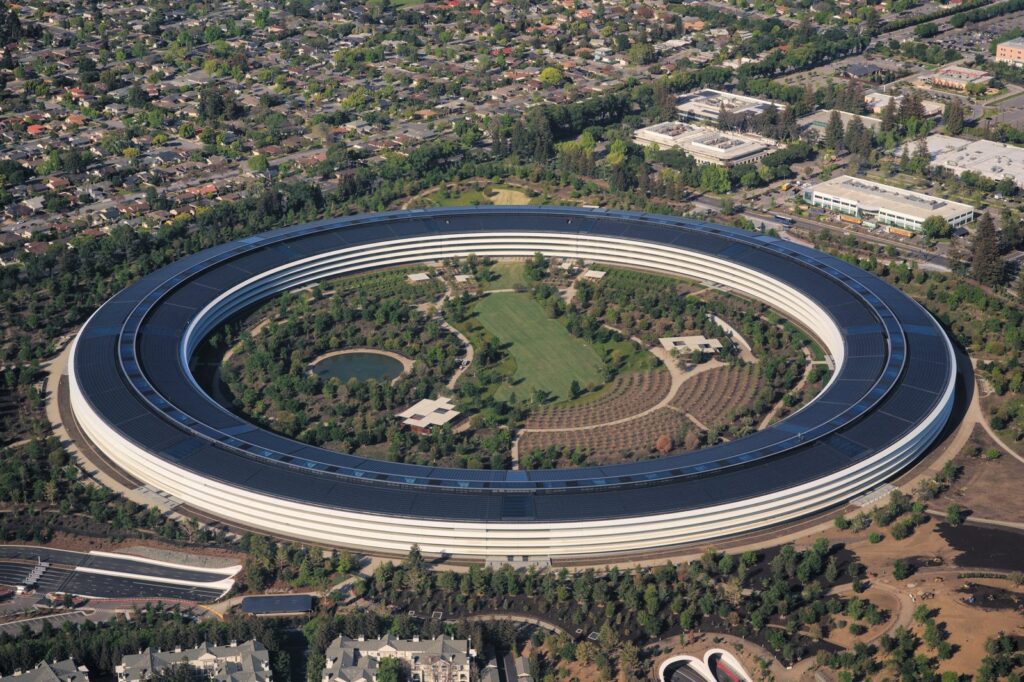
Photo: Daniel L. Lu (user:dllu) (CC BY-SA 4.0)