OpenAI’s countersuit against Elon Musk has pulled back the curtain on the commercial tensions that now sit under the hood of every major AI partnership, and Apple Intelligence is no exception. The litigation complicates the technical reality of integrating third-party models into an operating system that markets privacy as a feature, not a bug.
Legal Exposure in Seoul
The most immediate headache for Apple is not in a California courtroom but in Seoul. The Korea Fair Trade Commission has submitted an examiner’s report recommending corrective orders and a financial penalty after investigating complaints from the Seoul YMCA filed in March 2025. Investigators concluded that Apple marketed nine Apple Intelligence features as arriving in US English by the end of 2024 and in Korean by early April 2025, despite internal knowledge that delivery would be difficult. In practice, the flagship Siri personal context feature did not launch in US English until September 2026, with Korean support following in October 2026. The KFTC estimates Apple’s revenue associated with the alleged violation at roughly 3.35 trillion won, approximately $2.5 billion. Local reports suggest the fine could land between $21 million and $48 million. Apple has six weeks to file a written defence before the Commission issues a final determination.
The Storage Tax
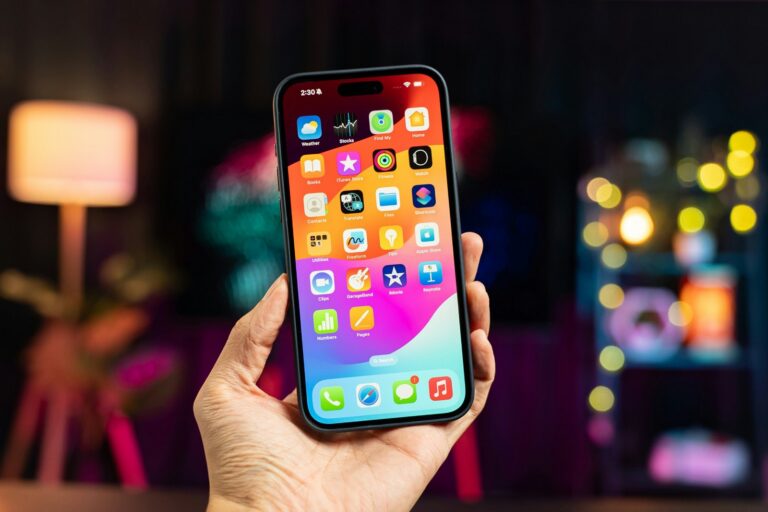
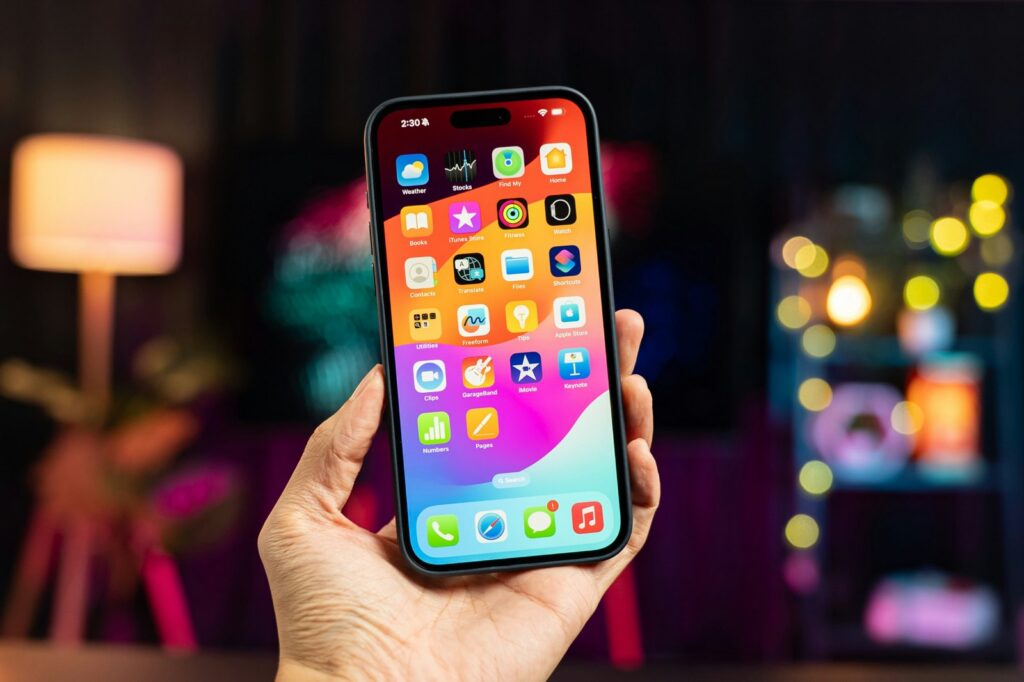
While the legal process grinds on, the technical reality for users is measured in gigabytes. On iOS 27, Apple Intelligence requires up to 14GB of storage on the iPhone Duo, iPhone Air, and iPhone 17 Pro or later, and 8GB on other compatible models. For a 128GB device, that represents more than 12 percent of total capacity consumed by on-device models the user may not want. Some users report actual usage ranging between 9GB and 16GB. As ever, the detail that matters is the reclaiming of that space: disabling the features no longer frees the storage, because iOS retains the models in case the user changes their mind. The current workaround requires setting the Siri language to a different region than the device language — English (Canada) versus English (US), for instance — and restarting the phone, a procedure Apple could break in a future update.
No Master Switch
The opt-out experience has regressed. In iOS 26, a single toggle disabled Apple Intelligence. In iOS 27, Apple folded AI settings into a new Siri menu centred on Siri AI and dropped the master switch. Disabling Siri AI now kills the voice assistant entirely, along with the dedicated Siri app, Visual Intelligence, and personal request recognition on HomePods sharing the same iCloud account. Writing Tools and Image Playground are blocked via Screen Time. Notification summaries have their own toggle. Per-app Siri learning controls live inside each app’s Siri & Search settings. The controls are scattered, and the friction is deliberate.
The China Workaround
Apple’s solution for the Chinese market illustrates the architectural compromise forced by regulatory geography. Because OpenAI’s models cannot operate in China, Apple partnered with Alibaba to integrate the Qwen model family into Apple Intelligence for users there. The Cyberspace Administration registered Apple Intelligence for use on iPhones in China on July 15, 2026. Alibaba confirmed Qwen models would be integrated into Apple Intelligence experiences covering text and image understanding and generation, though no source specifies the Qwen version, parameter count, or data routing architecture. Baidu also appears in reporting as a participant in the China build. For Apple, it is a locally approved answer to a market where its global AI partners cannot operate; for Alibaba, it is distribution it could not buy through the App Store.
What Comes Next
The OpenAI lawsuit adds a layer of uncertainty to this multi-model strategy. If the relationship between Apple and OpenAI sours, or if discovery exposes data flows that contradict Apple’s on-device privacy claims, the regulatory scrutiny currently focused on Seoul could broaden. Apple has cooperated with the KFTC investigation but disagrees with the examiner’s conclusions, pointing to the rollout of Korean language support for Apple Intelligence and Siri AI as evidence of its commitment. The Commission’s final determination, expected after Apple’s six-week defence window closes, will set the precedent for how aggressively regulators police the gap between AI marketing timelines and the technical reality of shipping them.
Sources
- How to Turn Off Apple Intelligence Feature by Feature in iOS 27 – CNET
- How much storage does Apple Intelligence use on your iPhone? – Engadget
- South Korea proceeds with case over allegedly misleading Apple Intelligence ads – 9to5Mac
- Alibaba Qwen Apple Intelligence: 4 Platforms [2026]
- Apple Sued in South Korea Over Misleading iPhone 16 Apple Intelligence Ads
- New Model Apple iPad Tablets Are on Sale for Black Friday, Including the iPad Mini With A20 Pro That Came Out Earlier This Month
Photo: Amanz / Unsplash (Unsplash License)