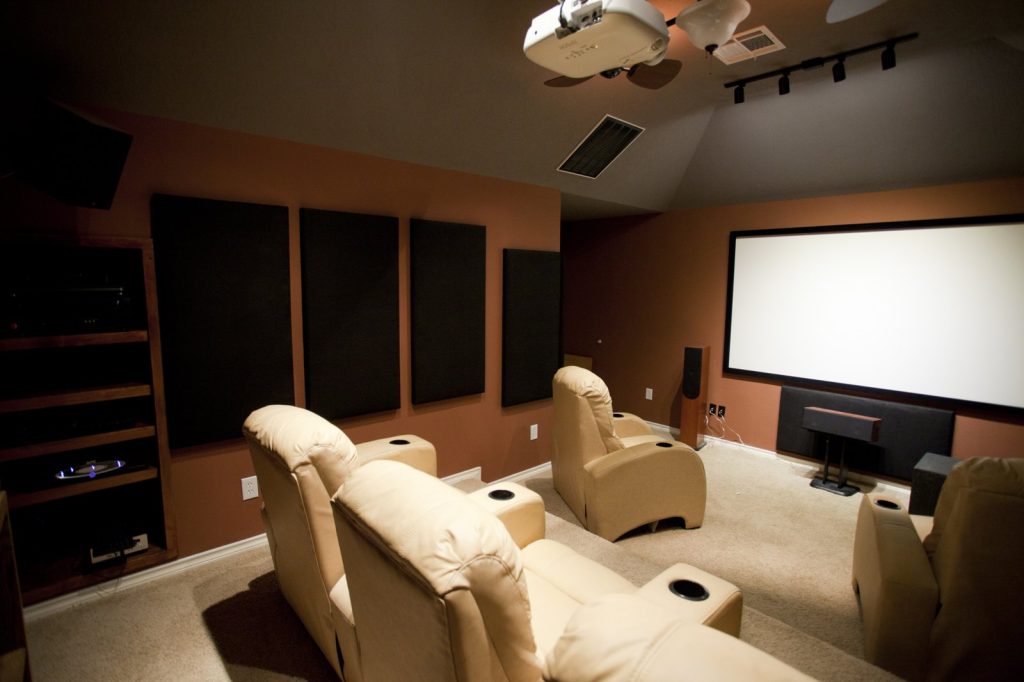
James Bruce stopped watching TV about a decade ago. He prefers a cinema-sized picture to a sharp one, but he always suspected he was giving something up. Then he set up the AWOL Vision Aetherion Max, and for the first time, he wrote in BGR on Sept. 15, 2026, a projector made him forget he was not looking at an enormous TV.
The laser ultra-short-throw model is priced at $3,799 on Amazon. Bruce has tested plenty of laser projectors and even more DLP units, and he says the jump from last-generation laser machines to this one feels as big as the jump from DLP to laser. He credits four things: color, black levels, brightness and the sharpness AWOL calls PixelLock, which holds right out to the corners.
The black-level problem
Black is where projectors usually lose to TVs. There is no local dimming as on an OLED panel, so a dark scene often looks dark grey at best. The Aetherion Max tries to fix that with Enhanced Black Level processing, which scans each scene and trims laser output when it can, so bright objects still pop while shadows sink. The projector has a stated native contrast of 6,000:1, and the processing lifts the perceived figure to 60,000:1.
There is a catch. Bruce found it helps only in the Filmmaker or Cinematic modes. Pick HDR Dynamic or Dolby Vision Bright and the two settings largely cancel each other out. He tested the effect with a scene from “Star Trek Into Darkness” against AWOL’s older LTV-3500, which has similar brightness, and the older machine looked mushier.
Noel Campion of the Irish Examiner, reviewing the same projector in a darkened room, reached a similar view. Blacks will not match an OLED’s, he wrote, but the algorithms make shadows feel deep and textured. He also called watching UltraHD Blu-ray on it more immersive than on his 65-inch LG OLED.
Hardware, setup and screens
The Aetherion Max measures 22 x 12.7 x 5.5 inches, the smallest laser projector Bruce has tested. He describes the angular body and front LED bar as Cybertruck-like and expects them to divide opinion. A lens cover slides open when the unit powers on. Campion puts the weight at 8.75kg and likes the gunmetal finish.
A 120-inch image needs the rear of the projector nine inches from the wall. A 200-inch picture means about 22 inches. There is no optical shift, so you move the box itself to line up with the screen. Bruce used AWOL’s own 120-inch ambient-light-rejecting screen, listed at $1899.99. He also tried a wall painted with natural lime paint, which let him reach 150 inches and avoided the hotspots of ordinary wall paint, a paint that needs weeks to fully carbonize.
Campion says the light engine uses three lasers instead of a color wheel, which keeps the rainbow effect down. He lists 3,300 ISO lumens, two 25W speakers and three HDMI 2.1 ports. He adds that the built-in Google TV system is one of the quickest he has used.
Gaming takes some work
Bruce found variable refresh rate on a PC anything but plug-and-play. It works only at 1080p, not 4K, and AV receivers can strip the signal. With automatic low latency mode, input lag falls as low as 1ms where supported. His wife, who normally asks him to move games back to a monitor, tried it and was blown away by the difference.
Bruce’s one reason to hesitate is that AWOL has just announced the LuxVision, a 4K 120Hz projector with optical shift, at a $6,000 launch price. For everyone else, he says, the verdict is that it is “one of the best UST laser projectors you can buy for under $5,000.”
Sources
- AWOL Vision Aetherion Max Review: An Outstanding Centerpiece For Your Home Theater – BGR
- AWOL Aetherion Max review: Is this triple laser UST projector a true TV killer? – Irish Examiner