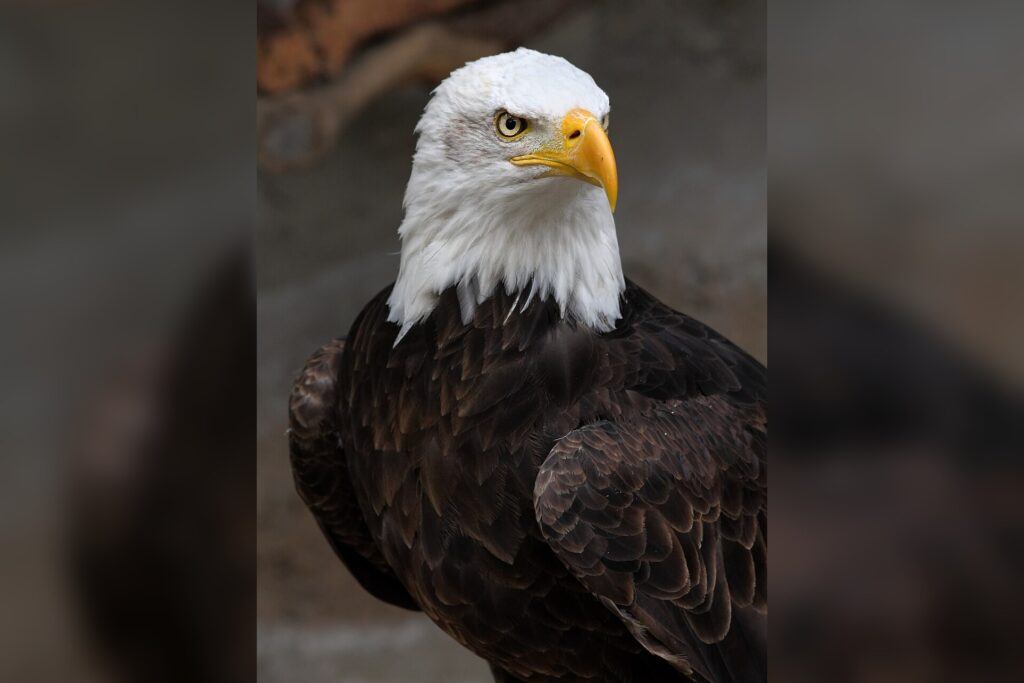
A deer carcass by the roadside can stop a migrating bald eagle for a day. That small detail, noted by the American Eagle Foundation, says most of what there is to know about where these birds go when the cold arrives. They go where dinner is.
For families who watch eagles from a car window or a riverbank, the idea that the bird simply flies south for winter feels natural. It is also too tidy. Some biologists, the foundation says, do not call bald eagles migrants at all. They prefer “seasonal movements,” because a nesting eagle usually travels only as far as it must to find food.
Frozen water sends them moving
Eagles that hold a nesting territory often stay close to it all year. In some regions they leave with the seasons anyway. Either way, the deciding factor is food, not the thermometer.
Northern adults tend to head out in the fall as the lakes and rivers around them ice over, then return to breeding ground when weather and food allow. Here is the surprise: they do not always aim south. The foundation says they fan out in whatever direction leads to open water, since open water means fish.
Audubon puts numbers on the pattern. Adults that breed south of 40°N often stay put for good. Those that breed north of it, in the northern interior, migrate south between August and January, and the young ones tend to go earlier and farther than the adults. In spring the northern birds come back from January to March, again as food becomes available. In the Pacific Northwest and Alaska, many movements line up with salmon runs.
How far, how fast
The distances are real. Telemetry studies have clocked migrating eagles at up to 225 miles in a day, though the average came to about 98 miles. The foundation puts the usual range at 75 to 125 miles, weather permitting. Riding rising columns of air called thermals, the birds can average 30 mph. Even outside migration, an eagle hunting in winter can cover 50 to 100 miles in a single day.
Audubon adds that eagles migrate alone and by day, and only sometimes join others. They do not form flocks. Their routes follow coasts, big rivers such as the Mississippi, or mountain chains such as the Appalachians.
Before a long flight they do not fast to travel light. They eat normally, and may eat extra if the food is there. The foundation says it has watched migrating birds stock up along the way.
So an empty winter sky over a favorite nesting tree usually does not mean the eagles are gone for good. In winter, Audubon notes, the birds turn up even in very dry western valleys, wherever there is open water.