
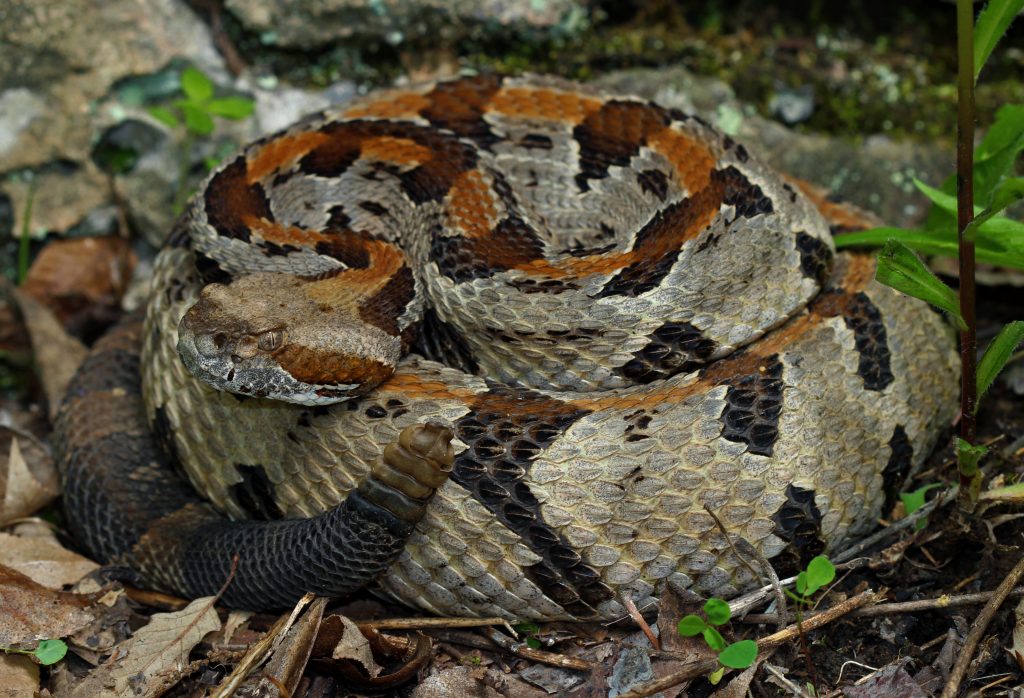
Bermuda has no native snakes. That single fact is why a phone call on June 26 triggered what the Ministry of Public Works and Environment calls a multi-agency response. A credible report came in.
Someone saw what might be a rattlesnake on Gibbs Hill Road. Officers from the Department of Environment and Natural Resources and the Bermuda Aquarium, Museum and Zoo are now working a search-and-contain operation for an animal that has no business being on the island.
Rattlesnakes are not supposed to be here. They do not migrate here. They do not drift here on currents.
If one is present, it arrived by human means — accidentally in cargo, or deliberately. The ministry has not speculated on how it might have gotten loose.
That investigation is separate from the immediate task: find it, contain it, before anyone gets hurt. No injuries have been reported. That is the good news.
The bad news is that a venomous snake, if it is indeed a rattlesnake, can hide effectively. It can coil under a board. It can slip inside a pipe.
It can lie still in dense vegetation and never be seen until someone steps too close. The ministry’s advice is blunt: do not approach, do not capture, do not harm the animal.
Call 911. If you can keep eyes on it from a safe distance, do that. But do not make sudden movements.
For residents near Gibbs Hill Road, the practical effect is a warning to stay out of thick brush and to avoid reaching into any space where visibility is limited. That means under decks, inside storage sheds, behind stacked lumber.
The advice is simple: do not stick your hand anywhere you cannot see first. Pet owners are told to keep animals indoors or under close supervision until further notice. First responders and healthcare services in the area have been notified as a precaution.
The ministry is treating the report with what it calls “the utmost seriousness.” That language matters. A credible report of a rattlesnake in Bermuda is not a routine nuisance call. It is a potential ecological and public safety problem.
Rattlesnakes are predators. They eat small mammals, birds, lizards.
If one establishes itself, it could prey on native species that have no evolutionary experience with a sit-and-wait ambush predator. The island’s ecosystem is fragile. Introduced species have caused damage before.
This is not that — yet. But the concern is real enough that multiple agencies are coordinating for an appropriate and timely response.
The Bermuda Aquarium, Museum and Zoo has expertise in handling exotic animals. The Department of Environment and Natural Resources has authority over wildlife and protected species. Together, they are searching.
The public is asked to be vigilant. That means looking before stepping. That means keeping pets close.
That means not trying to be a hero with a shovel. The snake, if it exists, is not aggressive by nature.
It will strike only if threatened or provoked. Leave it alone. Let the professionals handle it.
For now, the search continues. The ministry has not said how long it will take.
It has not said whether the sighting was confirmed or remains unconfirmed. What it has said is clear: stay away, call 911, and do not take risks. That is the only sensible response when an animal that does not belong here might be hiding somewhere nearby.
{“@context”: “https://schema.org”, “@type”: “NewsArticle”, “headline”: “Bermuda Agencies Search for Possible Rattlesnake on Gibbs Hill Road”, “description”: “Bermuda has no native snakes. That single fact is why a phone call on June 26 triggered what the Ministry of Public Works and Environment…”, “datePublished”: “2026-06-26T17:19:00+00:00T09:30:00+00:00”, “author”: {“@type”: “Person”, “name”: “Erika Johnson”}, “publisher”: {“@type”: “Organization”, “name”: “InfoPulse Today”, “url”: “https://newsfeed.infopulsetoday.com/”}}




