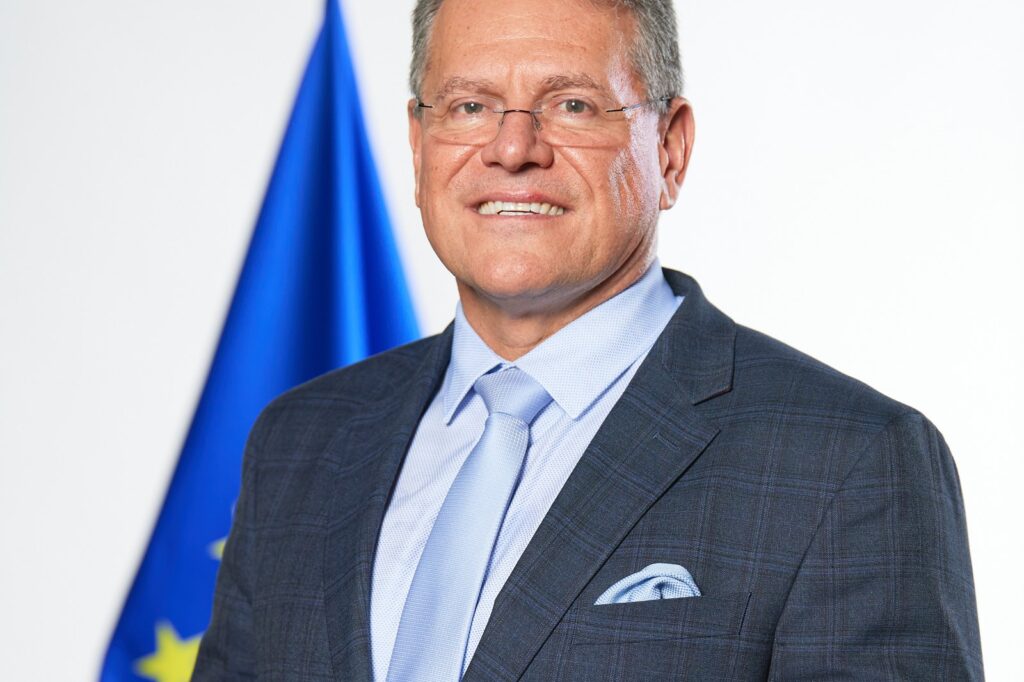
Every day, China sells the European Union roughly €1 billion ($1.12 billion) more in goods and services than it buys. For European manufacturers watching cheaper rivals take their customers, that figure is not an abstraction, and it was the backdrop when EU Trade Commissioner Maroš Šefčovič landed in Beijing on Thursday.
He planned two days of talks, running until Friday, aimed at what he called an “unsustainable” deficit. EU figures put it at its highest since 2022. After a meeting with Chinese Commerce Minister Wang Wentao, Šefčovič wrote on X that the bloc was “working hard to rebalance EU-China trade” and that it was “crucial” for the talks to deliver tangible outcomes.
Three months of talks, one deadline
The meeting followed three months of discussions between EU and Chinese officials, and Šefčovič has said he wants to see results by October. Many in Europe blame the gap on unfair practices in Beijing, among them state subsidies and price dumping that undercut European competitors.
China took a conciliatory line in public. Foreign Ministry spokesperson Mao Ning said resolving differences “through equal dialogue and consultation” served both sides, and she hoped Europe would work toward solutions with China.
Earlier on Thursday, Šefčovič sat down with representatives of EU companies operating in China. The message, he said, was clear: better access to the Chinese market, together with stronger economic security.
Hybrid cars and a harder line at home
Beyond the headline deficit, the agenda includes a dispute over hybrid cars. Diplomats say China has turned down calls to limit its fast-growing exports of them to the bloc voluntarily. Brussels could respond with temporary quotas and tariffs on Chinese cars, which Beijing firmly opposes.
Pressure for tougher action is building in Europe. Earlier in the week, German Chancellor Friedrich Merz and French President Emmanuel Macron called for stronger measures against unfair trade practices, saying they weaken European companies and deepen the bloc’s dependencies. Last month, Commission President Ursula von der Leyen warned that the imbalance “leads to deindustrialization in the industrial heartlands of Europe.”
EU leaders are due to discuss relations with China at a summit in Brussels next week.