
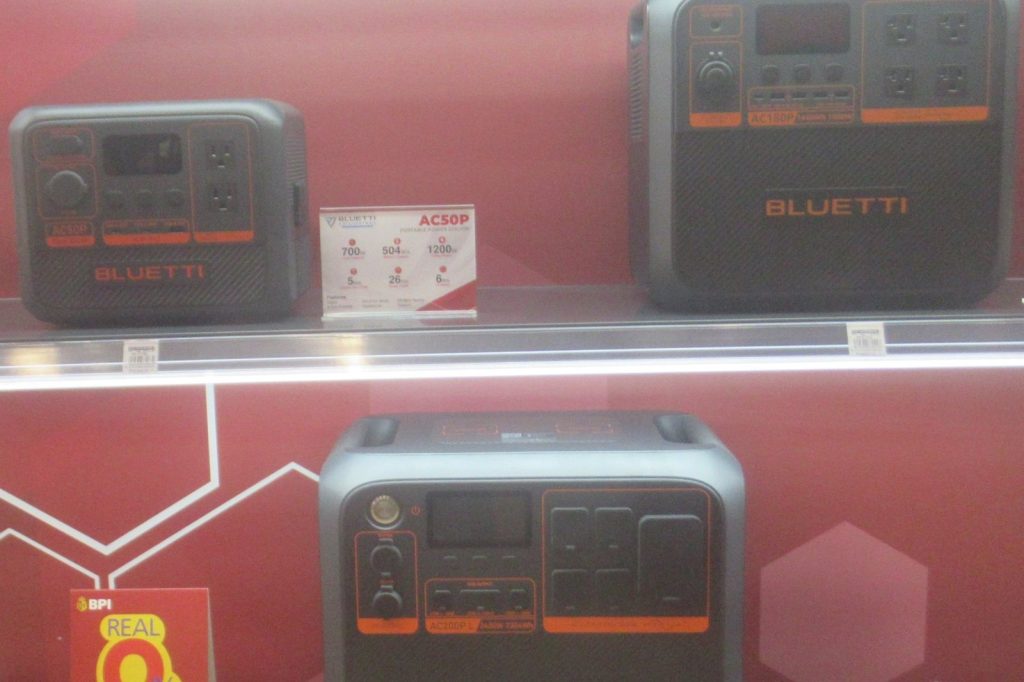
A miter saw, a blender and a space heater, all running at once. Then a jump to 4,000 watts as the saw started up. That was the stress test Popular Mechanics gave the Bluetti Elite 200 V2, and the power station took it without complaint.
The magazine tested eight portable power stations, scoring each for output ceiling, capacity, recharge speed and how easy it is to move. The team of editors David Dritsas and Bradley Ford, with contributor Tony Carrick, loaded every unit to its rated limit, measured the energy it delivered under a steady load with a usage monitor, timed recharges from a wall socket and then tried to lift or wheel each one around. Anyone who lives with regular power cuts will know why those four numbers matter.
Best overall: Bluetti Elite 200 V2
The Bluetti puts out 2,600 watts at most, with 3,900-watt startup power, and a battery rated at 2,073.6-watt-hours. In testing it delivered 92 percent of that figure; the typical unit manages 85 percent. Recharging from empty hit 80 percent after 81 minutes, and the tank was full at 107 minutes. Its LiFePO4 chemistry is rated for 6,000 cycles before capacity slips under 80 percent.
It has four AC outlets, a car outlet and a DC output, and takes solar input of up to 1,000 watts. At 53 lb it is not light, but the testers called its power-to-weight ratio great. StorageReview, which reviewed the same model, said it is built around a 2,600W pure sine wave inverter that peaks at 3,900W, and adds that Bluetti backs it with a 5-year warranty. The Scotsman liked the price in particular: £999 on sale, otherwise £1,399.
The rest of the field
For value, the testers picked the Jackery Explorer 1000 V2. It carries 70 watt-hours more than the original plus a 1,500-watt output, 50 percent more than before. It kept a 25-cubic-foot refrigerator running for a stretch of 18 hours and 22 minutes, better than other 1000-watt models they have tried, and lasted 1 hour and 57 minutes under a 475-watt load. It charges from the wall in under two hours.
Small households have a candidate in the EcoFlow River 3 Plus. It weighs 10 pounds, about as big as a wide toaster, yet it delivers 600 watts. Gallium Nitride technology in its inverter keeps it compact. The testers used it to back up a home office for a full workday, and handled a two-slot toaster, something small units usually cannot do. A refrigerator ran for 3 hours and 45 minutes. Its capacity is only 286 watt-hours, though expansion batteries raise that to 858 watt-hours.
At the other end sits the EcoFlow Delta Pro 3, the pick for whole-home backup. Fitted with one expansion battery, the test unit offered 8,096 watt-hours and was the most efficient they tested, delivering 97 percent of its listed capacity. A space heater pulling 1,300 watts ran on it for nearly 6 hours. It has a maximum output of 4,000 watts, rising to 6,000 watts with X-Boost. The catch is the weight. At more than 113 pounds, it was hard to move over the threshold between garage and kitchen, and with the expansion pack the kit nears 200 pounds.
Sources
- The 8 Best Portable Power Stations of 2026, Tested by Popular Mechanics
- Portable Power Meets Lab-Grade Reliability: BLUETTI Elite 200 V2 Review – StorageReview
- Bluetti Elite 200 V2 review – The Scotsman




