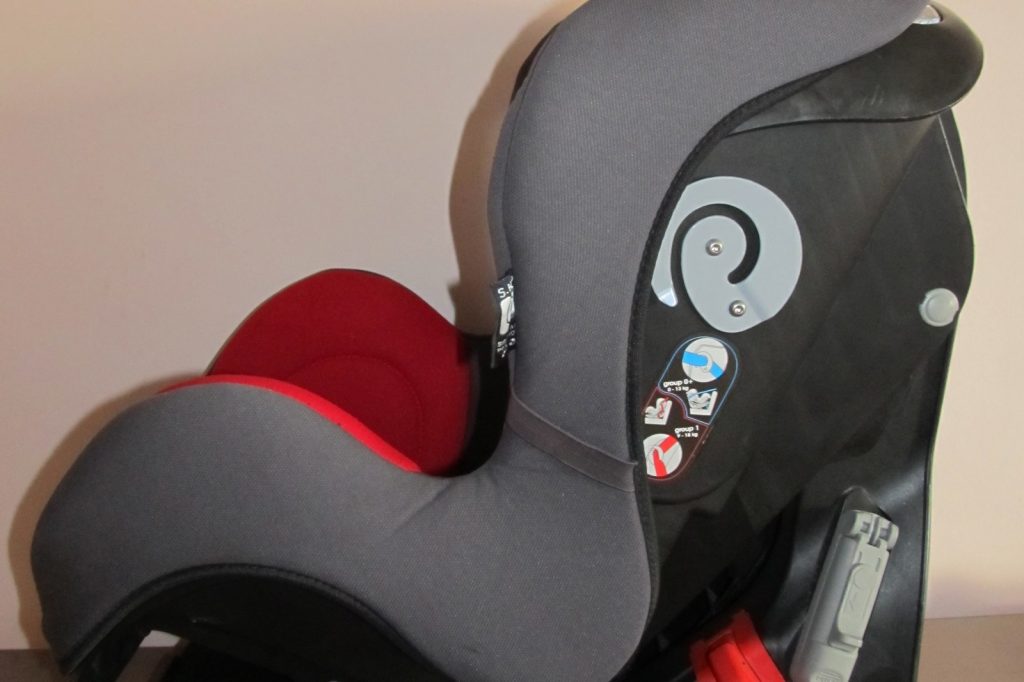
The listing called it a “4 in 1 Baby car seat and Stroller.” It carried photos of a popular brand called Doona, including one of Ivanka Trump with her own Doona. The price was $299, which made it $200 cheaper than the real thing.
CNN bought the copy and sent it to the University of Michigan Transportation Research Institute for a 30 mph crash test. The seat broke into pieces. In the video, the toddler dummy twists as the seat fractures and slides forward, and shards of plastic fly through the air. A genuine Doona put through the same test met federal requirements and stayed in one piece around the dummy.
Dr. Alisa Baer, a pediatrician and nationally certified child passenger safety instructor, reviewed the results. In a real crash, she said, a failure like that could put a child in “grave danger” and cause injuries to the chest, neck or head, including traumatic brain injury.
Red flags on the seat
Baer also looked the seat over before the test. The word “always” was misspelled “aiways” on the anti-rebound bar. It carried European warning labels instead of American ones. A safety label had been sewn straight through the webbing of the harness straps, which she thinks could weaken them.
US car seats must be certified to NHTSA standards, and this one had no US certification labels. The Amazon listing claimed European certification, but the seat arrived without the required European label, and the registration number in the manual was copied from Doona’s.
The seller was Strolex, shipping from China. Its listing vanished shortly after CNN placed the order, though the seller account stayed on the site with nothing for sale. Reached by phone in China, a Strolex representative said “my products are safe.” He would not give his name or answer other questions.
Amazon’s response
CNN sent the crash results to Amazon. A week later Amazon emailed customers who had bought the product. The message warned of a safety issue, said the item “may not be a genuine product,” urged people to stop using it immediately and offered a full refund.
An Amazon spokesperson told CNN that sellers are responsible for meeting the company’s “high bar” for product quality. “We require all products offered in our store to comply with applicable laws and regulations and have developed industry-leading tools to prevent unsafe or non-compliant products from being listed in our stores,” the spokesperson said in an emailed statement.
A marketplace problem
Seven business owners told CNN that counterfeiters were targeting their products through Amazon’s marketplace for third-party vendors. They said Amazon leaves it to them to report suspicious listings. Several described a game of “whack-a-mole,” with new listings appearing almost as soon as flagged ones came down.
Amiad Raviv, Doona’s commercial manager, said the company has found more than 40 Amazon listings this year with fake or infringing versions of its products. Doona flags them and Amazon removes them, but Raviv said listings often stay up for several days. “A lot of people on the Amazon platform think that because it’s on Amazon, it is a genuine product. And that’s actually really not the case,” he said.
The fake Doonas were sold through Amazon’s website or app, but not by Amazon itself. Amazon’s 2018 annual report put the share of sales from third-party sellers at 58 percent. Many ship straight to customers, and what they sell may never be checked by Amazon staff or pass through an Amazon warehouse.
Under current US case law, Amazon is not liable when third-party products on its site infringe intellectual property or have safety defects. The liability falls on the seller. A physical store such as Target or Walmart can be sued over a defective product even though it did not make it.
Other products suffered too. The makers of the Love to Dream baby swaddle, priced at $34.99, learned of a fake when a customer called to say a zipper pull had broken off, a potential choking hazard. Their company, Regal Lager, estimates the copies cost it about $250,000, roughly 3 percent of its Amazon sales. Charlotte Wenham, whose company makes the Baby Shusher sound machine, put her losses at more than $100,000 and said she feared battery fluid from a fake could leak onto a sleeping baby. “Amazon does not provide any real support. It was entirely up to us to manage it,” she said.