
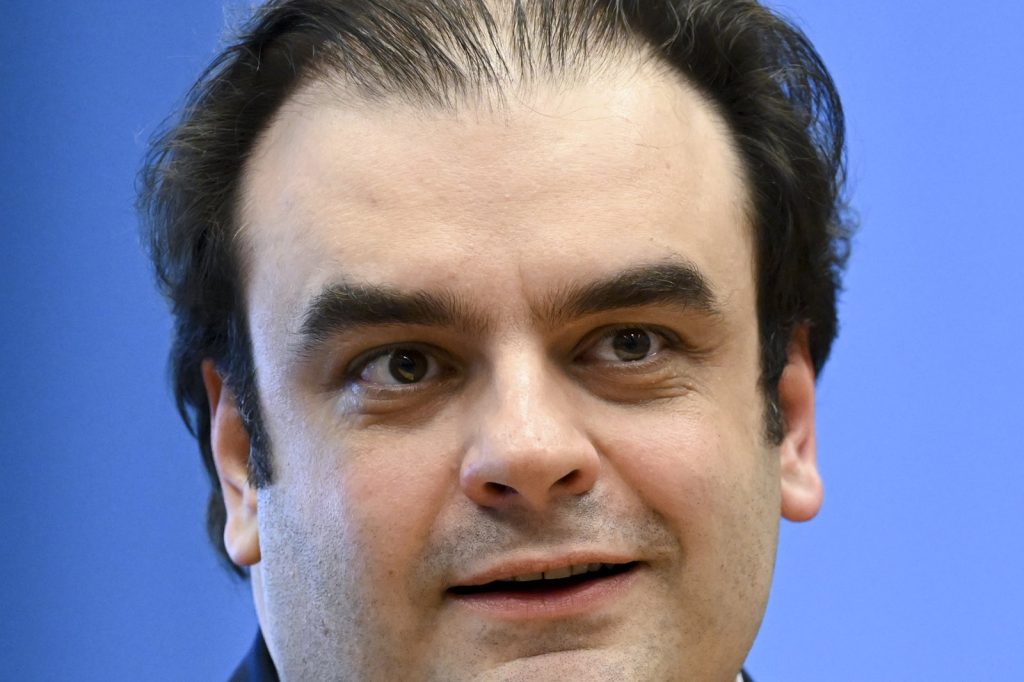
Athens, September 30, 2026 The EU’s 2028-2034 budget could see a significant boost as Greece proposes the creation of a European Spectrum Union to leverage funds from the sale of 6G mobile spectrum. The proposal, crafted by Kyriakos Pierrakakis, chairman of the euro zone finance ministers, was presented to EU ministers on Tuesday, September 22, 2026. According to the plan, the potential initial financial scale could be around €12–15 billion (approximately US$13–16 billion).
This funding could help finance the EU’s 2028–2034 budget, which is proposed at €2 trillion (approximately US$2.2 trillion). Negotiations on the budget are described as tough due to new challenges such as increased defence spending and efforts to enhance competitiveness, while maintaining spending on traditional policies like farming and cohesion.
Other financing options under discussion include a share of revenue from EU carbon emissions permits, a tax on goods imported from countries with weaker climate policies, a tax on non-collected e-waste, a share of tobacco excise duty, an annual lump-sum contribution from large firms operating in the EU, and levies on extreme wealth, digital services, online gambling, and crypto asset capital gains.
Ireland is expected to assess which of these options, or a combination, could gain unanimous support from all 27 EU countries by the next EU summit scheduled for October 2026. The proposal does not include any potential future contribution from selected 5G spectrum rights. 6G, the proposed sixth generation of mobile communications technology, aims to achieve higher data rates, lower latency, and greater energy efficiency than 5G.
Planned advances include new air interface designs, improved coding and modulation, and reconfigurable intelligent surfaces. Research also explores integration with satellite, Wi-Fi, and non-terrestrial networks, as well as distributed edge computing for AR, VR, and AI applications. Machine learning and AI are expected to help manage networks, allocate spectrum, and optimize services.
The largest number of 6G patents have been filed in China. Research since the early 2020s has been conceptualizing 6G and new features that may be included, such as AI designing and optimizing 6G architectures, protocols, and operations. The frequency bands for 6G are undetermined, with mid bands being considered by WRC for 6G/IMT-2030.
One of the challenges in supporting the required high transmission speeds will be the limitation of energy consumption and associated thermal protection in the electronic circuits. As of now, development is coordinated by the International Telecommunication Union (ITU-R) within its IMT-2030 framework, defined in Recommendation ITU-R M.2160-0.
ITU-R oversees related work by 3GPP and ETSI, together with the Next Generation Mobile Networks (NGMN) Alliance. 3GPP is finalizing Release 18 for 5G Advanced and preparing Release 19 for early 6G research. Companies including Ericsson, Nokia, Huawei, Samsung, LG, Apple, NTT Docomo, Airtel, and Jio have announced 6G programs. Governments in North America, Europe, and Asia are funding national 6G initiatives through the EU, the United States, Russia, China, India, Japan, and South Korea.
Commercial deployment of 6G is anticipated in the early 2030s, following standardization milestones later in the 2020s. Stay tuned for more updates on this developing story.




