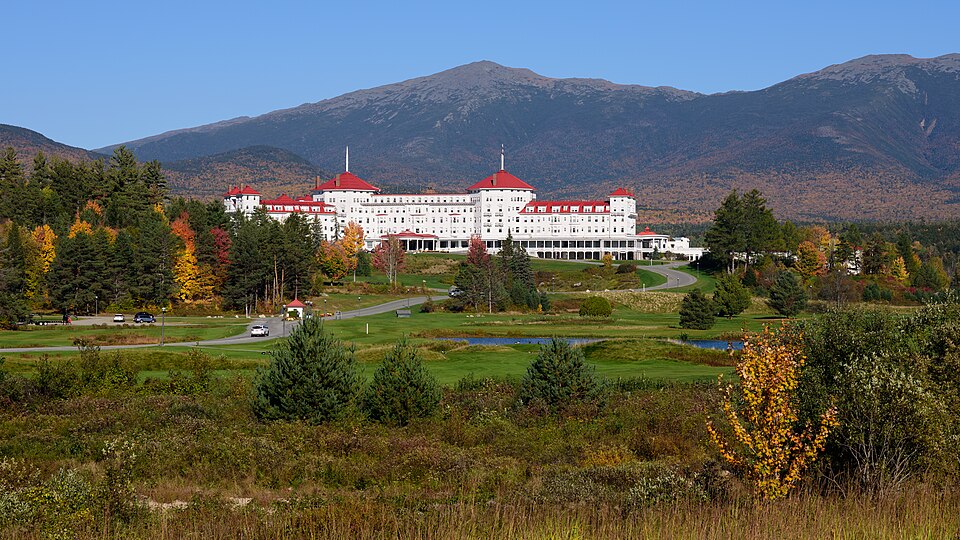
The numbers behind Bretton Woods are stark: 730 delegates, 44 Allied nations, 22 days in July 1944. When it ended, the world had a new monetary order, and two institutions that still shape global finance.
The United Nations Monetary and Financial Conference met from July 1 to 22 at the Mount Washington Hotel in Bretton Woods, New Hampshire. Planning started well before. John Maynard Keynes of the British Treasury and Harry Dexter White of the US Treasury had each begun sketching postwar ideas early in the war. A joint statement by experts on an International Monetary Fund appeared in several Allied countries on April 21, 1944. Washington issued its invitation on May 25, and a smaller preliminary meeting in Atlantic City ran from June 15 to 30.
The lesson of the 1930s
Delegates wanted to avoid a repeat of the interwar years: countries leaving the gold standard, the Great Depression, trade wars that spread the slump worldwide. Germany’s hyperinflation haunted the room too. By autumn 1923, one dollar was worth about 4 trillion marks. What they wanted was equilibrium in exchange rates, no competitive devaluations, and room for governments to pursue high employment.
What the conference produced
Three results came out of it. Articles of Agreement created the IMF, to promote stable exchange rates and financial flows. Others created the International Bank for Reconstruction and Development, later part of the World Bank Group, to speed reconstruction and fund infrastructure. A third set of recommendations covered wider economic cooperation. The IMF agreement mattered most to participants.
Its core was an adjustably pegged system in which exchange rates were tied to gold. Governments were meant to change rates only to correct a “fundamental disequilibrium”. They could revise a par value by up to 10% without objection from the IMF. Beyond that, the Fund could concur or object, and while it could not force a member to undo a change, it could deny access to its resources. Members pledged to make currencies convertible for current account transactions, though transitional provisions allowed indefinite delay and members could regulate capital flows. Convertibility for the Fund’s Western European members and their colonies did not arrive until December 1958.
The United States, which controlled two-thirds of the world’s gold, insisted the system rest on both gold and the dollar. As the biggest economy and the main prospective source of funds, it held the most influence. Keynes had pushed a different scheme, an International Clearing Union with its own currency, the “bancor”. The Americans rejected it.
How the work was done
Three commissions did the heavy lifting. White chaired the one on the IMF, Keynes the one on the IBRD, and Mexico’s finance minister Eduardo Suárez a third on other forms of cooperation. Negotiation and informal consensus ruled over formal votes. Getting the IBRD agreed pushed the closing date from July 19 to July 22. The Soviet delegation attended but later declined to ratify, calling the institutions “branches of Wall Street”. The agreements took effect in 1945, once enough countries ratified.
The conference also took up the Bank for International Settlements after Norway’s delegation presented evidence of its involvement in war crimes. A proposal to liquidate it passed Commission III without objection, but momentum faded after Roosevelt’s death in April 1945, and by 1948 the liquidation had been set aside.
The unwinding
The system rested, in Barry Eichengreen’s account, on low international capital mobility, tight financial regulation and the dominant position of the United States. Eurodollar growth began to test the controls on capital movement. On August 15, 1971, the US ended the dollar’s convertibility into gold, which effectively finished the system and left the dollar a fiat currency. Many fixed currencies, the pound sterling among them, floated soon after. The Jamaica Accords formally ratified the end in 1976.
Critics say the dollar’s central role let the United States operate with fewer constraints than others, while fixed rates limited Europe and Japan as inflation rose. They add that IMF and World Bank policy conditions strained developing countries.