
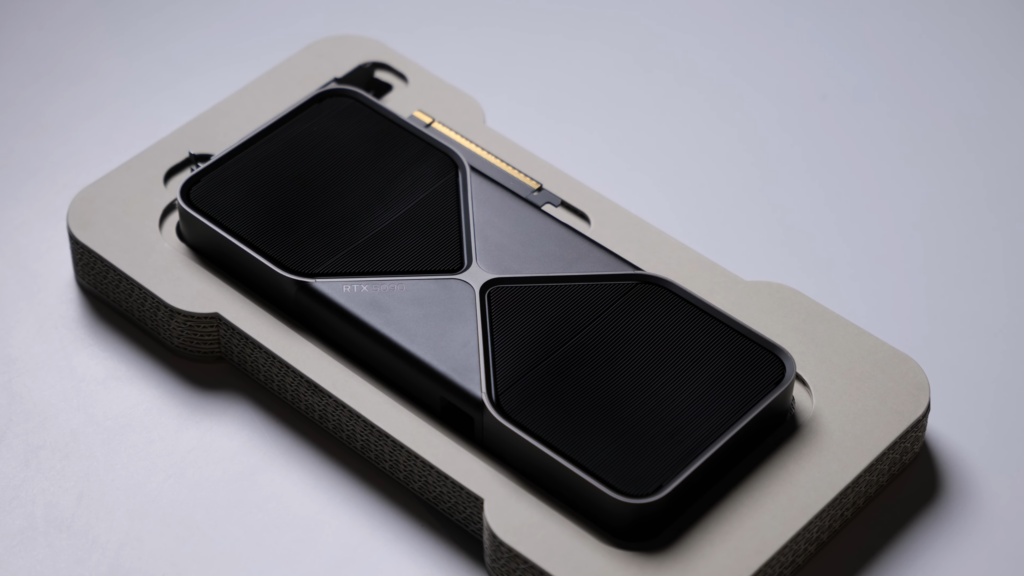
The Nvidia GeForce RTX 5090 arrived on January 30, 2025, with a suggested price of $1,999. Its predecessor, the RTX 4090, had launched in October 2022 at $1,599. That was the paper difference. In the shops, it was a different story.
TechRadar’s John Loeffler, who tested both cards, noted that the older flagship had sold for a 50% premium or more almost from the day it appeared, with partner models pushing past the $2,000 mark and staying there. The new card, he warned, would face the same upward pressure, and few units would sell at list price. On cost alone, he picked the RTX 4090 as the winner.
What the extra money buys
Performance is the other half of the argument. In TechRadar’s tests the RTX 5090 ran about 26% faster than the RTX 4090 at 4K, measured by average frame rate, and nearly 29% faster on minimum frame rates. Ray tracing at 4K widened the gap to about 34%. At 1440p the lead shrank to roughly 20%. Synthetic benchmarks put it about 21% ahead.
None of that counts DLSS 4, the frame-generating software Nvidia leaned on in its pitch, which Loeffler expected to lift the numbers further. His call: spend the money on the RTX 5090 if you are buying at this tier, because the gains and the future-proofing justify the cost. He added that a cheap RTX 4090 deserved a look if prices fell.
The Verge took a cooler view. Its review of the $1,999 card found a powerhouse that was not quite the generational leap the RTX 4090 had been over its own predecessor. Its headlines were blunter still. One asked whether Nvidia ought to have held off on the ‘launch’ of the 5090 and 5080. Another described the RTX 5080 review as “big expectations, small gains.”
Prices off the shelf
By late April 2025 the argument had moved from list prices to street prices. The Verge’s Sean Hollister wrote that the great GPU shortage had returned. He found an RTX 5080 selling at over $1,500, a full $500 above its list price. The RTX 5090 was so scarce that a buyer could not get the $2,000 card for $3,000. AMD was not spared. A Silicon Valley store offered the Radeon RX 9070 XT, a $600 card, for $850.
The lower end looked friendlier. The Verge questioned Nvidia’s claim of RTX 4090 performance from the RTX 5070 at $549, and called the 5070 Ti a cheaper RTX 4080. The $429 RTX 5060 Ti earned a “solid it depends” from Hollister, who called it a real upgrade over the 3060 Ti as long as the price stayed under $500. On May 19 the $299 RTX 5060 followed.
So the debate came down to a question every buyer faced that spring. Was the list price the real price? For the flagship cards, it was not.
Sources
- Nvidia RTX 5090 vs RTX 4090: we put Nvidia's best graphics cards head-to-head – TechRadar
- All the news about Nvidia's RTX 50-series GPUs – The Verge




