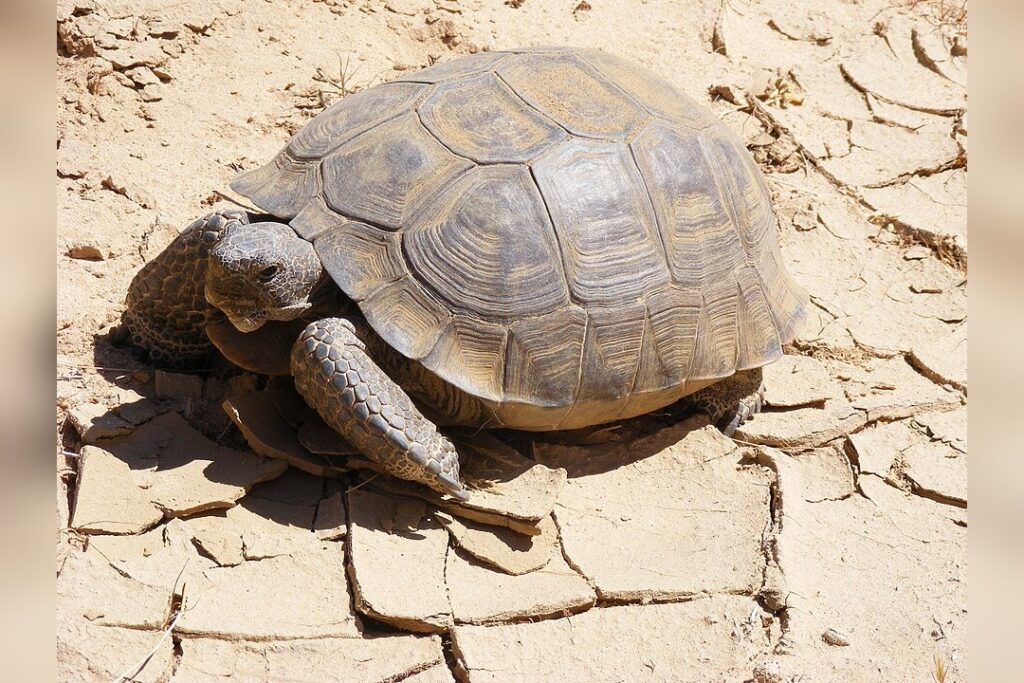
Most desert animals get noticed for what they do. The Mojave desert tortoise gets noticed for what it digs. A burrow, PBS notes in its description of a new Wild Critters USA special, can become home to dozens of other animals, and that idea sits at the center of “The Tortoise that Saved the Rabbit.”
The special, 27 minutes and 16 seconds long, is dated June 24, 2026 on PBS. Federal biologists at Fish and Wildlife helped make it, and it is pitched at kids from 3 to 11. PBS calls it a family episode about why the desert tortoise matters so much to its habitat.
A podcast with a TV home
It is the first entry in a ten-part series produced by the Orbit podcast for kids together with PBS Nature, with the National Wildlife Federation as a partner. In its June 25, 2026 announcement, the federation called the series a podcast for America 250 and put the Mojave desert tortoise first, on June 24.
The format leans on children. Child co-hosts guide each show, and scientists, biologists, conservationists and park rangers respond to questions from kids. Naturalist David Mizejewski, who advises Ranger Rick magazine on science, makes a guest appearance in the episodes. The series moves from the Mojave to the Everglades and the Great Plains, and on to rivers, forests and coasts.
What the tortoise does
The Nature Conservancy describes an animal built for waiting. Lifespans run 30 to 50 years, and some tortoises pass 80. Adults reach 9 to 15 inches in length. They keep out of the sun under shrubs and rocks, and in extreme heat and winter they hibernate in burrows they dig themselves. Your best odds of spotting one come right after seasonal rains, when temperatures sit between 79 and 93 degrees Fahrenheit.
The menu is grasses, shrubs, cacti and flowers, and succulents supply a large share of their water. Roadrunners and burrowing owls shelter in their burrows, as do Gila monsters and collared peccaries. Because so many species depend on the tortoise, the Conservancy classes it as a keystone animal.
The Endangered Species Act lists the species as threatened. Its range is limited to the Mojave Desert, which spans parts of California, Nevada, Arizona and Utah.
Sources
- The Tortoise that Saved the Rabbit | Wild Critters USA | PBS
- PBS Nature, Orbit, NWF Launch Wild Critters USA, a New Family Podcast Series for America 250
- Mojave Desert Tortoise Habitat, Threats, and Conservation Facts