
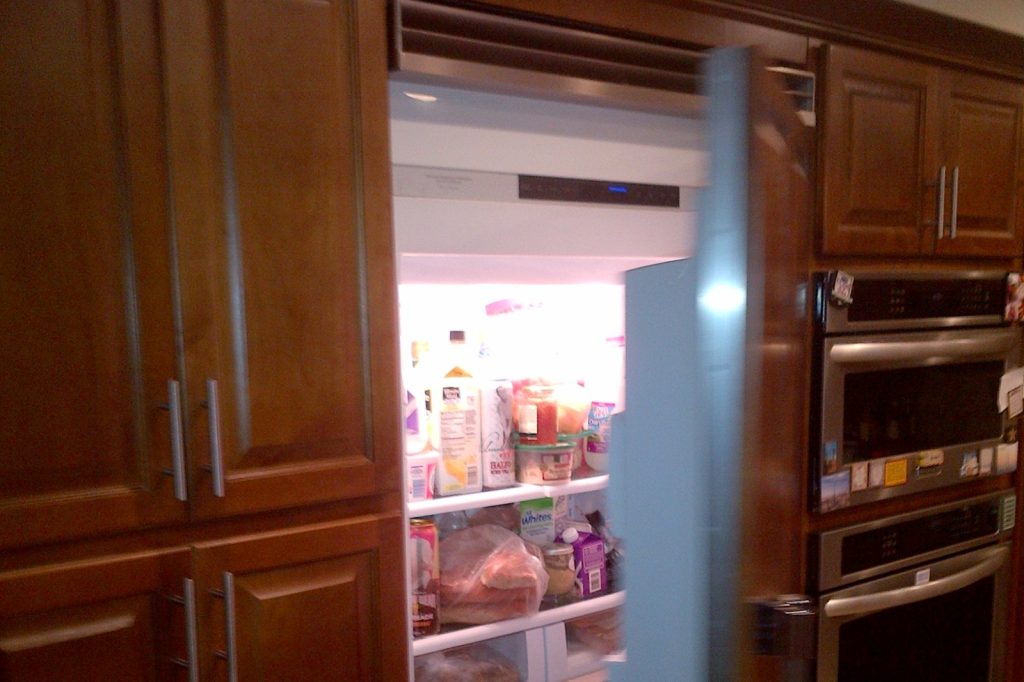
SUWON, September 24 — A firmware update that was meant to improve the performance or security of Samsung Electronics smart refrigerators instead left some of the appliances unresponsive, according to reports that surfaced on online forums and social media in mid-2025. The affected units are refrigerators equipped with Family Hub displays and Wi-Fi connectivity, the connected line Samsung introduced in 2016 that lets owners manage groceries, stream content and control other smart devices from the kitchen.
The company has not issued a formal recall or a detailed public statement as of this report, and affected users have been advised to contact customer support.
What went wrong, and where owners reported it
Owners took to platforms including Reddit and Samsung’s own community forums to describe what happened after the update landed. Some reported that their refrigerators became inoperable, that food spoiled as a result, and that they faced financial loss. In the worst cases, the source material indicates, the units required service calls or outright replacement.
The exact number of affected units is unknown. Figures show nothing on the scale of the incident has been published by Samsung, and the company has not confirmed which firmware version or which production batches were involved.
That absence of detail has itself become part of the discussion, with users on the forums comparing notes on model numbers and update timing in an effort to work out whether their own appliances were at risk. Samsung Electronics, founded in 1938 and headquartered in Suwon, South Korea, is a global leader in consumer electronics and home appliances. The company has a long history of innovation in home appliances, and the Family Hub line — its flagship push into the connected kitchen — sits at the centre of that strategy.
The supply-chain and software problem in a long-lived product
A refrigerator is not a phone. It is expected to run for a decade or more, and the software inside it has to keep working for that entire span. That is the structural tension this incident exposes.
Over-the-air updates are the mechanism that keeps connected appliances current, and they are also a single point of failure. When an update is pushed to a device that stores food and cannot simply be rebooted like a laptop, the consequences land in the kitchen rather than in a support ticket queue.
The source material notes that the incident highlights the growing reliance on internet-connected appliances and the risks associated with over-the-air updates. For Samsung, the challenge is maintaining software in products whose service life far exceeds the typical software support window. The company’s response will be closely watched as consumers increasingly expect seamless connectivity from the appliances they buy.
The event has also sparked broader discussions about product reliability and the need for robust update protocols — a conversation that now runs through the entire smart-home category, not just Samsung’s refrigerator line.
What to watch next
Samsung has not issued a formal recall or detailed public statement as of this report. Whether it does so — and whether it publishes the scope of the affected units, the firmware version responsible, or any remediation programme — is the next concrete marker to watch. This story is developing, and further details may emerge.
For now, it serves as a cautionary tale about the intersection of technology and daily life, and a reminder that in the connected home, a routine software push can reach further than the engineers who wrote it intended.




