
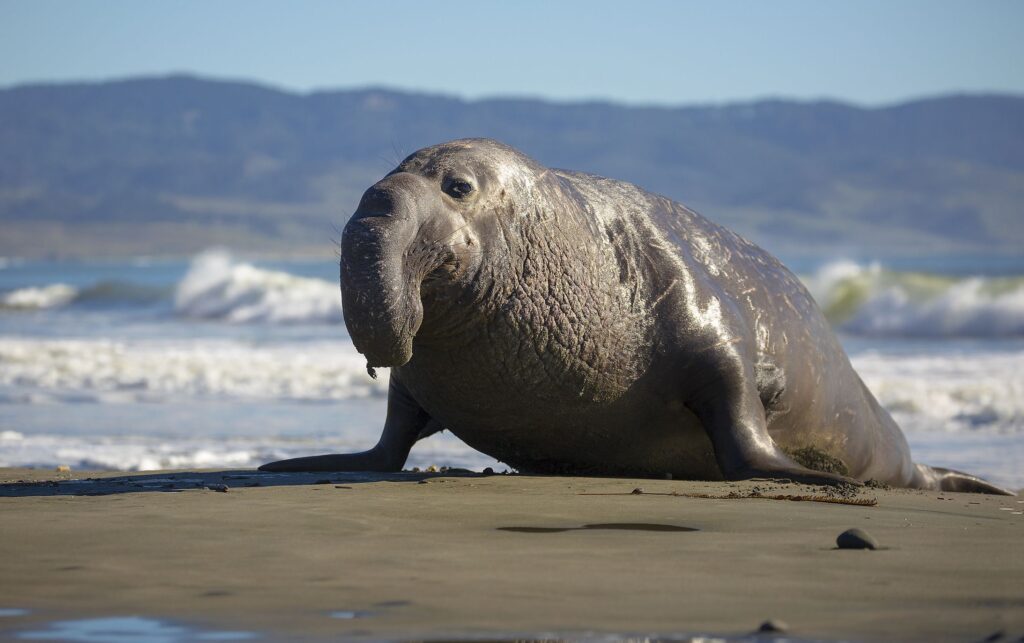
HOBART, Australia — Neil the elephant seal does not care about your traffic signs. He does not care about your fences, your bollards, or your warnings. He weighs a metric ton.
He has spent months feeding at sea. And when he came ashore in June for the 12th time, he treated a slice of southern Tasmania like a demolition derby.
He bent traffic bollards. He flattened a sign that warned people about seals. He tried to vault a fence and lost.
He picks fights with parked cars. Sometimes he just lies in the middle of the road and brings towns to a standstill.
This is not a villain origin story. This is a 5-year-old male elephant seal doing exactly what juvenile male elephant seals do. Sophia Volzke, a local elephant seal scientist, explained it plainly.
Young males need to practice. In adulthood, they rear up and crash their chests together to compete for breeding rights. Neil is rehearsing.
He is not being a jerk. He is being a seal.
The real problem is not Neil. It is his fans. Neil has 1.4 million followers on TikTok.
That is more than double the entire human population of Tasmania. Every time he surfaces, the cameras come out.
Every time he smashes something, the internet cheers. Some people online have hailed him as an anti-authoritarian hero. The officials see something else entirely.
A 1,000-kilogram animal with a bellowing roar and a taste for testing barriers is not a pet. He is a wild animal. And wild animals do not understand the difference between a curious tourist and a threat.
Officials are worried. They say Neil’s viral fame could lead to ill-advised human-seal encounters.
That is dangerous for both sides. A seal that size can crush a person without meaning to. A person who gets too close can spook the seal and trigger a defensive attack.
No one wins. Neil was born on the Australian coast.
He returns again and again. This June visit was his 12th. He hauls himself ashore after months at sea, fat and full of hormones, ready to test the world.
The world, in this case, is a beachside town in southern Tasmania. The town does not stand a chance. Local officials wince when Neil shows up.
Social media cheers. The pattern is predictable now.
Neil arrives. Neil smashes. Neil sleeps.
Neil leaves. The cycle repeats.
He is the only male elephant seal to visit Tasmania in years. That alone makes him a rarity. The TikTok following makes him a phenomenon.
But the experts are not celebrating. Volzke sees normal behavior. A growing seal needs to push boundaries.
That is what Neil does. The problem is that fame brings people closer.
And closer is exactly where they should not be. What happens next depends on the humans. Neil will keep being a seal.
He will keep coming ashore. He will keep testing fences and picking fights with cars.
The only variable is whether people give him space. If they do not, someone will get hurt. It could be a person.
It could be Neil. Either way, the warning is clear. A 1,000-kilogram wild animal with a TikTok account is still a 1,000-kilogram wild animal.
{“@context”: “https://schema.org”, “@type”: “NewsArticle”, “headline”: “Tasmania’s Neil the seal damages bollards, signs, and parked cars on shore”, “description”: “HOBART, Australia — Neil the elephant seal does not care about your traffic signs. He does not care about your fences, your bollards, or your…”, “datePublished”: “2026-07-03T06:13:22+00:00T09:30:00+00:00”, “author”: {“@type”: “Person”, “name”: “Ethan Smith”}, “publisher”: {“@type”: “Organization”, “name”: “InfoPulse Today”, “url”: “https://newsfeed.2bme.xyz/”}}




