
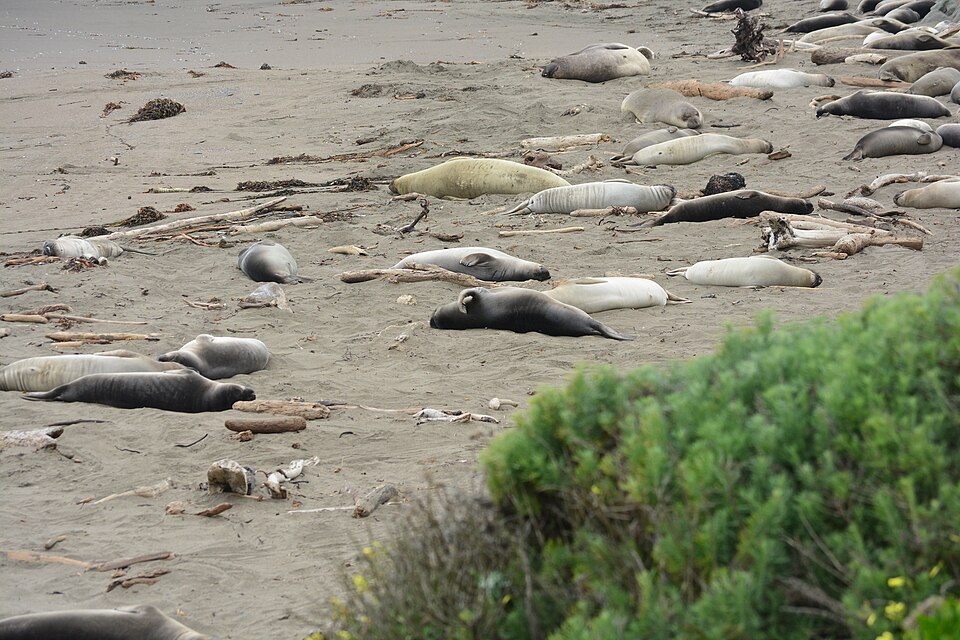
HOBART, July 3 — Neil has come home to the stretch of Australian coast where he was born, trailing fame, fans and property damage in his wake. He is also a 1,000 kg elephant seal. The bellowing five-year-old mammal hauled himself onto land in June for his twice-yearly tour of beachside towns in southern Tasmania state after months of feeding at sea.
That is posing problems now that he weighs as much as a small car and has a social media following more than double Tasmania’s human population. His rampage through local infrastructure has claimed bent traffic bollards, a sign warning the public about seals, and a fence that did not survive Neil’s attempt to vault it.
The rest of the time he lies placidly anywhere he likes, which is sometimes the middle of the road, bringing towns he visits to a standstill. Officials say their biggest concern is that Neil’s popularity could lead to ill-advised human-seal encounters that are dangerous for both sides. Neil, the only male elephant seal to visit Tasmania in years, has commanded an enthralled TikTok following of 1.4 million — in part because he acts like kind of a jerk.
During this visit to shore, his 12th, his crimes have included picking fights with parked cars and smashing through barriers erected to keep him off roads. Those antics have prompted some online to hail Neil as a kind of anti-authoritarian hero.
But experts say it is normal experimentation for a growing seal. Juvenile male elephant seals need to practise for dominance battles in which adults rear up and crash their chests together as they compete for breeding opportunities, said Sophia Volzke, an elephant seal scientist based at the University of Tasmania in Hobart. With no other juveniles to spar with, Neil appears to be testing himself against whatever he finds.
The science behind his behaviour is intriguingly straightforward. A young male elephant seal that size has few natural outlets for the instincts that will one day determine his breeding success. Cars and traffic barriers are poor substitutes for another seal, but they are what is available.
What researchers found, watching Neil across his 12 visits, is that his antics follow a pattern familiar to anyone who has studied adolescent male pinnipeds. He arrives exhausted from months at sea, rests, explores, causes chaos, and eventually returns to the water.
The property damage is incidental to the biology. For now, officials are left with the delicate task of protecting both Neil and his human admirers from each other. The seal shows no sign of moderating his behaviour, and his social media following shows no sign of losing interest.
The question is whether the infrastructure of southern Tasmania can survive another visit.




