
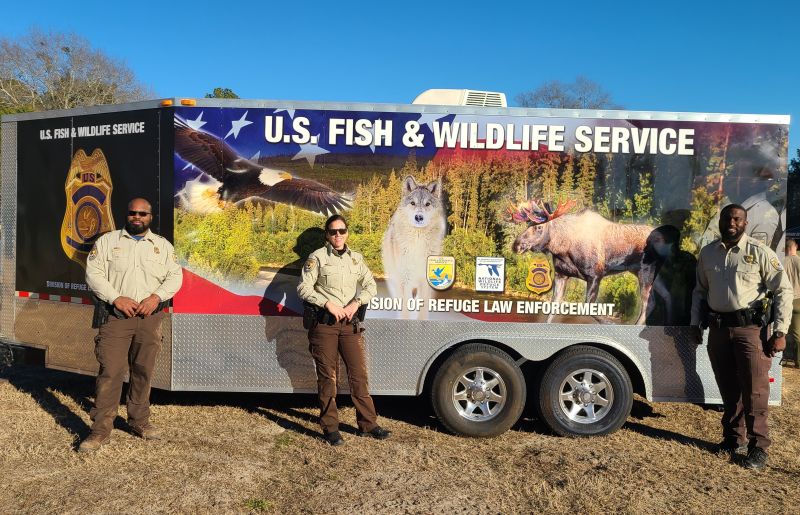
The figure that matters is 2,300. That is roughly how many at-risk plants and animals Colossal Biosciences and the federal Fish and Wildlife Service now plan to bank as frozen cells, tissue and DNA, in a deal announced on June 25, 2026.
Colossal, a Dallas firm that made its name on de-extinction projects (the woolly mammoth, the dodo and the dire wolf among them), will set up BioVault storage covering each species the Endangered Species Act lists. The Department of the Interior is also party to the announcement. Ben Lamm, the co-founder and chief executive, put it to Reuters this way: “We’re not loading two of every animal onto a boat.” Live animals are not the point. What goes in the freezer is living cells, reproductive tissue and DNA.
By the numbers
The scale grew in negotiation. Colossal’s chief animal officer, Matt James, said the agency first floated 100 species, “in a very government way.” Colossal pushed for the whole list. Talks between the two began five years ago, after the agency learned of the frozen biobank Colossal was already assembling at its headquarters: tissue and cell lines from some 200 species, kept in liquid nitrogen at -274°F. That collection was not built around the endangered list.
The need is plain from the list itself. Another account put it at more than 2,100 species. Only 54 have recovered enough to be delisted, giant panda and bald eagle among them, while 67 went extinct despite protection, including 21 in 2023 alone. The wider IUCN red list names 48,600 species as threatened or endangered.
How it works
Samples will sit in liquid nitrogen in Dallas and at other sites. Field work is limited: from a living wild animal, scientists can take blood or a skin biopsy and little more. So Colossal also watches for carcasses and for zoo deaths, which allow a necropsy and a wider range of tissue. Every sample is fully sequenced before freezing, and the team hopes to turn some cells into induced pluripotent stem cells. James said Colossal has derived such cells from elephants for the first time.
Priority sampling has already begun, according to the announcement, with field teams deployed and sequence data fed into federal recovery plans. All genomic data will go into open-access repositories at no cost. “Everyone should share in what we have,” Lamm said. Interior Secretary Doug Burgum called the deal a way to pair agency science with private-sector ingenuity, and Fish and Wildlife Director Brian Nesvik said it would show how biobanking and genomics can complement existing conservation tools. Lamm described the goal as “a digital twin of nature.”
The timing is political. The Trump administration has proposed changes to the Endangered Species Act which green groups argue would dilute a law that, by the usual accounting, has kept 99% of listed species from going extinct. In March a federal court threw out a number of earlier rollbacks. Separately, Colossal announced in February an arrangement with Dubai’s Museum of the Future to freeze samples from over 10,000 species. That facility was expected to open in October.
Sources
- Colossal Biosciences Is Building a DNA 'Noah's Ark' for Endangered Species (Yahoo / Complex)
- The Plan To Collect and Save the DNA of Everything on the Endangered Species List (Yahoo News)
- The Plan To Collect and Save the DNA of Everything on the Endangered Species List (Yahoo News), continued
- US to bank DNA of every endangered species in 'modern-day Noah's Ark' (AOL / Mirror US)




