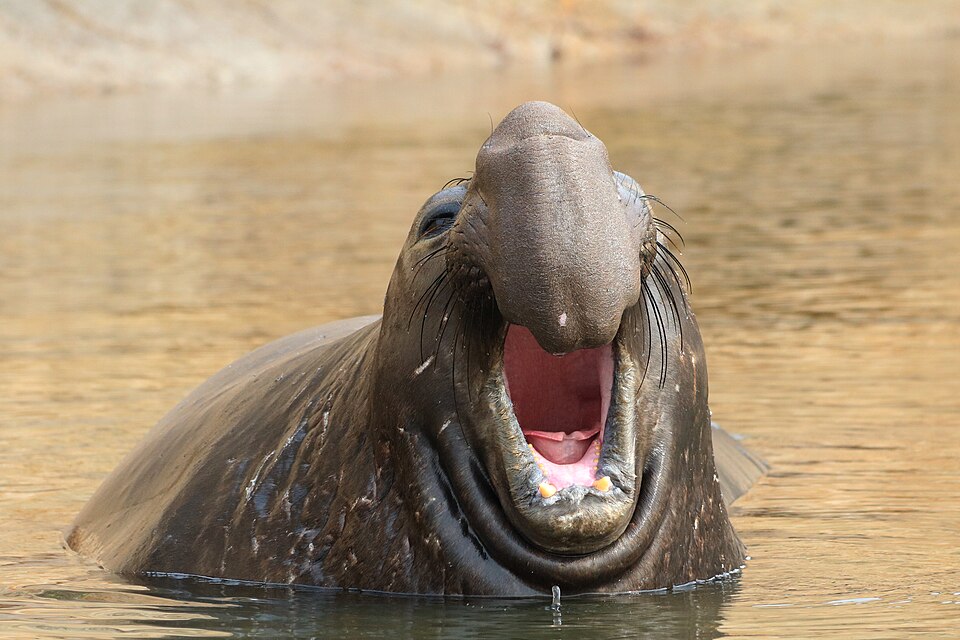
Neil weighs about 1,000 kilograms, and nothing in his path is safe. The five-year-old elephant seal is back in southern Tasmanian towns, lying across roads, flattening fences and bashing into at least one parked car.
“He’s probably not the fastest mover, but if he runs into a car or decides to put his nose up on the bonnet, it’s not going to be too good,” said Rod Macdonald, mayor of Tasman council, whose area includes the place Neil was born in 2020. “He’s certainly been a bit of a celebrity, and he continues to earn his status.”
Independent senator Jacqui Lambie put it another way. Neil is “the only bloke in Tasmania who can stop traffic, ignore everyone, and still be loved for it.”
Why a seal is in town
The Times of India, citing Global News, reported that Neil comes ashore twice a year after months feeding at sea, on the stretch of coast where he was born, and that this is his twelfth visit. Dr Jane Younger, a seal expert at the University of Tasmania, told The Guardian that his behavior is normal. Elephant seals return to where they were born to moult, breed or socialise. What is odd is the location, since most of his kind live thousands of kilometres south on the subantarctic Macquarie and Heard islands. Younger suspects Neil’s parent was a young, inexperienced seal that wandered to Tasmania by mistake.
“He’s come back every year since he’s been born, but he’s bigger now,” Younger said. “He’s broken fences, he’s harassing people’s cars, that’s just a function of his size.” Adult males routinely top 2 tonnes, she said, and the biggest reach about three-and-a-half.
Marine ecologist Dr Clive McMahon, who has worked with elephant seals for three decades, said Neil is likely to stay about six weeks. Young males would normally spar with him. Without them, he practises on bollards and traffic cones. NPR, as relayed by the Times of India, quoted University of Tasmania scientist Sophia Volzke saying the chest-to-chest shoving matches are rehearsal for competing for mates later, and that Neil has been using parked cars.
McMahon thinks he is probably lonely. “Often when you see him sleeping, you’ll see him squished up against a fence, and that’s probably part of him wanting to feel that there’s something else there.”
Fame and its risks
Global News put Neil’s TikTok following at 1.4 million, more than Tasmania has residents once his other platforms are added. Officials say the bigger danger is people. Kris Carlyon, of Tasmania’s Department of Natural Resources and Environment, called Neil’s fame “a bit of a double-edged sword.” Some fans have brought infants close to him for photos. Officials are asking the public to keep their distance and not to say which town he is in, to avoid an encounter that could force rangers to relocate him.
The advice is to stay 20 metres away at all times, even if he is asleep, and 50 metres if you have a dog. McMahon says Tasmanians should treat Neil’s visits as a chance to learn. Elephant seals face worse threats elsewhere. The IUCN upgraded the southern elephant seal to “vulnerable” after bird flu hit four of five major populations. In some colonies more than 90 percent of pups died, including 13,000 on Heard Island alone.
Sources
- A 1,000kg mammal is wreaking havoc in Tasmania – and Neil the seal is loved for it
- Neil the Elephant Seal: Why Tasmania's 1,000kg giant is crushing cars, blocking roads and winning hearts- Moneycontrol.com
- Who is Neil? The 1-tonne elephant seal and Tasmania's 'reigning troublemaker' winning hearts across social media