
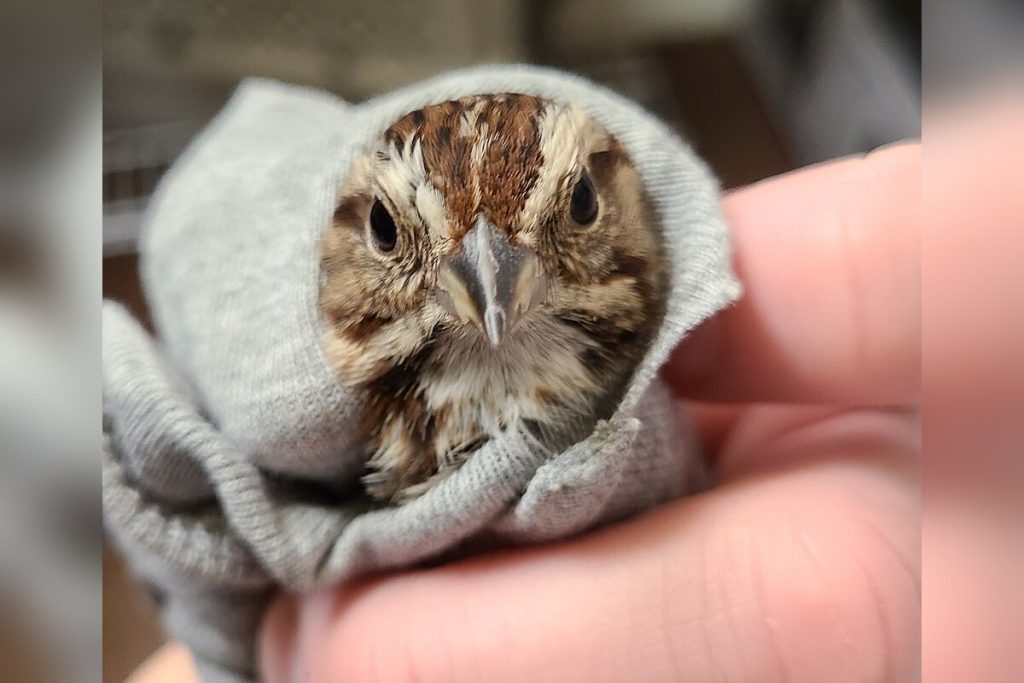
Caroline van den Berg can leave her shop at a moment’s notice. She runs Wild Wardrobe, a second-hand clothes store in Cavan Town, and when someone calls about an injured animal, a member of staff covers the till and she goes.
A few years ago she stepped in to fill a gap in wildlife rescue across Cavan, Monaghan and Leitrim. The store, which she runs with Joanna Birsanu, is a non-profit. Its proceeds go to Kildare Wildlife Rescue and to Dooletter Wildlife Rescue near Blacklion.
Her first piece of advice for anyone who finds a creature in trouble is to watch before acting. An animal that is not behaving as it should is the sign to look for. A hedgehog out in daylight is “a red flag,” she says, though one that looks like it is “on a mission” may be a nursing mother searching for extra food. Any animal that seems lethargic, struggling or motionless may need help.
Irish Wildlife Matters, a charity, makes the same point. “Many situations require observation rather than intervention,” it says, and young animals such as fledgling birds or leverets “may appear alone but are often still being cared for by their parents.” A woman in Belturbet saw this recently when a newly fledged long-eared owl hopped onto her porch, explored for a while and went back to the trees.
The law adds a limit. Under the Irish Wildlife Act, it is illegal without a licence to disturb a wild bird on or near a nest holding eggs or young, or to photograph or film one there. Giving animals space and keeping dogs under control also cuts the harm.
Wildlife Ireland tells people to take time to observe, assess the animal’s condition, talk through the options if possible and then decide whether to step in. All wild animals can pass on disease and cause serious injuries, it warns, so proper equipment matters, and the nearest rescue contact can help before anyone tries a capture.
Some cases cannot wait. “If an animal has been hit by a car it can go into shock,” van den Berg says. Once it recovers from the shock, it will hide, and then “it is nearly impossible to find them and help them.” Last week she recovered a fox and took him to Kildare Wildlife Rescue, which has cared for 3,975 animals since opening in 2022. It released 2,429 of them and fostered 1,600.
The calls vary with the season. In what she calls “orphan season,” many of them concern young house martins. The birds arrive from Africa in April, leave around October and build mud nests under the eaves of houses. Their numbers are falling as habitat disappears. “Unfortunately, the mud doesn’t stick on the plastic facia and the nests drop down,” she says.
Contact details for rehabilitators are on irishwildlifematters.ie. Besides van den Berg, the nearest are in Armagh, Enniskillen, Kells, Kenagh and Newry. The charity reminds callers that these people are nearly all unpaid, caring for injured wildlife in back gardens while juggling jobs and families.
Callers can help by offering to drive. Van den Berg and a group of volunteers arrange transport to the shelters at their own cost, so “anyone who can help with transport is much appreciated,” she says.




