An F-35 fighter jet carries more than 900 pounds of rare earth elements. A Virginia-class submarine uses around 9,200 pounds. Neither flies or dives without material that, for now, passes through Chinese hands on the way to Western factories.
That dependence is the reason governments keep talking about a race for supply. The numbers behind it are blunt. The U.S. Geological Survey puts world mine output at roughly 390,000 metric tons of rare earth oxide equivalent in 2025, and China accounted for an estimated 270,000 tons of it, about 69 percent. Dominant, yes. Total, no.
Not rare, just hard to use
The name misleads. Rare earths are a group of 17 elements, the lanthanides plus yttrium and scandium, and they are relatively abundant in the Earth’s crust. What is scarce is a deposit concentrated enough to mine and separate at a profit. The USGS lists more than 85 million metric tons of world reserves. China holds an estimated 44 million tons, a little over half. Greenland is listed at 1.5 million tons, and the agency notes measured and indicated resources of about 3.6 million tons in the United States and more than 14 million in Canada.
So the grip is not geological. It sits in the middle of the chain. The 17 elements look alike chemically and turn up together, so turning a mined concentrate into a pure oxide of neodymium or dysprosium takes several chemical stages, heavy capital and a lot of know-how. Swarajya, citing the Australian Strategic Policy Institute, traces China’s position to a campaign of about 40 years, which began with rare earths pulled out as a by-product of iron ore mining at Bayan Obo in Inner Mongolia. The magazine says China processes almost 90 per cent of the world’s supply and makes over 90 per cent of neodymium-iron-boron magnets, the kind that sit inside motors and transformers.
The American catch-up
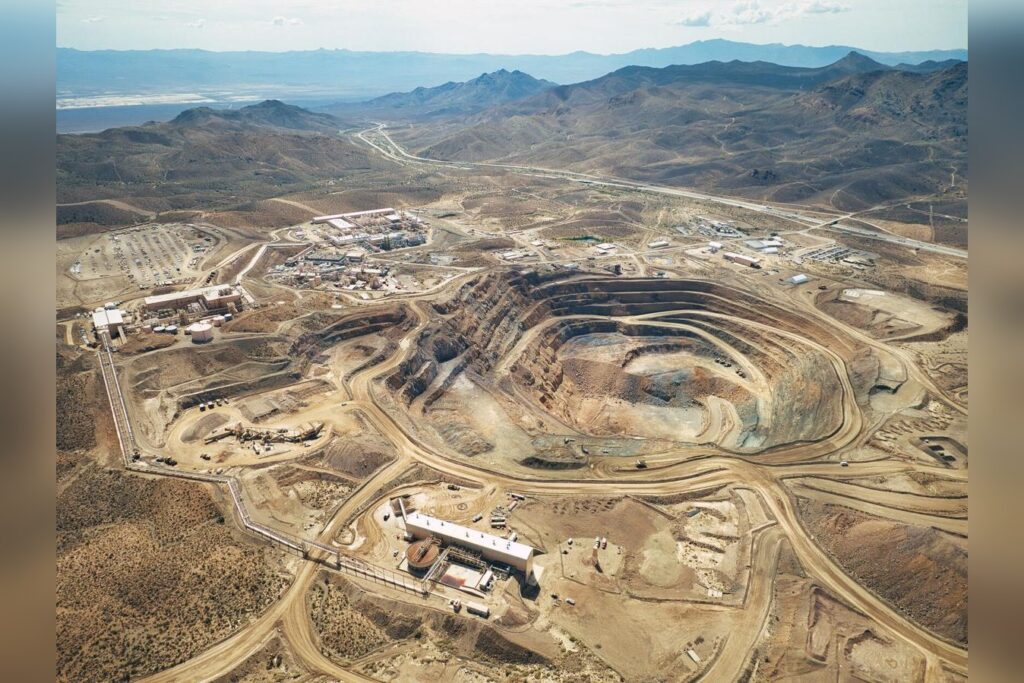
The United States still has a working mine. Mountain Pass in California, whose main ore mineral is bastnasite, shut in the early 2000s and later reopened. Swarajya reports that Washington has committed over $439 million since 2020 to rebuild domestic capacity, including support for MP Materials and a magnet factory in Fort Worth, Texas. The Defense Department wants a full mine-to-magnet chain at home by 2027.
The gap is large. MP Materials expected about 1,000 tons of magnets a year by the end of 2025. China produced 138,000 tons of the same type of magnet in 2018, so the American figure is less than 1 per cent of it.
Export controls sharpen the problem
Beijing has shown how much a single link matters. The USGS notes that China tightened export controls in 2025 on samarium, gadolinium, terbium, dysprosium, lutetium, scandium and yttrium, and later widened the list. Factories need qualified material in the right chemical form, not ore sitting in the ground elsewhere. The same USGS review of Chinese output found China produced 74 of the 77 mineral commodities it examined and ranked first for 39 of them, with a share of gallium production reaching as high as 98 percent.
Researchers at the Chinese Academy of Sciences have themselves forecast that China’s share of global reserves will fall to 28 per cent by 2035 as deposits elsewhere come online, according to Swarajya. Recycling and substitute materials may help at the edges. The USGS says substitutes exist for many uses but are generally less effective.
Sources
- Rare Earths Are Not Rare: Where the Real Supply Bottleneck Is
- World Wants To Break China's Rare Earth Monopoly — Good Luck Trying