Brydon Thomas has wanted to race since he was a kid. “Sim racing and racing in general is something I want to do,” he said, and he sees the simulator as a way in: “the sim world can also lead to opportunities in the real world.” For many people across Asia and elsewhere, where real-world motorsport is out of financial reach, that idea carries weight.
Cheaper than a track day
Ryan Henifin, a sim racer, called racing “probably the most expensive sport to get into”. Sim racing is “real-life racing in a video game that’s much cheaper.” It saves thousands of dollars in car repairs and track time.
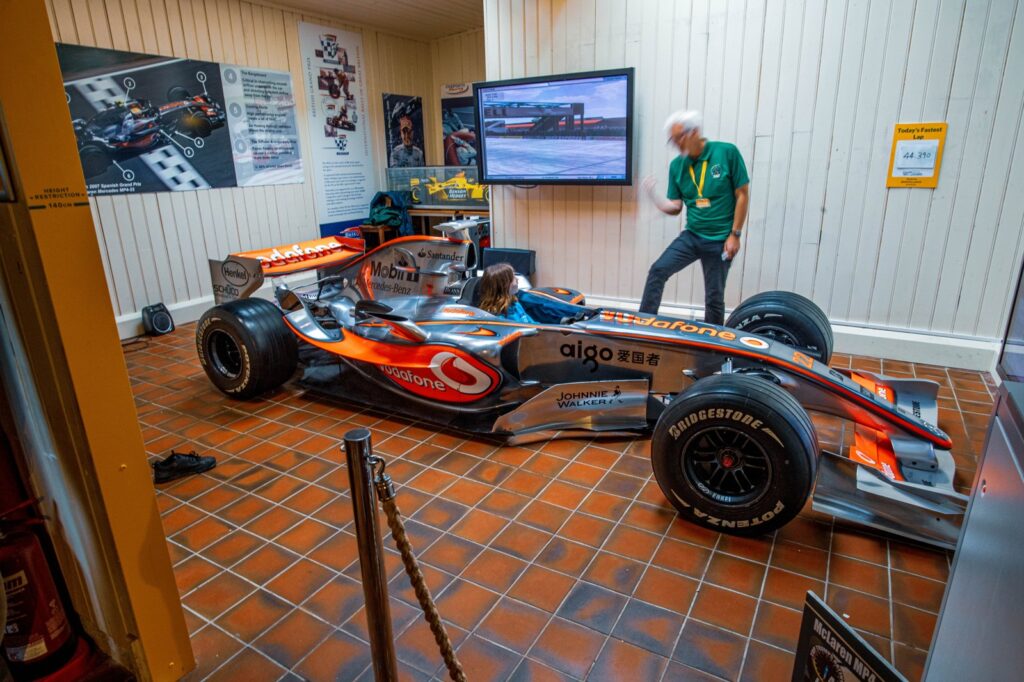
Better technology has made it more affordable too. Callum Read, co-owner of Northwest Sim Racing in Portland, said many customers have rigs at home, but “nothing like what I’m offering”: his have motion and triple monitors. Sims such as iRacing mimic different cars down to tires and brakes, and scanning systems copy real circuits. Racer Cameron Root, the 2023 Ferrari Challenge winner, said tracks like Montreal, Miami and Circuit of the Americas are all available, “to the point where you memorize it so much.”
What a sim demands
The genre has come a long way from Pole Position, the 1982 arcade game Atari sold on its “unbelievable driving realism”. A modern sim models fuel use, tire wear, grip and suspension settings. To be quick, a driver has to master threshold braking and keep control as tires lose traction. That separates sim racing from arcade games like Need for Speed, which chase a feeling of speed rather than realism. iRacing, Assetto Corsa, Gran Turismo and Forza Motorsport all belong to the genre.
From screen to cockpit
Joshua Rogers, an Australian three-time iRacing world champion, now races for Team Parker Racing in the Porsche Carwow Sprint Challenge GB. The biggest leap, he said, is from virtual to real. “Everything I felt from the sim translated, but I was dealing with new senses that I had to adapt to.” Going the other way is harder: “Going from a real car to a sim, you’re stripping senses away. Sounds and tactile feelings that you normally use to ‘feel’ the car, are gone.”
Nick Tandy, a Le Mans winner who shared a virtual 24 Hours of Le Mans entry with Rogers in 2020, felt the same rewire. He has always sensed tire degradation through the car, but in the sim he had to listen for it. Rogers learned from Tandy too, about managing traffic from faster LMP cars while keeping the team’s own line.
Both men said sim racing put them under more pressure than the real thing. Tandy said he sweated more sitting in an air-conditioned room than driving a 60-degree racing car. Rogers’ heart rate reaches 140 to 160 bpm in the sim and often 180 in the car.
Tandy’s view is that talent travels: “The best simulation drivers will always be good in a car,” he said, if they bring an “absolute, single-minded dedication to being the fastest”. Porsche is testing that with its Esports Supercup talent shoot-out. Up to five competitors are assessed in Cologne, up to two move to an on-track test, and the winner gets Porsche Motorsport support to race in a one-make series in 2027. NASCAR, McLaren and Red Bull have also moved into sim racing.
Rogers, for his part, won all three of his races at Silverstone that day, and two weeks later finished five points short of the championship in the final round of the 2026 Porsche Carwow Sprint Challenge GB.
Sources
- Sim racing
- Sim vs real racing: what transfers from screen to track
- How these simulation racing centers help drivers train for professional races
Photo: Michael Gaylard (CC BY 4.0)