Microsoft’s fiscal first quarter came in at $92.3 billion in revenue, up 19% and ahead of the roughly $90.6 billion analysts expected. Adjusted earnings of $4.89 a share beat estimates of about $4.72. As ever, the story is AI and cloud demand. Shares jumped as much as 6% in after-hours trading, then pared back to a gain of nearly 3%, according to Yahoo Finance data.
Under the hood: Azure and the new segments
The detail that matters is Azure. For the first time Microsoft gave Azure revenue in dollars, after folding its reporting into two segments, Agents and Infra, and Devices and Consumer. Azure grew 48% to about $33.2 billion, past the company’s own guidance of 44% to 45% and analysts’ estimate of $32.2 billion.
Microsoft Cloud revenue rose 30% to $63.9 billion. Agents and Infra brought in $76.8 billion, up 25%. Within the cloud, Microsoft 365 commercial grew 18% on an adjusted basis, Microsoft 365 consumer 17% and industry solutions 10%.
The quarter ended September 30. Operating income was $45.9 billion, up 21%. GAAP net income reached $36.6 billion, up 32%, with diluted earnings per share of $4.92, also up 32%. The non-GAAP figures tell a quieter story: $36.4 billion and $4.89, each up 18%, once investments in OpenAI are stripped out. Those investments added $207 million to net income this time, against a $3.1 billion hit a year earlier.
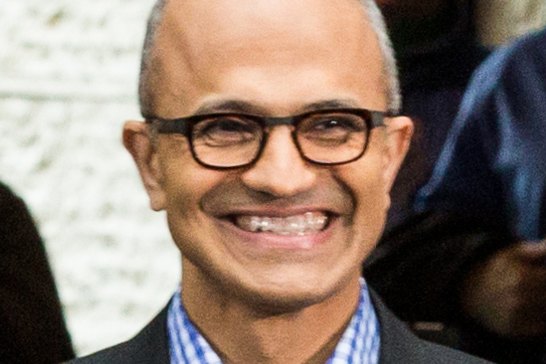
Satya Nadella said Microsoft is turning its innovation into wider adoption across industries. Amy Hood, the chief financial officer, said results beat expectations on revenue, operating income and earnings per share.
Backlog, spending and the soft spot
Commercial remaining performance obligation, contracted revenue not yet recognised, rose 73% to $677 billion. The technical reality is less dramatic than it sounds: that was roughly flat against $678 billion in June, and commercial bookings fell 12%. Cash capital expenditure came to about $39.4 billion, under the roughly $45.9 billion analysts had pencilled in, as the company kept building data centres and capacity for AI workloads.
Devices and Consumer brought in $15.5 billion, down 3%. Xbox content and services slipped 2%, and Windows OEM and Devices fell 22%. Microsoft still returned $10.2 billion to shareholders through dividends and buybacks.
Tokenised shares, a wry footnote
The results also exposed price gaps across blockchain-based versions of the stock. Ondo’s tokenised Microsoft (MSFTon) traded at a premium to the after-hours share price, while Kraken’s MSFTx and Microsoft perpetual futures on Hyperliquid stayed broadly in line with it. Microsoft, for its part, was among the issuers that objected on October 19 to tokenised versions of their shares trading on OKXICE, the proposed venue backed by OKX and Intercontinental Exchange; Alphabet and Goldman Sachs filed similar objections. The objection covers OKXICE only, not Kraken’s MSFTx. An IMF study published in October found that regular stocks absorbed roughly 87% to 99% of their tokenised counterparts’ overnight price moves within the first five minutes of regular trading.
Management will give forward guidance on its earnings call and webcast.
Sources
- Microsoft
- FY27 Q1 – Press Releases – Investor Relations – Microsoft
- Microsoft beats earnings estimates with $92.3B in revenue as it pushes back against tokenized stock trading
Photo: Briansmale (CC BY-SA 4.0)