
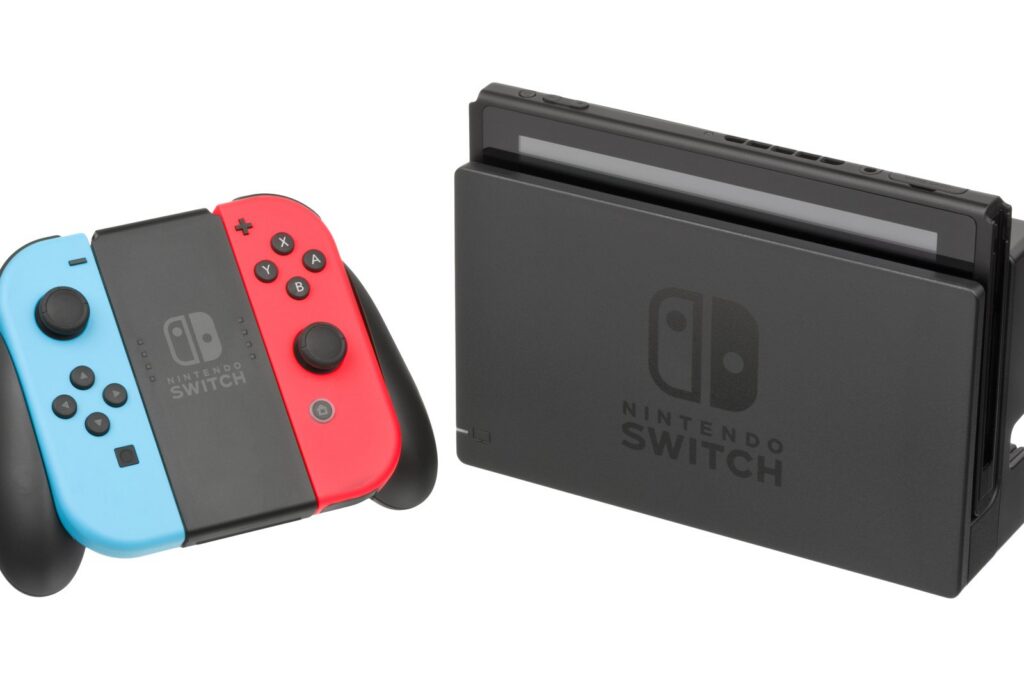
Twenty-eight years after Ocarina of Time reached the Nintendo 64, Link can jump and sprint at the press of a button. Nintendo’s full Switch 2 remake launches Thursday, November 5, with a simple development principle: “the visuals may change, but the experience does not.”
Director HokWai Ng said that approach was meant to protect the different memories players carry. Nintendo has retained the original’s self-contained maps and time-travel structure rather than turning Hyrule into a seamless open world.
Modern controls, familiar journey
The most obvious mechanical change is the over-the-shoulder camera. It replaces the carefully framed viewpoints of 1998, although the targeting system that helped define early 3D adventure games remains.
Dedicated movement controls remove the need to line up a running automatic jump. Reviewers found combat smoother, but noted that switching between locked targets is still less convenient than in some contemporary action games.
A quick item menu, introduced to the series in 2023’s Tears of the Kingdom and continued in 2024’s Echoes of Wisdom, reduces trips to the pause screen. Players can change tactics during a fight, combining Nayru’s Love with Bombchus instead of relying on the same equipment throughout.
The new “Threads of Time” log offers broad directions rather than complete solutions. The Water Temple has fewer small keys and is less frustrating, but some reviewers felt clearer targets, nearby locks and other hints made dungeon answers too obvious.

A denser Hyrule
Art director Aya Shida used “a puppet-show feel” and “the analog feel of practical effects films” to describe the visual goal. Detailed environments coexist with colorful, exaggerated characters instead of pursuing realism alone.
Young Link’s clothing received particular attention. The team examined museum materials and experimented with making fabric so it would look like something forest children could weave themselves.
Link breathes and moves his fingers while playing the ocarina, watches his footing on stairs and shields his face in tall grass. Bombchus resemble wind-up toys, and cut grass settles into its surroundings. Reviewers reported a solid 60 frames per second in both docked and handheld play.
Koji Kondo’s soundtrack has been recorded by a small ensemble. Expanded dialogue and more expressive animation add character, although early cutscenes can slow the pace.
One fan-requested correction comes after the Water Temple. Zora’s Domain now unfreezes when its curse is lifted, something the Nintendo 64 version never showed.
The people behind the remake
Nintendo’s Entertainment Planning & Development Production Group No. 3 led the project. The 2011 Nintendo 3DS remake, by contrast, was handled by Grezzo.
Ng, Shida, program director Hiroki Taguchi and sound director Masato Ohashi all have experience on recent Zelda games. Series producer Eiji Aonuma and director Hidemaro Fujibayashi also participated in Nintendo’s developer interview.
The original sold more than seven million copies and became the highest-rated game on Metacritic and GameRankings. That legacy makes any alteration sensitive.
Reviewers spent about 30 hours exploring the remake, finding side quests and Gold Skulltulas within its compact world. Some missed a harder Hero Mode and the unpredictability of the original’s less explicit puzzles.
The result is neither an exact reproduction nor a wholesale reinvention. It preserves the journey between child and adult Link while making the machinery around that journey easier for a new audience to use.
Sources
- The Legend of Zelda: Ocarina of Time
- Review: The Legend of Zelda: Ocarina of Time remake is superb, streamlined and safe
- Ask the Developer Vol. 24: The Legend of Zelda: Ocarina of Time — Part 2 – News – Nintendo Official Site
- The Legend of Zelda: Ocarina of Time's Remake Is Both a Beautiful Retelling of a Legend and a Rich Adventure That Stands on Its Own – Review
- The Legend of Zelda: Ocarina of Time Remake Studio Officially Revealed
- Zelda: Ocarina of Time remake leak shows big fan-requested change to the original
Photo: Evan-Amos (Public domain)