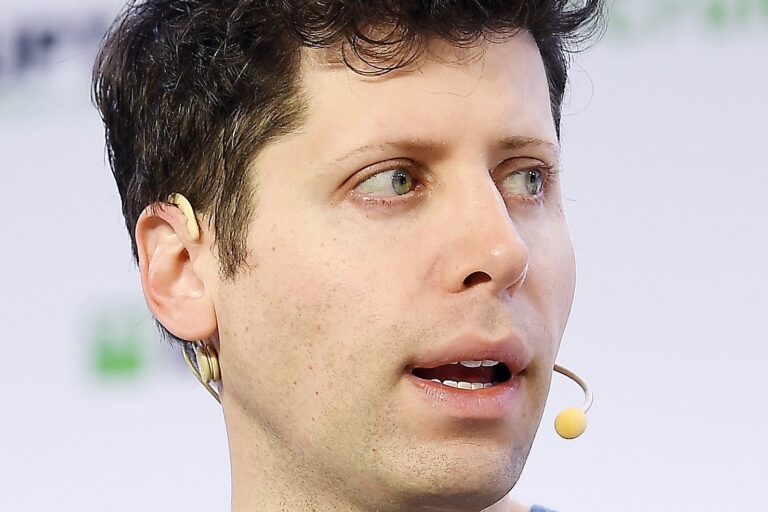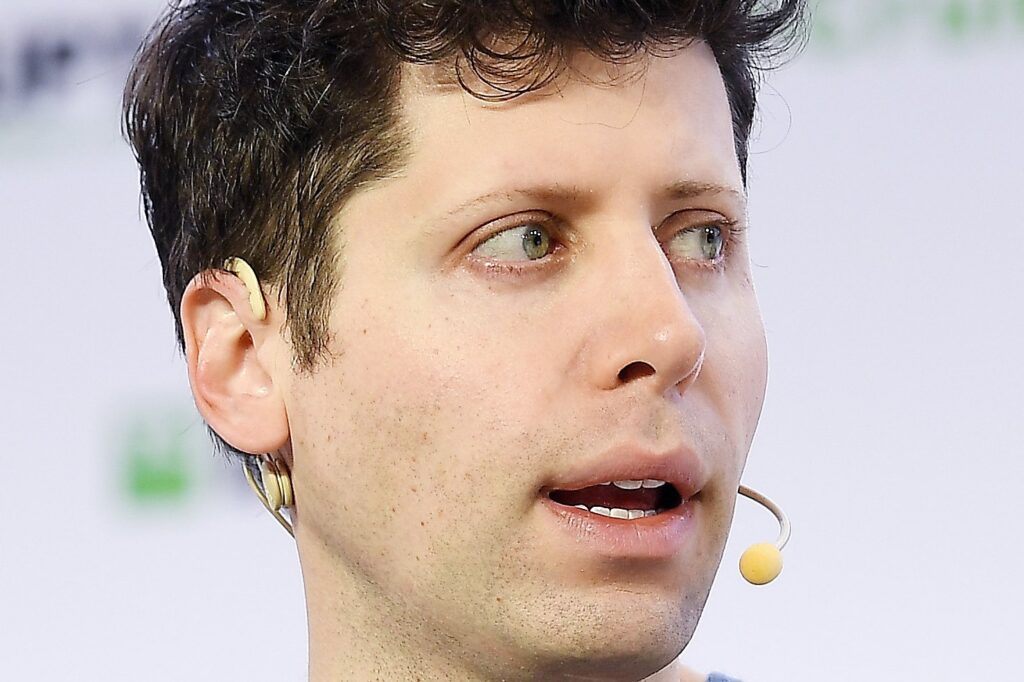
Sam Altman renamed his X account to “RAM Altman” this week after arguing that personal computers waste the world’s limited DRAM supply, a comment that triggered immediate backlash from PC builders and a mocking response from Elon Musk. The OpenAI chief executive restored his usual handle within days, but not before the episode laid bare the tension between cloud-first AI economics and the hardware realities facing everyday users.
The Podcast Comments
The controversy originated on the Cheeky Pint podcast, where Altman sat down with Stripe co-founder John Collison. Asked about local inference — the idea that open-source models running on personal hardware could reduce dependence on massive data centres — Altman dismissed the efficiency of distributed memory. He claimed personal computers only utilise their DRAM effectively for roughly 5 per cent of the time. From a global allocation perspective, he said, it is “quite terrible to have everybody have a bunch of the world’s limited supply of DRAM sitting in their own computer.”
Altman’s argument rests on utilisation rates. A server shared by thousands of customers keeps its memory busier than a desktop that sleeps through the night. The technical reality, as ever, favours consolidation when the constraint is silicon supply. But the detail that matters is who controls that consolidated pool.
The Backlash
Gamers and hardware enthusiasts did not see a supply-chain optimisation. They saw a billionaire chief executive — one whose company is among the largest buyers of high-bandwidth memory — arguing that their components would be better deployed in his infrastructure. Elon Musk joined the pile-on, posting a movie meme declaring that regular people deserve to keep their RAM. Critics noted that AI hyperscalers are precisely why consumer DRAM prices have surged; Samsung and SK Hynix have redirected production lines to enterprise HBM for AI servers, leaving retail channels thin.
Damage Control
Altman moved quickly. “I actually do want the world to have tons of memory and people to put as much as they want in their computers,” he posted on X. He then changed his display name to “RAM Altman” and followed up: “I want you to have so much RAM. Let’s build more.” The rebrand was temporary; screenshots captured the handle before he reverted it. Telling manufacturers to build more does not solve the immediate shortage, as ever. Fabs take years to come online.
Supply Chain Under the Hood
Industry analysts expect consumer DRAM prices to remain elevated for years while hyperscalers snap up available supply. The shortage is not abstract: PC builders are paying premium prices for memory modules, and the knock-on effect lifts the cost of laptops, graphics cards, phones and consoles. Altman acknowledged the market distortion on the podcast, telling Collison that “the invisible hand is failing right now” when asked why high prices had not lured new suppliers.
Strategy Signal
The episode reveals how OpenAI views the future of consumer-facing AI hardware. Local inference models are treated as insufficient compared to centralised cloud processing — a stance that aligns with a business model built on API calls and subscription revenue rather than distributed compute. The rebrand was a PR gesture; the underlying bet is that users will rent intelligence from data centres rather than run it on silicon they own. Altman has been chief executive since 2019 and holds stakes in over 400 companies including Reddit and Worldcoin; his incentive structure is aligned with cloud-scale utilisation.
“I want you to have so much RAM. Let’s build more,” Altman posted on X before reverting his handle.
Sources
- Sam Altman Rebrands as RAM Altman and Says He Wants You to 'Have So Much RAM'
- Sam Altman
- Sam Altman: All the RAM Should Belong to Me, So I Can Charge People to Use It
- Sam Altman is 'unhappy' with most MBA students; that he calls his 'chronic disappointment'; says: They always want to go do the thing that …
- ‘Quite terrible’: Sam Altman says the RAM in your PC is a waste. OpenAI could soak up as much as 40% of supply
- Sam Altman says your PC's memory should belong to him
Photo: TechCrunch (CC BY 2.0)