
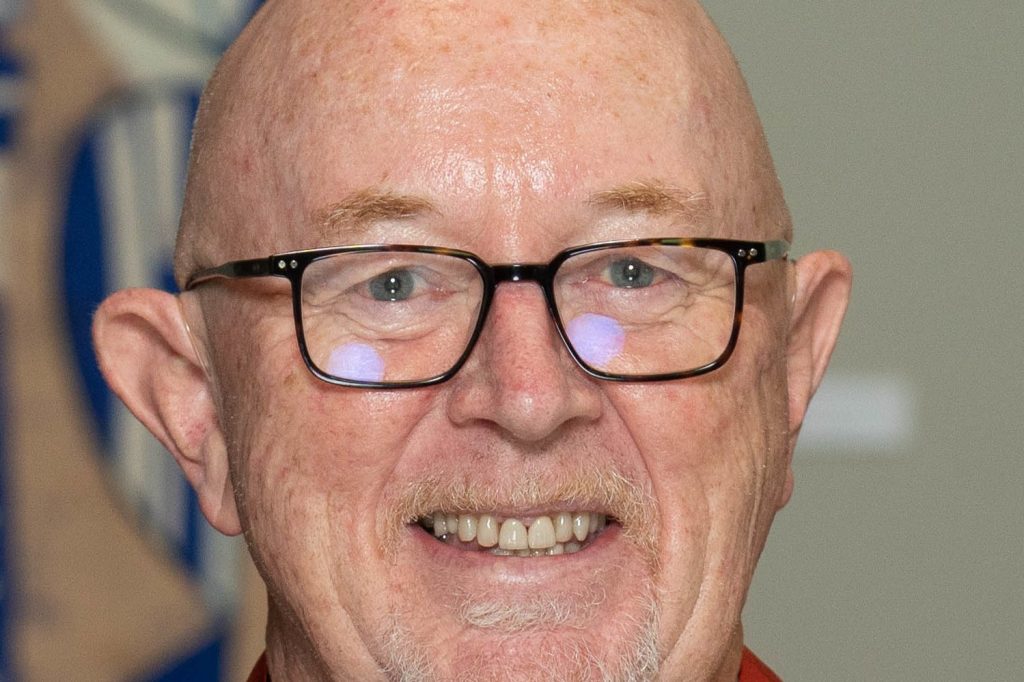
Sir Dave Dobbyn’s three-legged orange cat knows the routine. It lounges on the back step of his Wellington home, then demands to be carried upstairs for quiet. The cat owns the house.
Dobbyn just lives there, fills it with books and music and the coloured scribbles on a doorframe near the fridge that map his family’s height — though the Dobbyns, the record notes, aren’t tall stock. That home sits a short walk from his studio.
It was there when the family bought the place. No windows. Curved orange and beige brick walls.
Dark, but cocoon-like. Inside, guitars hang from the ceiling.
Gold records lean against a well-loved piano. Trinkets and mementos crowd every surface. It is a sanctuary built for work.
Dobbyn needs that sanctuary now more than ever. The 69-year-old New Zealand music icon was diagnosed with Parkinson’s disease in 2022. Since then, he has faced prostate cancer and breathing problems.
His body is throwing punches. He keeps getting up.
“Retirement doesn’t sit well with me,” Dobbyn told journalist Bridget Jones. “I thought there’d be some kind of off-ramp, but there isn’t. And I wouldn’t take it if there was, because I’d miss it too much.
As they say, it keeps you young, it keeps you excited to be alive.” This is the practical reality for a musician in his late 60s facing multiple health setbacks. Making music isn’t a hobby he can put down.
It is the engine. The thing that gets him out of bed on the tough days. Dobbyn has been a fixture of New Zealand music for decades.
He wrote “Slice of Heaven” and “You Oughta Be in Love.” His voice is woven into the country’s soundtrack. But that history doesn’t matter much when Parkinson’s starts shaking your hands or the cancer treatments drain your energy. What matters is what you do next.
He built a studio without windows at the end of his garden. Curved orange and beige brick walls radiate their own version of sunshine.
Inside, he keeps working. The dark, cocoon-like space lets him focus. It lets him create.
It lets him ignore, for a few hours, what his body is doing to him. The contrast is stark.
The family home is bright, jammed full of life, books lining the lounge walls. The studio is dark, a deliberate retreat. Dobbyn moves between them.
One space for living, one for working. Both essential. Dobbyn’s decision to keep going matters beyond his own career.
He is one of New Zealand’s most respected musicians. If he can keep making music while facing Parkinson’s, cancer, and breathing problems, that sends a signal.
It says the work is worth doing. It says age and illness don’t get the final word. He is 69.
He has serious health battles. He has an off-ramp available.
He won’t take it. “Retirement doesn’t sit well with me.” That’s not a boast. It’s a statement of fact.
Dobbyn isn’t pretending he isn’t sick. He’s just refusing to let that be the story. The three-legged cat doesn’t care about any of this.
It just wants to be carried upstairs. Dobbyn probably obliges.
Then he walks back down, past the doorframe with the family scribbles, past the books, out to the dark studio at the end of the garden. He picks up a guitar. He keeps going.




