
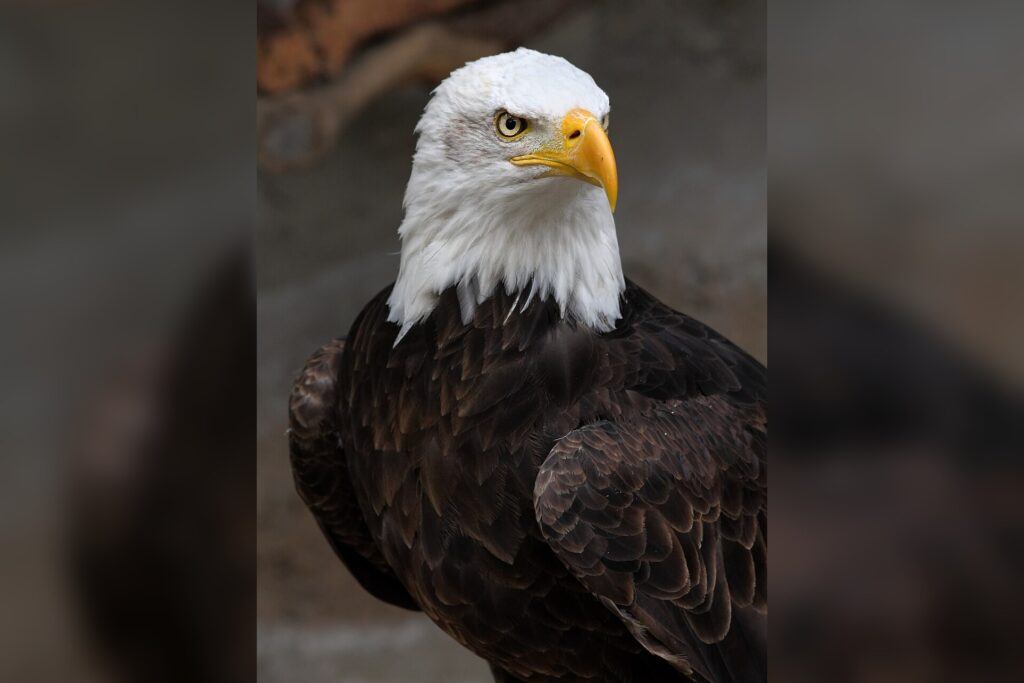
Federal wildlife officials are shifting their approach to bald eagle conservation, moving away from outdated assumptions about winter migration and toward data-driven habitat management. The U.S. Fish and Wildlife Service, along with state agencies, now bases protection strategies on the birds’ actual behavior: following food, not warmth. For decades, the working assumption held that bald eagles head south when temperatures drop.
That picture was incomplete. What researchers now see — using satellite transmitters and GPS tracking collars — is a far more nuanced pattern.
Eagles stay put if open water and fish remain. They move only when ice locks up their food supply. And when they move, they rarely travel the long distances typical of other migratory birds.
The implications for land managers are concrete. Conservation groups are identifying and protecting key winter congregation sites — places where multiple eagles gather because fish are reliably available.
These are not necessarily warm-weather refuges. They are simply places where the water stays open and the prey base holds. “The birds are not abandoning their territories,” one wildlife biologist with the service explained in background materials.
“They are adapting to where the food is.” That adaptability, while impressive, creates new challenges for the people charged with protecting them. A bald eagle that shifts its winter range by 50 miles may end up in an area with fewer legal protections, closer to human development, or near power lines and wind turbines. Tracking data now allows agencies to anticipate those shifts before conflicts arise.
State wildlife departments in the Great Lakes region and the Pacific Northwest have begun incorporating real-time eagle movement data into their habitat conservation plans. In some areas, that means working with private landowners to keep关键的 winter roosting sites undisturbed.
In others, it means adjusting the timing of construction projects near waterways where eagles are known to congregate. The human dimension is not lost on officials. Families who watch eagles from their backyards often report a sense of loss when the birds vanish in December.
For those communities, the news that eagles are not fleeing to some distant warm climate but are simply relocating to a different local lake or river can be reassuring. Some agencies now publish seasonal eagle forecasts, telling residents where the birds are likely to be found in any given winter.
But the technology driving this understanding comes with costs. Satellite tags and the data processing required to map eagle movements are not cheap. Federal grants for raptor research have faced budget pressure in recent years.
Conservation groups argue that the investment pays for itself — better data means smarter land-use decisions and fewer conflicts between eagles and human infrastructure. The Fish and Wildlife Service has not issued new formal guidance based on these findings. Officials say they are still gathering data.
What is clear is that the old model — eagles fly south, period — no longer holds. The agency’s working view now treats bald eagles as flexible survivors, not creatures of rigid instinct.
For the birdwatchers who scan winter skies and find them empty, the science offers an explanation but not always comfort. The eagles are out there. They are just somewhere else, following the fish.
{“@context”: “https://schema.org”, “@type”: “NewsArticle”, “headline”: “U.S. Fish and Wildlife Service Updates Eagle Conservation Based on Food-Driven Migration”, “description”: “Federal wildlife officials are shifting their approach to bald eagle conservation, moving away from outdated assumptions about winter migration and toward data-driven habitat management. The…”, “datePublished”: “2026-07-05T12:01:00+00:00T09:30:00+00:00”, “author”: {“@type”: “Person”, “name”: “Noah King”}, “publisher”: {“@type”: “Organization”, “name”: “InfoPulse Today”, “url”: “https://newsfeed.2bme.xyz/”}}




