
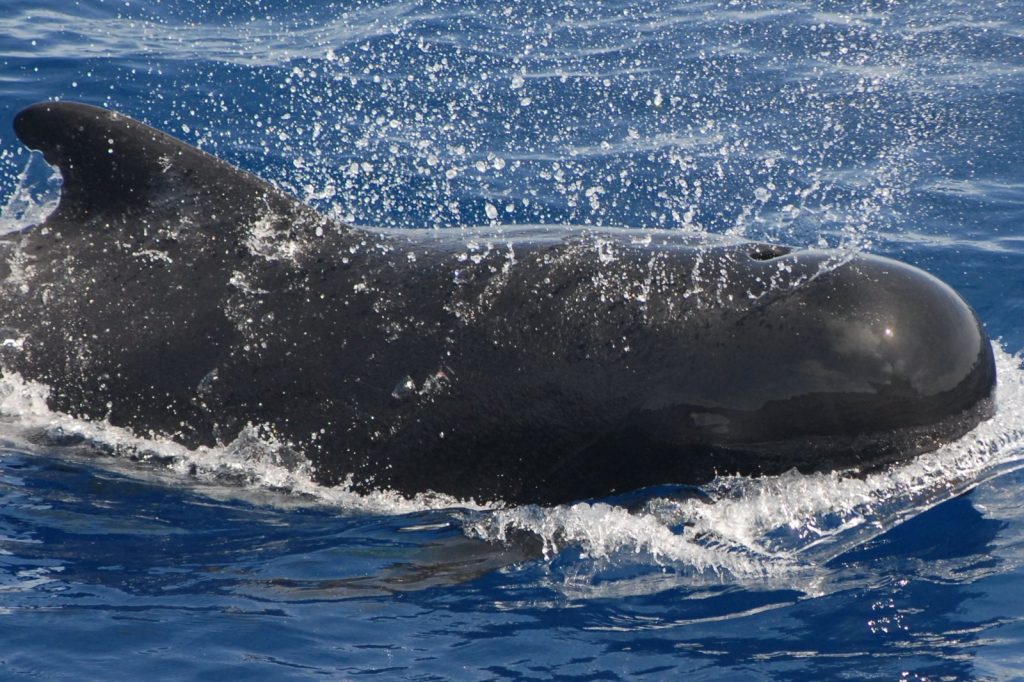
On a remote stretch of sand near North Tolsta in the Outer Hebrides, forty‑two pilot whales were found dead after coming ashore. A further twelve were euthanized by veterinarians when the tide failed to refloat them, bringing the total loss from this single pod to fifty‑four animals. The incident did not resemble a simple navigational mistake; the whales remained together, a behaviour described by responders as a social collapse.
Pilot whales belong to the genus Globicephala and are the largest oceanic dolphins after the orca. They live in tight matrilineal groups, hunt squid in deep water, and exhibit a strong tendency to follow any pod member that beaches itself.
This loyalty, rather than confusion, explains why the rest of the group did not scatter when the first animals stranded. The British Divers Marine Life Rescue team attempted to refloat the survivors, but adverse conditions — strong wind, rough waves, and the specific shape of the beach — prevented success. After hours of effort, rescuers concluded that euthanasia was the most humane option, administering the procedure by needle and bullet to the twelve remaining whales.
Officials admit that the exact trigger for the stranding remains unknown. Two species of pilot whale exist — long‑finned and short‑finned — which appear nearly identical at sea and can only be distinguished by examining the skull.
Long‑finned individuals favour cold waters, while short‑finned whales inhabit tropical and subtropical zones. Given the Outer Hebrides’ location in a cold region, the stranded whales are likely long‑finned, though this has not been confirmed. Historical records show that mass strandings of pilot whales occur repeatedly in Scotland, New Zealand, and Tasmania, involving the same genus, behavioural patterns, and tragic outcomes.
Some researchers hypothesize that anthropogenic sonar — low‑frequency noise from naval exercises or seismic surveys — could disorient these deep‑diving cetaceans, interfering with the acoustic cues they use to locate squid. Others suggest that disease might play a role, with a sick individual leading the pod ashore, prompting the rest to follow.
A third viewpoint argues that such events are natural, rare phenomena that have occurred for millennia, predating modern sonar, as evidenced by the fossil record. To investigate, authorities plan to perform necropsies, test tissue samples for toxins, and examine the whales’ ears for signs of acoustic trauma. Answers may emerge slowly, or not at all. Pilot whales are colloquially called blackfish, though they are mammals that breathe air, nurse their young, and recognise each other’s vocalisations across vast ocean distances.
When one member perishes on a beach, the companions typically stay. Currently, forty‑two bodies lie on the North Tolsta shoreline, with twelve more having been euthanised, totalling fifty‑four dead whales from a single pod.
The Scottish government is expected to commission a full report, and the data will be added to a global database of stranding events. Scientists will compare this incident with previous cases, seeking patterns that might explain why a healthy pod of pilot whales would swim straight into death. For now, the beach, the bodies, and the unanswered question remain the only certainties.




