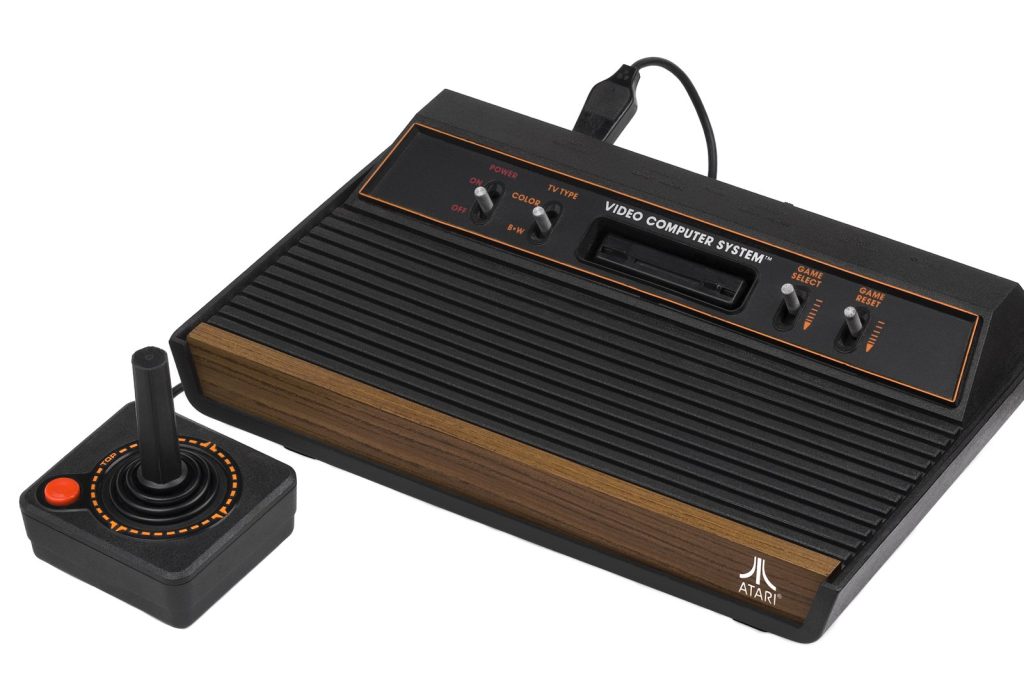
The Consumer Electronics Hall of Fame has inducted the Atari 2600, recognizing the 1977 console that standardized home gaming. This honor arrives as the spiritual successor to the original machine, the modern Atari VCS, prepares to shut down its software store in 2027. The juxtaposition highlights a fifty-year arc where a single device defined the $116 billion gaming market before its modern echo faces obsolescence.
Standardizing the Home Console
The Atari 2600 was released in September 1977 as the Atari Video Computer System, according to historical records. It popularized microprocessor-based hardware and games stored on swappable ROM cartridges, a format first used with the Fairchild Channel F in 1976. The console was prototyped under the codename Stella by Cyan Engineering, an Atari subsidiary. Nolan Bushnell, Atari’s CEO, sought a programmable home system after realizing that developing custom electronics for every arcade game was ruinously expensive.
The technical reality under the hood was driven by the semiconductor industry’s shift toward affordable microprocessors. In late 1975, MOS Technology introduced the 8-bit 6502 microprocessor, which was significantly cheaper than competing devices. Atari contacted MOS Technology and requested a smaller version of the chip. MOS obliged with the 6507, which was essentially a 6502 in a smaller package with 28 pins versus 40 for the original. The restricted input and output capabilities led to minor performance limitations, but these were immaterial for Atari’s immediate goals.
Output standardization was the other critical innovation. Arcade games had built-in displays, but a home console needed to leverage the television set already present in nearly every household. Atari designed circuitry to output video and sound to standard TVs, resulting in a custom integrated circuit called the Television Interface Adaptor. The system also utilized ROM modules for game instructions, which could be easily swapped. While it was not the first console with plug-in software, it was the first to sell well in that format.
From Arcade to Living Room
Atari, founded in 1972 by Nolan Bushnell, Ted Dabney, and Al Alcorn, had already invented Pong, the first successful arcade game. The company understood the limitation of dedicated hardware for each game. The VCS launched in 1977 with nine games on 2 KB cartridges. Atari ported many of its arcade titles to the system, including Breakout and Night Driver, which featured color graphics unlike their monochrome arcade originals.
The system’s first killer application was the home conversion of Taito’s Space Invaders in 1980. This title cemented the console’s place in the living room. Adventure, also released in 1980, became one of the first action-adventure video games and contained the first widely recognized Easter egg. The popularity of the VCS led to the founding of Activision and other third-party game developers. Competition emerged from the Intellivision and, years later, the ColecoVision consoles.
By 1982, the 2600 was the dominant game system in North America. The name “Atari” had entered the vernacular as a synonym for the console and video games in general. Atari rebranded the VCS as the Atari 2600 in November 1982, alongside the release of the Atari 5200. Sears had sold the system as the Tele-Games Video Arcade, further spreading its reach. The console was bundled with two joystick controllers, a conjoined pair of paddle controllers, and a game cartridge, initially Combat and later Pac-Man.
The Crash and the Billion-Dollar Industry
The 2600’s dominance was not without consequence. Poor decisions by Atari management damaged the system’s and the company’s reputation. The release of two highly anticipated games, a port of Pac-Man and E.T. the Extra-Terrestrial, proved detrimental. Pac-Man became the 2600’s best-selling game but was panned for not resembling the original arcade experience. E.T. was rushed to market for the holiday shopping season and was similarly disparaged.
These failures, coupled with a glut of third-party shovelware, contributed to the North American video game crash of 1983. Warner Communications sold the assets of Atari’s consumer electronics division to former Commodore CEO Jack Tramiel in 1984. The new Atari Corporation released a revised, low-cost 2600 model in 1986. Despite the crash, the industry it helped create has grown exponentially. The video gaming industry generated an estimated $116 billion in revenue in 2017, according to a Reuters estimate. This figure puts video gaming ahead of the television industry, which brought in $105 billion at the time.
The 2600’s design principles established the template for modern consumer electronics. The use of a commodity microprocessor and read-only-memory cartridges became common in the emerging console market. The standardization of video output to televisions remains the norm for home entertainment devices. The console’s ability to run a wide variety of games through swappable media set the expectation for flexibility and variety in consumer hardware.
The Modern Echo: Atari VCS
The modern Atari VCS console is a Linux-based mini PC inspired by the original 2600. It was designed loosely after the original machine, minus a cartridge slot. The VCS is an AMD-powered device that can emulate a large collection of pre-loaded classic Atari games. Its functionality could be expanded through an online software store that included access to streaming platforms and, in recent years, game streaming platforms like Xbox Cloud Gaming and Nvidia GeForce Now.
The Atari VCS saga has been marked by a decade of delays and name changes. Atari had to assure backers of a crowdfunding campaign that its retro console was not doomed. However, the platform is being retired early next year. On February 1, 2027, the Atari VCS software store is shutting down, according to an announcement posted to the Atari Club Discord and shared by Tom’s Hardware. Owners can download and add software to their libraries through Atari’s official online store until January 31, 2027.
After the store closes, previously downloaded apps and games will still be usable. Atari plans to make an OS update available that allows users to migrate all functionality to their local machine. This update aims to remove any dependencies on Atari infrastructure for authentication and software. The company also plans to release an Atari Home Brew app. This will allow owners to continue adding new games to their console’s library, shared to the community by third-party developers who still want to develop and support the VCS.
The closure of the VCS store marks the end of an era for this specific hardware. Yet, the legacy of the 2600 persists in the $116 billion industry it helped define. The technical foundations laid in 1977, from the 6507 chip to the ROM cartridge, remain visible in the architecture of modern gaming devices. The 2600’s induction into the Hall of Fame recognizes its role in transforming video games from a niche arcade curiosity into a dominant global medium. As the modern VCS winds down, the original’s influence on consumer electronics remains as tangible as the hardware itself.
Sources
- Atari 2600
- The Consumer Electronics Hall of Fame: Atari 2600
- The Atari VCS saga will come to an end next year when its software store closes
Photo: Evan-Amos (Public domain)