Ask anyone now and the iPod is an icon. In October 2001 the reaction was less reverent. Apple unveiled the player on October 23 at the Town Hall auditorium on its Infinite Loop campus in Cupertino, and Steve Jobs promised a “breakthrough digital device” at $399 in the US and £349 in the UK. Twenty-five years on, the early notices make good reading.
What was in the box
Under the hood, the pitch was capacity without bulk. Jobs pulled the iPod from his jeans pocket on stage and promised “1,000 songs in your pocket.” It held 5GB, ran about 10 hours on a charge, and synced over FireWire with iTunes on a Mac. Apple said a full CD could move across in under 10 seconds and 1,000 songs in less than 10 minutes. The drive could also hold documents and other files.
Rivals tended to offer either similar space with more bulk, or a small body and little room. Hardware chief Jon Rubinstein had found a Toshiba hard drive while meeting a supplier in Japan and bought the rights to it for Apple. Tony Fadell, brought in to lead the build, and the team around him produced a scroll wheel that made it easier to move through thousands of tracks.
A cool reception
The technical reality was that digital music had not yet gone mainstream. MP3 players existed but were niche, CD ripping was novel, and most people with MP3s had pirated them. Napster had been shut down that same year, though alternatives sprang up.
Jason Snell, then editor of Macworld, was in the room. “It was a mixed reaction,” he recalled. “The price of $399 was considered to be high.” The press pack was puzzled by an Apple product that was not a Mac, and Apple handed journalists a taped-together cube of CD jewel boxes standing in for the preloaded music. Readers of MacRumors, where a rumor roundup two days earlier had already floated the name “iPod,” were blunter. Many wanted a new Mac instead. The device was called overly expensive, a “glorified consumer gimmick” and “stupid,” and one asked, “Why would they do this?” Others were kinder: one said it “looks really cool,” another that it was “just the beginning.”
The professional critics split too. The New York Times quoted analysts who saw potential in digital players but doubted the iPod could make much impact without Windows support, which would not arrive until iTunes for Windows in 2003. David Pogue praised the FireWire speed, capacity and size. Walt Mossberg in the Wall Street Journal called it “simply the best digital music player I’ve seen,” noting that rivals were cheaper, smaller or roomier but none packaged everything with Apple’s finesse.
On sale, then rapid revisions
The iPod went on sale on November 10, 2001, with readers reporting they queued to buy one. Early forum posts complained about fingerprints on the polished back, charging temperatures and sound quality, alongside plenty of praise.
Changes came quickly. The second generation adopted a touch-sensitive scroll wheel, and the third, in 2003, introduced the 30-pin Dock Connector. The full-size model gained a color display in 2004 and video playback in 2005. The iPod mini, announced in January 2004, was the first extension of the line, in anodized aluminum in silver, gold, pink, blue or green, and it debuted the Click Wheel, which built playback buttons into the touch-sensitive surface. The fourth-generation full-size iPod took the same control later that year.
In 2005 came the display-less shuffle and the nano, a thin flash-storage player that replaced the mini. Later nanos added video, a camera and a touchscreen, and the square 2010 model could be strapped to the wrist with third-party watch bands. The iPod touch arrived in September 2007, with a 3.5-inch Multi-Touch display, Wi-Fi and Safari.
The numbers, and the end
By April 2007 Apple had sold 100 million iPods, less than six years after the first reached customers. By 2011 the total had passed 304 million, and an estimated 450 million were sold overall. During the middle of 2010, iPhone sales overtook those of the iPod. Apple discontinued the iPod classic in September 2014, the nano and shuffle in July 2017, and the iPod touch on May 10, 2022. Greg Joswiak, Apple’s senior vice president of worldwide marketing, said then that “the spirit of iPod lives on” in the iPhone, Apple Watch, HomePod mini, Mac, iPad and Apple TV.
Snell, for one, needed no persuading. His old player held eight songs, and his work computer’s collection was only about 3GB. A week after the launch he was playing music from an iPod in a hospital delivery room as his wife gave birth to their daughter.
Sources
- The iPod was unveiled 25 years ago — and it was called both a 'glorified consumer gimmick' and 'the best digital music player' of the time
- IPod
- Happy 25th Anniversary, iPod
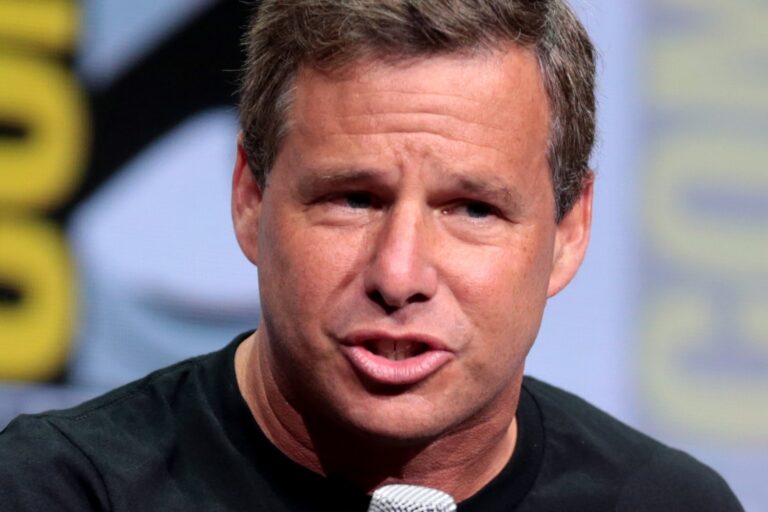
Photo: Matthew Yohe (CC BY-SA 3.0)