
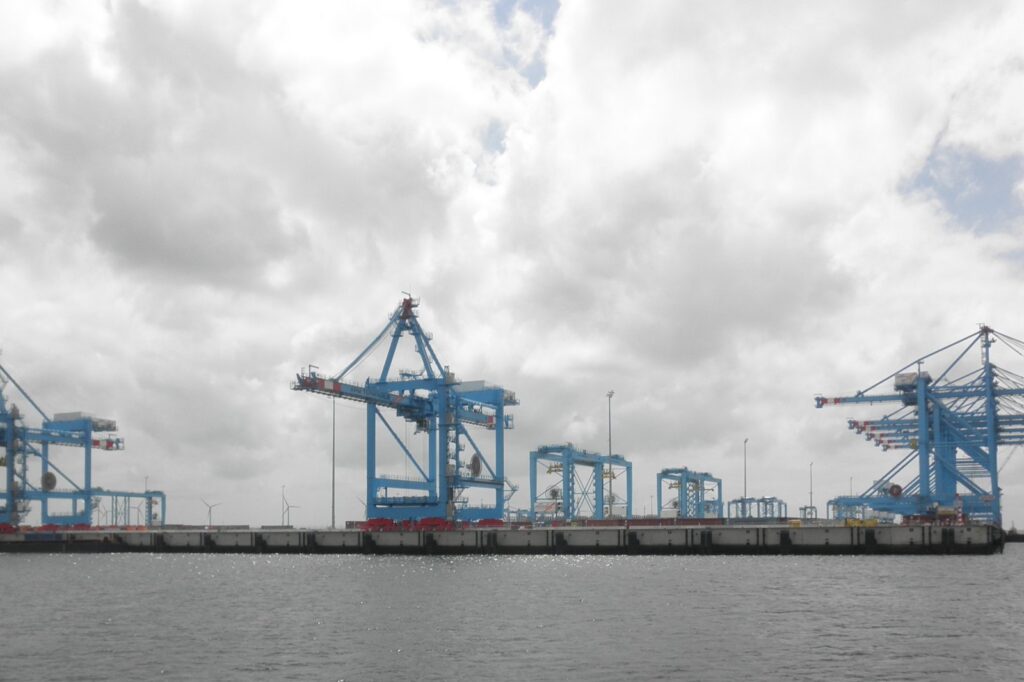
China is seeking a high-tech upper hand in the shipping industry, which moves more than 80% of goods traded worldwide by volume. The Mawan Terminal in Shenzhen features driverless trucks, remote-controlled cranes, and AI-powered systems as part of China’s automated port network.
Background And History
China’s economy has been transitioning toward high-tech industries such as electric vehicles, renewable energy, telecommunications, and IT equipment, with the country spending around 2.6% of its GDP on research and development across various economic sectors. As the world’s largest high technology exporter, China has been leveraging its industrial policies and strategic five-year plans to dominate strategically important industries. According to the Information Technology and Innovation Foundation (ITIF), China’s systematic campaign to dominate these industries threatens America’s technological leadership, economic strength, and national security.
Targeted Sectors
China is targeting sectors such as electronic bills of lading, digital versions of documents traditionally used as receipts for seaborne cargo, and customs databases powered by AI and big data. The country aims to have 90 automated terminals by 2030, with the New Qianwan Container Terminal in Qingdao being the world’s first fully automated terminal. Chinese companies have received three to eight times more state aid than western firms between 2005 and 2024, contributing to stronger global market share gains.
Implications And Numbers
The EU is expanding its trade toolkit to manage risks from China’s rise in high-tech manufacturing, a phenomenon termed ‘China Shock 2.0’. China’s policy focus on the high-tech supply side is going hand in hand with broad weakness on the demand side, partly driven by a longstanding property slump. The country’s managed exchange rate regime keeps yuan appreciation in check despite large surpluses on the trade and current accounts, with the Chinese yuan being 17-25% undervalued in real effective terms. As Isaac Kardon of the Institute for Defense Analyses noted, China’s push to export its shipping technology could give Beijing new strategic leverage and monopolistic positions, with major strategic downsides.
What It Means Now
The implications of China’s high-tech push in the shipping industry are significant, with the potential for Beijing to gain monopolistic positions and exploit back doors to spy on rivals or cripple trade networks in a crisis. As the Asia-Pacific Economic Cooperation summit approaches, China’s ambitions to modernize maritime trade remain undimmed, with the country proposing to lead working groups on electronic bills of lading and customs databases powered by AI and big data. The EU’s expansion of its trade toolkit and the US’s efforts to reorganize its government and mobilize for the techno-economic-trade war with China will be crucial in responding to China’s high-tech push. According to ITIF research, China’s industrial strategy threatens U.S. technological leadership in ‘national economic power industries’, and the US must fundamentally transform its techno-industrial economic system to prevent becoming subservient to China.
Sources
- Economy of China
- Analysis-China seeks high-tech upper hand in industry carrying 80% of global trade
- National Economic Power Industry Series Anthology
- Will China Shock 2.0 trigger an EU-China trade war?
- Türkiye, China gather at green development forum, assess co-op
- Global Deep-Sea Innovators Gather in Sanya, China, to Explore New Opportunities for Marine Technology Cooperation
Photo: Zandcee (CC BY-SA 3.0)




