
MANILA, Sept. 4 — Portable power stations are getting a closer look from Popular Mechanics, whose test team just put eight models through real-world trials to find the best backup options for outages, off-road camping, and remote work. The evaluation, led by editors David Dritsas and Bradley Ford with contributor Tony Carrick, measured each unit’s maximum output, capacity, charging time, and portability.
They connected appliances to test output limits, used an electricity monitor under a steady load to gauge capacity, timed full recharges from a wall outlet, and carried or rolled each machine to judge how travel-friendly it really is. For communities across Asia where power cuts and typhoon season are a familiar concern, the findings point to a few standouts.
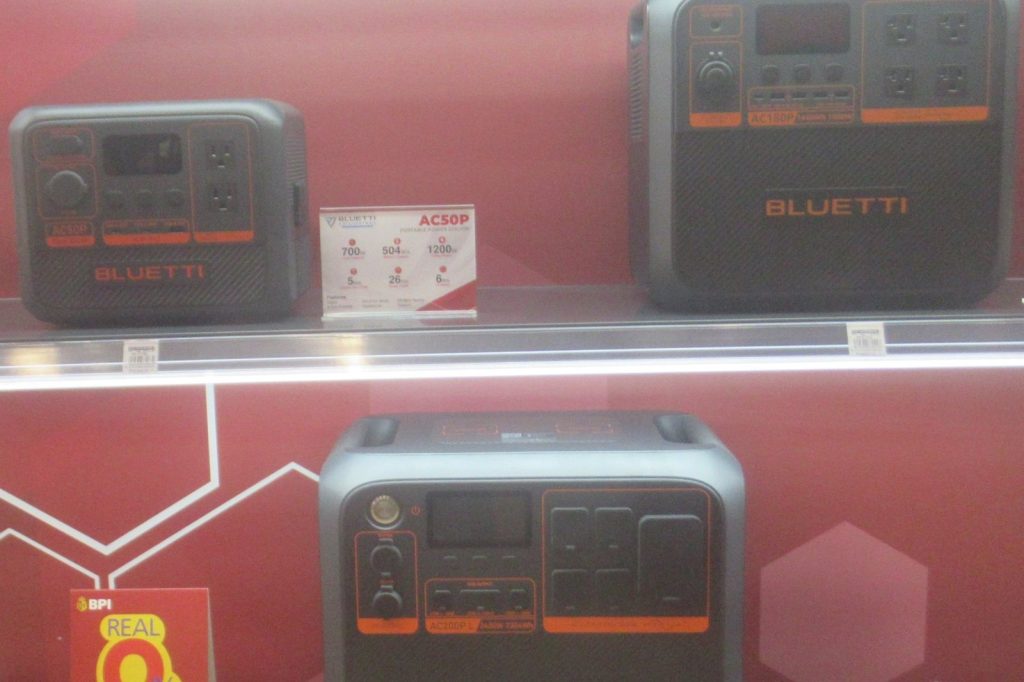
Bluetti takes the top spot
The Bluetti Elite 200 V2 emerged as the pick of the bunch. It delivers a maximum output of 2,600 watts, with a 3,900-watt startup surge, and packs a 2,073.6-watt-hour capacity. Its LiFePO4 battery is rated for 6,000 cycles before dropping below 80 percent capacity — a long lifespan for families who plan to keep one unit for years.
In testing, it powered a miter saw, a blender, and a space heater all at once, even absorbing a 4,000-watt startup spike. It delivered 92 percent of its listed capacity, well above the 85 percent average the team saw across units.
Recharging from empty to 80 percent took 81 minutes, and a full charge came in at 107 minutes. It offers four AC outlets, four USB ports, a car accessory outlet, and DC output, with solar charging support up to 1,000 watts.
Jackery and EcoFlow round out the field
The Jackery Explorer 1000 V2 is an upgrade over its popular predecessor, with a larger capacity and a 1,500-watt output — a jump from the original’s 1,000 watts. It features three AC outlets, two USB-C ports, one USB-A port, and a 12-volt DC outlet. Wall charging takes under two hours, while vehicle charging can take up to 12 hours.
During testing, it kept a 25-cubic-foot refrigerator running for 18 hours and 22 minutes — useful for households that lose power for extended stretches. It also ran for close to two hours under a constant 475-watt load and includes app monitoring over Bluetooth or WiFi.
For those who need something lighter, the EcoFlow River 3 Plus weighs just 10 pounds, roughly the size of a wide toaster. Its secret is Gallium Nitride (GaN) semiconductor technology, called X-GaN, used in the inverter and charging circuits to keep the unit compact. It offers a 600-watt continuous output, two USB-A ports, a 100-watt USB-C port, a 12-volt car port, three AC outlets, and functions as a UPS.
The article notes these stations are rechargeable lithium-ion battery bundles — a quiet, exhaust-free alternative to gas generators, with most models compatible with solar panels. As more households across the region look for dependable power that doesn’t rely on fuel, the test results give a clear sense of which units can genuinely carry a home through the night.




