
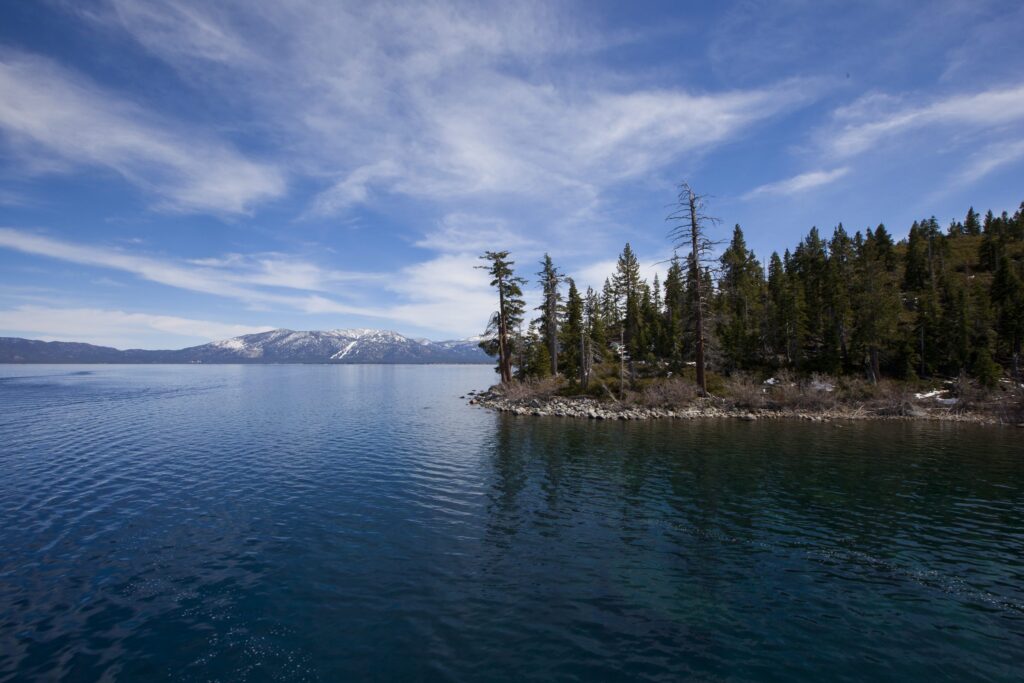
Summer in the Lake Tahoe basin draws visitors from across the country to its alpine forests and clear blue waters, but the season also brings a predictable challenge: an increase in bear encounters. According to the California Department of Fish and Wildlife, the Fourth of July holiday stands out as a peak period for human-bear interactions, and the 2025 holiday week underscored the pattern with more than 200 bear-related calls to local authorities.
The agency says July and August consistently record the highest number of bear incident reports each year, with summer weekends and holidays creating conditions that draw bears into populated areas.
A Seasonal Cycle of Attraction
The reason behind the surge is straightforward: more people means more food. Outdoor activities common during the Fourth of July — boating, barbecues, fireworks, picnics — generate food waste, unattended coolers, and overflowing garbage that bears have learned to exploit. Wildlife officials emphasize that securing food and garbage in bear-proof containers and never leaving coolers or food outside unattended are the measures that separate a safe holiday from a dangerous encounter.
The state’s wildlife agency recommends bear spray as a precaution, a point illustrated by a July 4, 2026 incident involving vacationer Cortlandt Koerwitz. As his family prepared for a boat trip at their Lake Tahoe vacation home, a bear approached, and Koerwitz successfully used bear spray to deter the animal.
Lake Tahoe itself is a freshwater lake formed roughly two million years ago as part of the Lake Tahoe Basin, with its modern shape carved during the ice ages. Situated high in the Sierra Nevada and straddling the California-Nevada border, the lake is known worldwide for the remarkable clarity of its water and the ring of mountains that surround it.
The English name derives from the Washo word Dáʔaw, simply meaning “the lake.” This natural setting has made the area a major tourist destination for both states: winter sports draw visitors to ski resorts, summer brings outdoor recreation on the water and in the forests, and the Nevada side offers lakeside casino resorts. Highways provide year-round access, ensuring a steady flow of people throughout the year.
That steady flow, particularly concentrated during summer holidays, has reshaped the relationship between humans and the wildlife that has lived in the basin far longer. Bears have always inhabited the forests around Lake Tahoe, but as human development spread and visitation grew, food and garbage became abundant and easy to find. Over decades, bears learned that summer weekends and holidays mean unattended coolers, picnic scraps, and full trash cans.
The result is a seasonal cycle: more people leads to more food available, which leads to more bears venturing close to homes and campsites.
Peak Risk and Practical Precautions
This pattern matters because the lake’s economy and identity depend on outdoor recreation. Visitors come for the scenery and the experience of being in a wild, high-alpine environment, yet that setting demands careful coexistence.
Wildlife agencies now treat July and August as the peak risk window for bear-human encounters. For residents and visitors, the prescription is straightforward: secure all attractants — food, garbage, and coolers — in bear-proof containers. Bear spray is a recommended precaution, as demonstrated by the Koerwitz incident.
The risk is highest during summer weekends and holidays, when outdoor gatherings multiply the food sources that draw bears into populated areas. Looking ahead, as summer 2026 continues, the California Department of Fish and Wildlife will track whether this year’s holiday encounter numbers match or exceed the 200-plus calls recorded during the 2025 Fourth of July week.
For now, the message from officials is consistent: the Fourth of July holiday is a peak time for bear-human encounters in the Lake Tahoe region, and preparation is the only reliable defense. Without such measures, a holiday outing can turn into a dangerous confrontation that harms both people and bears.
{“@context”: “https://schema.org”, “@type”: “NewsArticle”, “headline”: “Summer surge in bear encounters at Lake Tahoe draws over 200 calls”, “description”: “LAKE TAHOE, July 11 — Summer in the Lake Tahoe basin draws visitors from across the country to its alpine forests and clear blue waters,…”, “datePublished”: “2026-07-11T09:30:00+00:00”, “author”: {“@type”: “Person”, “name”: “Erika Johnson”}, “publisher”: {“@type”: “Organization”, “name”: “InfoPulse Today”, “url”: “https://newsfeed.2bme.xyz/”}}




