
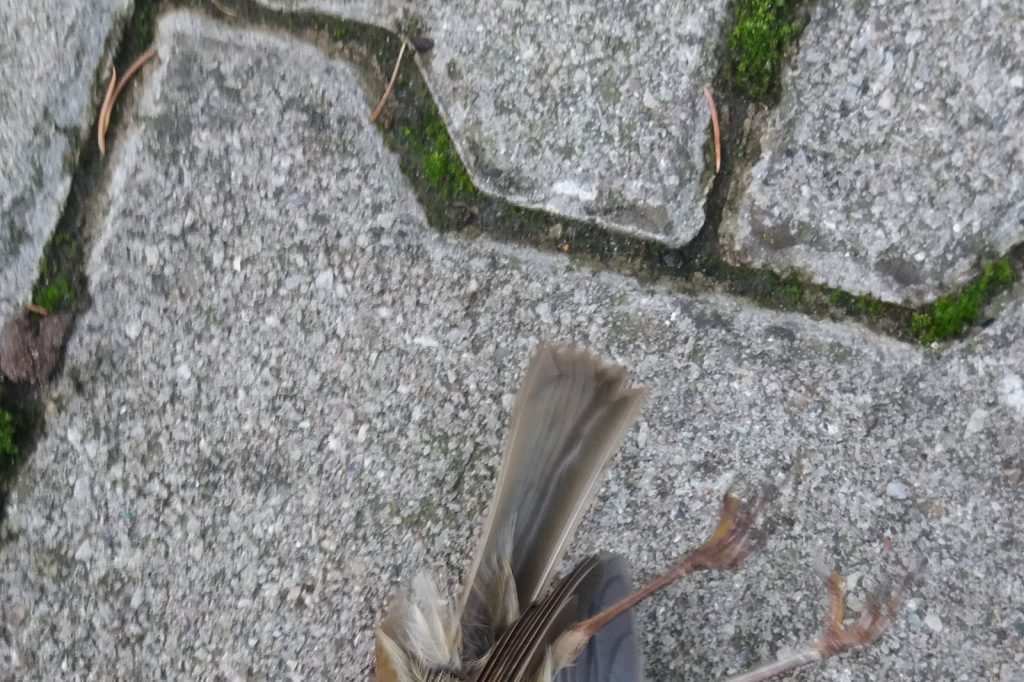
BALTIMORE — A bird hits a window. It sits there. Minutes pass.
Sometimes, it flies away. Sometimes, it does not.
The difference between those two outcomes is not random. It follows a pattern, one shaped by physics, biology, and a narrow window of human response. The record from July 5 shows that recovery time for a bird after a window strike can range from a few minutes to several hours.
That range is not a guess. It is a reflection of what happens when a living creature traveling at speed meets a sheet of glass it cannot see.
The severity of the impact is the first variable. A glancing blow against the glass is not the same as a full-velocity strike. The species of the bird matters.
So does its individual health and stress levels at the moment of collision. These factors stack on top of each other. A healthy starling that clips the edge of a window pane will have a shorter recovery than a stressed warbler that smacks the center of the glass at full speed.
The bird does not control any of this. What happens next is often misinterpreted.
Stunned birds sit quietly on the ground or on a nearby perch after impact. People see a still bird and assume the worst. The source material indicates that stillness is not necessarily a sign of grave injury.
The bird may simply be disoriented from the shock of the collision. Its brain is rebooting.
Many birds begin to show signs of recovery within 15 to 30 minutes. A bird that remains alert, holds its head up, and does not have obvious wing or leg injuries is often shaking off the concussion. The one-hour mark is the dividing line.
A bird that has not moved or attempted to fly after an hour may require intervention. The source advises that if a bird is still unable to stand or fly after that time window, it should be taken to a licensed wildlife rehabilitator. The first few minutes are critical.
The recommendation is to place the bird in a quiet, dark, and warm container — a cardboard box with air holes works — and leave it undisturbed. Handling should be minimal.
The stress of human contact can delay recovery or cause further injury. Do not offer food or water to a stunned bird. This is not a kindness.
Birds have a specialized respiratory and digestive system. Forcing liquids can cause aspiration.
The bird does not need a meal. It needs silence and darkness. The broader picture here is that window strikes are a predictable consequence of how humans build.
Glass is invisible to birds. It reflects sky and trees. The bird does not see a barrier.
It sees a path. The collision is not malice.
It is a design flaw in the environment we created. The data on recovery times tells us something about the resilience of these animals, but also about the limits of that resilience. A bird that recovers in 30 minutes was lucky.
A bird that sits motionless for an hour was not as lucky. A bird that never moves again was unlucky in a way that no intervention can fix.
There is no single answer to the question of how long a bird takes to recover from a window strike. The answer depends on the bird, the glass, the speed, the angle, the health, and the timing of human response. What the record shows is that the window is real.
The recovery is possible. But the margin for error is thin.




