
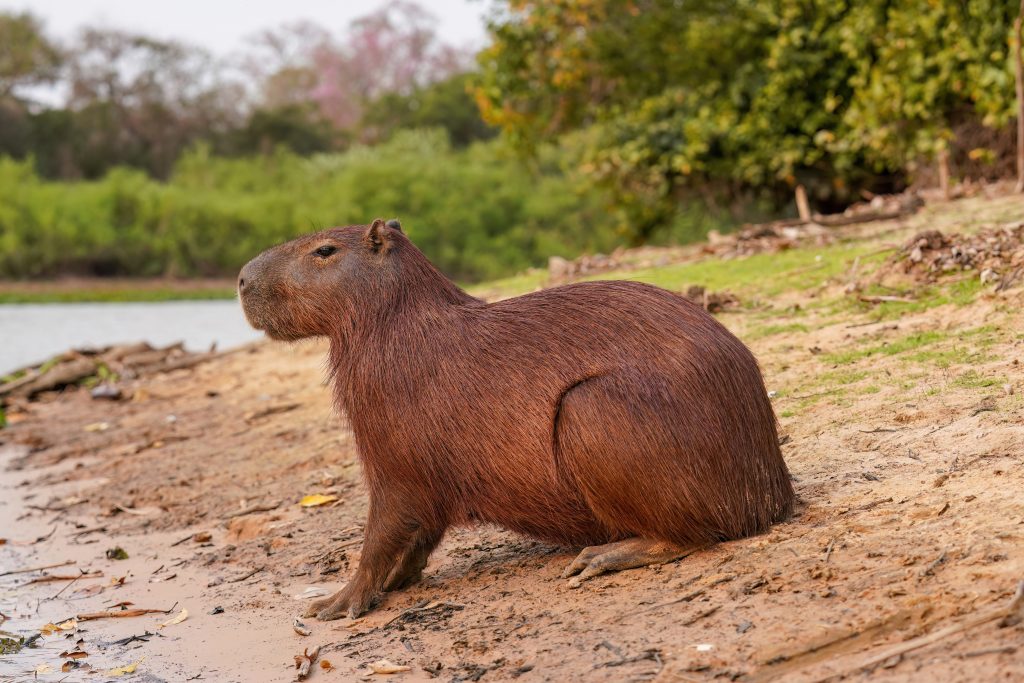
NEW YORK — A pet capybara named Uno likes to climb onto his owners’ shoulders when he gets tired on walks. When he wants attention, he rolls onto his back and snuggles next to them on the sofa. That bond is real.
But Uno is also a living example of a problem that is emptying wild habitats across the globe. Uno did not come from a breeder.
He was taken from the wild, one animal among many. The demand for exotic pets has risen sharply. More people want them.
And that means more animals are being pulled out of their natural homes. Think of the ecosystem as a complex machine.
Every part has a job. Remove one piece and the whole thing can start to break down. That is the situation now.
Animals are disappearing at a rate that worries experts. The garden is losing its flowers. The machine is losing its parts.
This is not about a few lizards in terrariums. It is about whole species being removed from places they have lived for thousands of years.
The consequences are not small. Plant populations decline. Other animal populations decline.
The habitat itself degrades. The damage is not contained to one spot.
It spreads. Uno’s story shows the other side. He is attached to his humans.
He has learned behaviors that make him seem like a house pet. But he is not a dog or a cat. He is a wild animal living in a house.
And for every Uno that ends up on a sofa, there are many more taken from the wild that do not survive the transition. The report does not say how many die.
But the math is grim. The demand keeps rising. The supply has to come from somewhere.
That somewhere is the wild. And the wild is losing.
The trend shows no signs of slowing. More people are willing to keep wild animals as pets, often without understanding what that means for the animal or for the ecosystem it left behind. The bond Uno shares with his owners is real.
But it is not a reason to empty the wild. It is a reason to ask harder questions about where pets come from and what is lost when they are taken. Removing animals disrupts the delicate balance.
That is not a theory. It is happening now.
The report states it plainly: the removal can lead to a range of negative consequences. Decline of populations. Degradation of habitats.
A machine that starts to malfunction. Uno will keep climbing onto shoulders and rolling onto his back.
He will keep snuggling on the sofa. That is his life now. But the life he left behind — the life of his species in the wild — is being hollowed out.
The demand for more Unos is driving that hollowing. And it is not stopping.




