
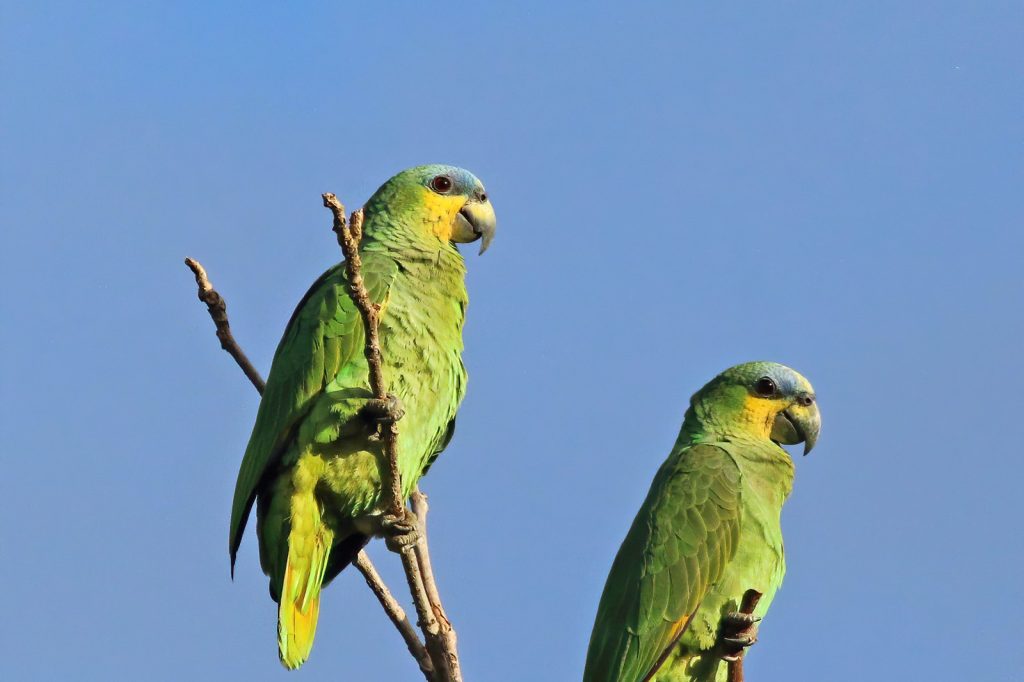
Every animal taken from the wild for the exotic pet trade leaves a hole. Not just an empty space in a forest or a savanna — a functional gap in a system that evolved with that creature in it. The ecosystem is a complex machine, and removing parts causes it to malfunction.
That is the practical upshot of a sharp rise in demand for exotic pets. Many species are being removed from their natural habitats at a rate that alarms scientists and conservationists.
This is not a new problem, but it is accelerating. People want something unusual in their homes. A parrot.
A reptile. A small primate.
The desire is straightforward. The consequences are not. Think of a big garden where certain flowers are being picked at an alarming rate.
The garden looks bare. Empty. That is what is happening to wild habitats right now.
One animal, Uno, has become something of a public example. He climbs onto his owners’ shoulders when he gets tired on a walk.
He rolls onto his back and snuggles on the sofa if he wants a pat. That behavior is a result of the bond between Uno and his humans. It highlights that some animals can form strong connections with people.
But it also obscures a harder truth. Uno is one animal.
For every Uno living on a sofa, how many were taken from the wild? And how many did not survive the journey? The demand for exotic pets drives the disappearance of animals from the wild.
That trend shows no signs of slowing down. Many people are willing to keep wild animals as pets, often without understanding what that means for the animals themselves or for the places they came from. The removal disrupts the delicate balance of the ecosystem.
Plant populations can decline. Other animal populations can decline.
Natural habitats degrade. It is a chain reaction. Remove a predator, and prey species multiply.
Remove a pollinator, and plants fail to reproduce. Remove a seed disperser, and forests stop regenerating.
Every part plays a vital role. The entire machine malfunctions when parts go missing. The exotic pet trade is pulling those parts out, one by one, and putting them in living rooms.
The practical consequences are severe. The ecosystem does not have a backup plan. It cannot replace a removed species quickly.
Evolution works on a timescale of millennia. The pet trade works on a timescale of weeks.
That mismatch is the core of the problem. People want an animal today. The wild cannot produce one that fast without being drained.
Regulation exists in some places. Enforcement is inconsistent.
Smuggling routes are well established. The financial incentive is strong. A rare animal can fetch a high price.
That money drives the removal of animals from habitats that are already under pressure from deforestation, climate change, and human encroachment. The exotic pet trade adds another layer of stress. Uno is lucky.
He has owners who care for him. He gets pats and shoulder rides.
But he is a single data point in a much larger pattern. The pattern is that a significant number of animals are disappearing from the wild. The reason is straightforward.
More people are seeking exotic pets. The supply comes from natural habitats.
Those habitats cannot sustain the current rate of removal. The garden keeps losing flowers. The machine keeps losing parts.
The trend keeps going. That is the situation as it stands.




