
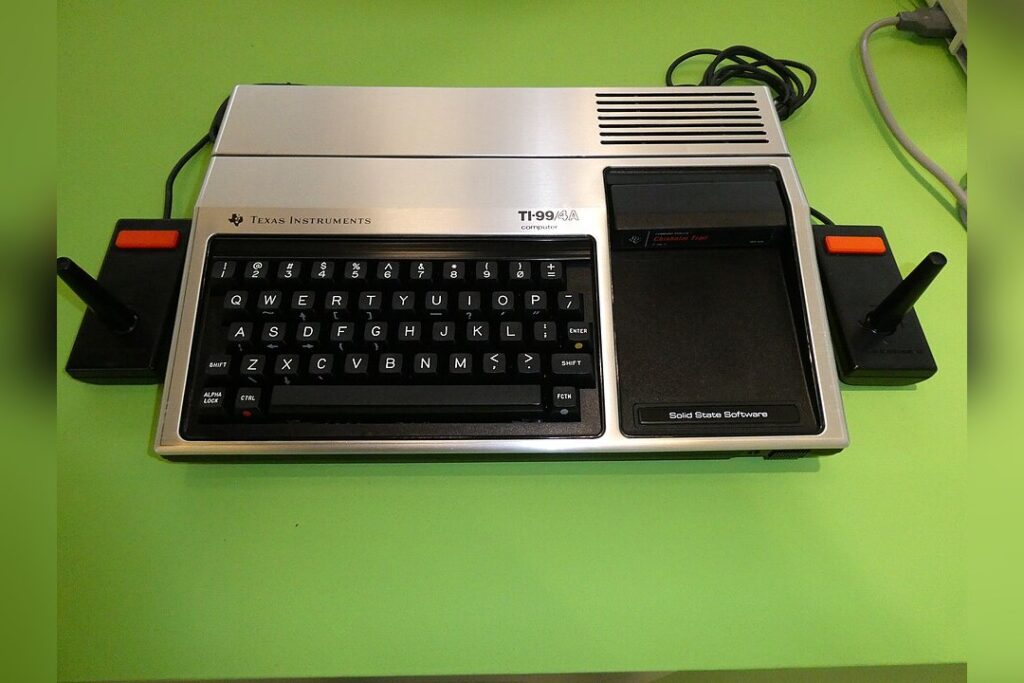
NEW YORK, July 16 — 1981. That is the year the Texas Instruments TI-99/4A home computer hit the market with a ROM cartridge slot, setting a template for how millions of people would soon load software. The bottom line: the ROM cartridge—a replaceable plastic case holding read-only memory—became the defining distribution medium for an entire generation of video game consoles and home computers.
It was faster than a floppy disk and, for publishers, far harder to pirate. By the numbers, the cartridge’s rise tracks a clear timeline.
The TI-99/4A debuted in 1981 with ROM cartridges for software. Nintendo’s Family Computer, released in Japan in 1983 and as the Nintendo Entertainment System in North America in 1985, popularized the format for consoles. Sega followed with the Genesis in 1988, and the Super Nintendo Entertainment System arrived in 1990.
All three used cartridges. The figure that matters for hardware engineers: the cartridge was memory-mapped directly into the system’s address space.
The CPU executed the program in place, without first copying it into expensive RAM. That saved cost and sped up load times. In most early designs, the entire address and data buses were exposed through an edge connector, making the interface crude but effective.
Investors will note the trade-offs. Manufacturing ROM cartridges cost more than pressing floppy disks, and storage capacity was smaller. Yet the format offered a key advantage: security against unauthorized copying.
That protection mattered to publishers in an era before widespread digital rights management. The cartridge slot was not limited to games.
It also served as a connection point for various hardware accessories and enhancements, expanding what the base machine could do. The widespread use in video gaming led to the colloquial name “game cartridge.” Competition shifted the landscape. The Nintendo 64, released in 1996, stuck with cartridges while competitors moved to CD-ROMs.
That decision had consequences for storage and production cost, but it preserved the cartridge’s security model and instant-load characteristic. Today, the format has found a second life.
Modern DIY projects, particularly those built around the Raspberry Pi, have revived interest in cartridge-based systems for homebrew games and retro computing. Hobbyists are designing new cartridges, writing new software, and building hardware that plugs into vintage slots. What to watch next: whether the homebrew cartridge movement gains commercial traction, and whether any current console maker revisits the format for a niche product.
The technology is old, but the demand for tangible, slot-in media is not gone.




